It may sound controversial, but hiring a roofer to fix a leak on your commercial or complex building envelope could be a waste of money. You need a roof leak detection specialist.
When water appears inside a building, your first instinct may be to call a roofer. It feels logical. There’s a leak, therefore the roof needs fixing.
But in complex, large-scale buildings, hotels, offices, healthcare estates, and education facilities, this approach is one of the most common and costly mistakes asset owners make.
Roofers are highly skilled tradespeople. They install, repair and replace roofing systems. But what they are not trained or equipped to do is conduct complete technical investigations to identify the true origin of water ingress across large or complex roof and façade assemblies.
As a result, many repairs address the visible symptom rather than the underlying cause, masking deeper defects and allowing long-term deterioration to continue unseen.
In the worst cases, this leads to repeated callouts, escalating repair costs, internal disruption, lost revenue and reputational damage, often without ever resolving the issue that caused the leak in the first place.
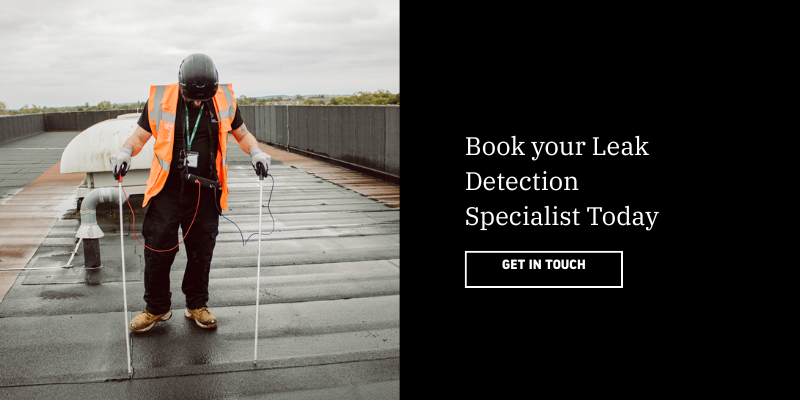
Understanding Water Ingress Pathways in Large-Scale Roof Systems
Unfortunately, water can be deceptive. It’s rare for it to enter a building directly above the point where damage appears internally. Instead, it tends to exploit a weak point in the building envelope, such as interfaces, penetrations, terminations, changes in level, before travelling laterally across membranes, insulation layers, decks and structural elements.
By the time it manifests internally, the point of entry may be many metres away, sometimes on a different elevation altogether.
This is especially true on large roofs such as those found on hotels, commercial offices, retail centres and public buildings. These roofs often incorporate multiple systems layered over time: original structures combined with later refurbishments, plant installations, temporary repairs and incompatible materials. Drainage falls may be marginal, outlets may be obstructed, membranes may be aged, and detailing may be compromised by subsequent works.
Without the advice of a leak detection specialist, it is almost impossible to understand how water is actually behaving within the roof build-up.
Why Visual Roof Repairs Fail Without Technical Leak Investigation
Traditional roofing repairs focus on what is visible: a blistered membrane, a split joint, a cracked detail.
These may indeed be defects, but unless their role on the broader moisture pathway is understood, repairing them in isolation can be ineffective.
In those cases, a roofer will be working with incomplete information. Access is limited. Investigation is visual rather than diagnostic. The scope is defined by a repair instruction rather than an understanding of building physics. The result is often a localised fix that temporarily suppresses symptoms without addressing the root cause.
This approach can inadvertently make matters worse. Covering over a defect may trap moisture within the roof system, accelerating insulation degradation, corrosion of fixings, timber decay or microbial growth. Over time, what began as a manageable ingress issue becomes a systemic failure and one that is significantly more expensive to remediate.
Why Hiring a Roofer to Fix a Leak Can Be a Costly Mistake
The financial impact of unresolved leaks goes far beyond the cost of repeated repairs.
In hotels, water ingress can force rooms out of service, disrupt guest experience and damage brand reputation. In office environments, leaks affect productivity, damage fit out and create health and safety concerns. In healthcare and education settings, the implications are even more serious, with risks to operations, compliance and occupant wellbeing.
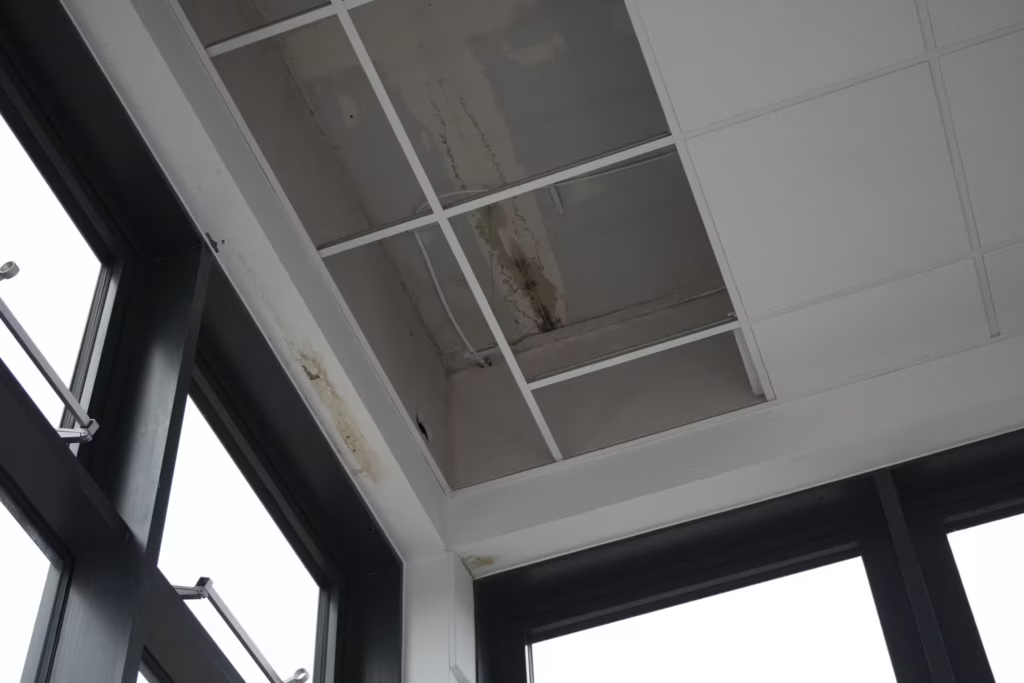
Interior signs of roof damage: staining, bubbling paint, sagging ceilings, damp odours, are often treated as cosmetic issues. In reality, they are indicators of ongoing moisture exposure within the building fabric. Left unaddressed, this can lead to progressive structural deterioration, increased energy loss, mould growth and premature system failure.
What appears to be a modest maintenance issue can quickly translate into lost revenue, increased insurance exposure and high unplanned costs.
Investigation First: A Smarter Strategy for Managing Roof Leaks
Roof leak detection specialists approach the problem from an entirely different standpoint.
The objective is not to jump in and start repairing immediately, but to understand.
At Building Transformation, our investigations are designed to trace water ingress back to its source. This involves a combination of advanced access techniques, non-destructive testing, targeted opening-up where necessary, and a deep understanding of how roof and façade systems perform over time.
Rather than working from ground-level assumptions, our teams reach the building envelope directly. Using rope access and specialist platforms, we can examine areas that would otherwise be inaccessible without full scaffolding, allowing defects to be assessed in situ and in context.
Crucially, this work is informed by technical expertise. We understand how membranes age, how drainage failures interact with structural tolerances, how thermal movement affects detailing, and how water migrates through complex assemblies. Patterns of deterioration are recognised, not guessed.
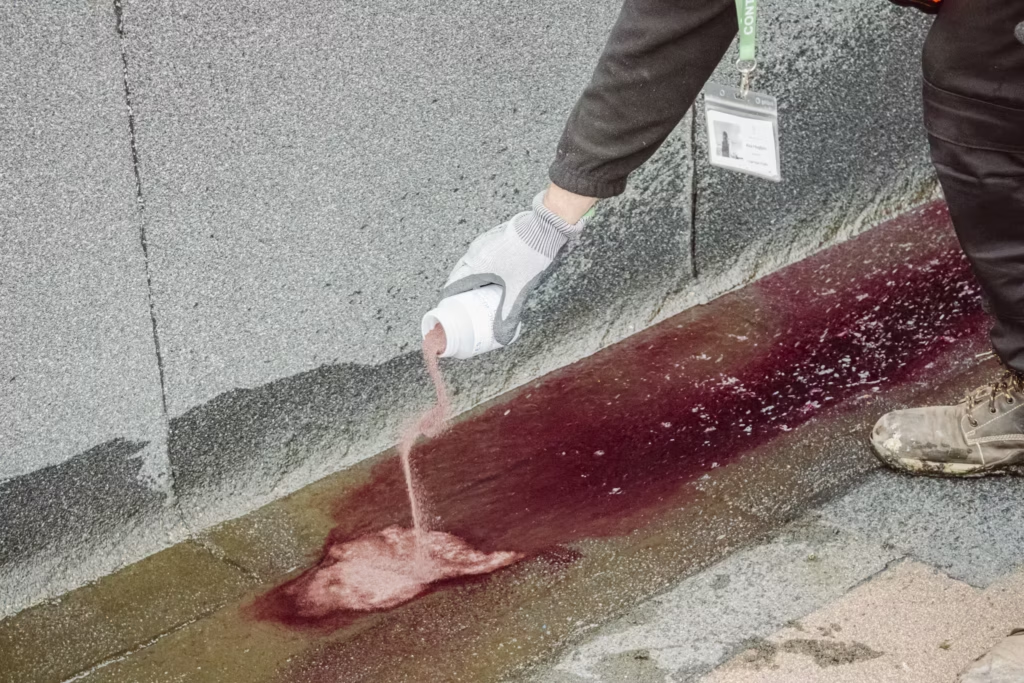
Solving Roof Leaks Properly: Investigation as a Risk Management Tool
The value of proper investigation lies in its outcomes. A technically robust diagnosis allows surveyors, asset managers and clients to move from reactive repairs to informed decision-making.
Instead of chasing leaks, maintenance can be planned. Instead of repeated call-outs, targeted interventions can be implemented. Instead of uncertainty, there is clarity about risk, urgency and long-term implications.
In many cases, investigation reveals that what appears to be a “roof problem” is actually a façade interface issue, a drainage design flaw, or a consequence of historic alterations. Without identifying this, no amount of roofing repair would ever resolve the ingress.
By isolating root causes, Building Transformation enables repair strategies that are proportionate, effective and aligned with the building’s lifecycle. This protects budgets, reduces disruption and extends the service life of existing systems.
Why Prevention Is Cheaper Than Repeated Roof Repairs
Leaks rarely happen without warning. Subtle indicators such as minor staining, intermittent dampness, and isolated defects often precede more serious failure by months or years. The challenge is recognising what these signals mean and responding appropriately.
Engaging a leak detection specialist early allows problems to be addressed before they escalate. It prevents temporary fixes from becoming permanent liabilities and ensures that money is spent solving the right problem, not simply reacting to visible damage.
For large or complex buildings, this distinction is critical. The cost of investigation is minimal compared to the financial and operational consequences of prolonged water ingress.
Why Partner with Building Transformation for Roof Leak Investigations
Roofers play an essential role in maintaining buildings, but they should be deployed with clear technical direction, informed by proper investigation. Without this, even well-executed repairs may miss the mark.
Building Transformation’s role is to bridge that gap. By combining façade and roof expertise, advanced access capability and rigorous diagnostic methodology, we enable issues to be understood at source, before repairs are specified, budgets committed or damage compounded.
When it comes to roof leaks, the most expensive decision is often the first one made in haste. Investigation first is not an added cost. It is the foundation of effective, long-term asset protection.