Using Roof Condition Surveys and Technical Investigations to Plan Ahead
Roof leaks and failures are often perceived as sudden events.
Water appears internally during periods of heavy rainfall, sometimes without any obvious warning signs, and usually, this triggers an urgent response: contractors are called, temporary repairs are undertaken, and budgets are redirected to address what appears to be an immediate problem.
But, as demonstrated repeatedly through roof investigations, roof condition surveys, and leak detection work, roof failures are rarely sudden.
In most cases, water ingress is the end result of progressive deterioration, often occurring over several years. Defects may develop in membranes, drainage systems, interfaces, or detailing long before water becomes visible inside a building. In many instances, the location where water appears internally has little to do with the point where the failure originated.
This disconnect between cause and effect is one of the primary reasons roof problems are misdiagnosed and why reactive repairs often fail to provide lasting resolution.
This guide will bring together established technical guidance on roof condition surveys, inspection methods, drainage design, leak detection, and compliance with BS 6229.
Its purpose is to explain how roof problems develop, why they are frequently misunderstood, and how early, informed investigation allows building owners and estates teams to plan works, control budgets, and reduce long-term risk.
Roof Failures: Why Reactive Repair Is a False Economy
When water ingress occurs, the immediate focus is often on stopping the visible leak as quickly as possible. While understandable, this approach can result in addressing the symptom rather than the underlying cause (leading to higher costs later down the line).
Water ingress in roof structures is also rarely linear. Water can enter a building at one location and travel considerable distances before becoming visible internally. It may track along membranes, insulation layers, structural decks, or service penetrations, exploiting weaknesses in detailing or changes in level.
Consequently, repairs are often targeted at the wrong location. Sealants may be applied, localised patch repairs undertaken, or components replaced without fully understanding how water is entering the building. In many cases, this provides only temporary relief while deterioration continues elsewhere within the roof system.
Over time, this reactive approach leads to:
- Repeated call-outs for the same or similar issues
- escalating repair costs
- increasing disruption to building occupants
- damage to internal finishes and building fabric
From a budgetary perspective, reactive repair is a false economy!
Without understanding the mechanism of failure, expenditure is directed toward short-term fixes rather than long-term resolution.#
Roof Condition Surveys: Purpose, Scope and Value
A roof condition survey is a structured technical assessment designed to evaluate the performance of the roof as a system.
Unlike cursory inspections or visual checks, condition surveys assess how individual components interact and how defects may affect overall roof performance. This includes evaluating materials, workmanship, drainage arrangements, interfaces, and compliance with current best practice.
A comprehensive roof condition survey typically examines:
- waterproofing membranes and roof coverings
- insulation build-ups and deck condition (where visible)
- drainage design, falls, outlets, and discharge points
- upstands, penetrations, joints, and interfaces
- evidence of ageing, fatigue, or movement
The objective is not simply to identify defects, but to assess their severity, extent, and potential consequences. In this case, any defects can be differentiated based on risk rather than treated equally.
Roof condition surveys provide the technical evidence required to:
- identify defects that pose an immediate risk
- recognise deterioration that can be planned for
- understand which areas are currently performing adequately
This information forms the basis for informed maintenance planning and budget forecasting, particularly for complex or high-value estates.
Inspection Methods: Why On-Roof Assessment Matters
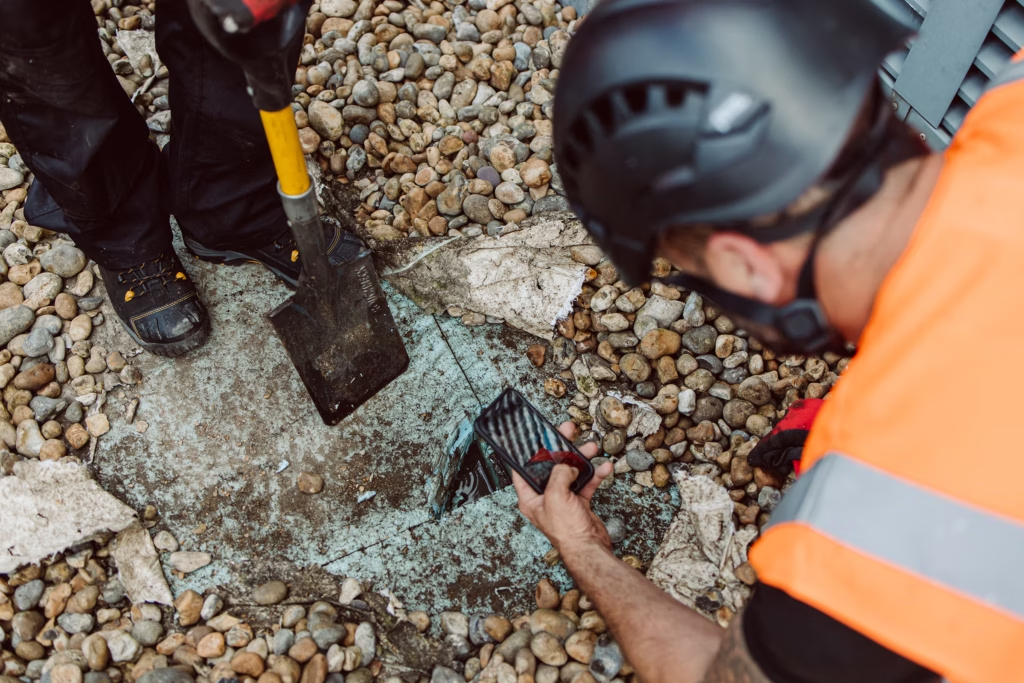
Remote inspection methods, including drone surveys, are increasingly popular and often used to assess roof condition. And while yes, these technologies can be useful in specific circumstances, they do have significant limitations.
Drone surveys provide visual information only. They allow surveyors to observe roof surfaces from above, but they do not allow physical interaction with the roof or close inspection of critical details.
As a result, drone surveys cannot:
- assess concealed construction or build-ups
- test drainage performance
- examine junctions, interfaces, or penetrations in detail
- identify early-stage deterioration beneath finishes
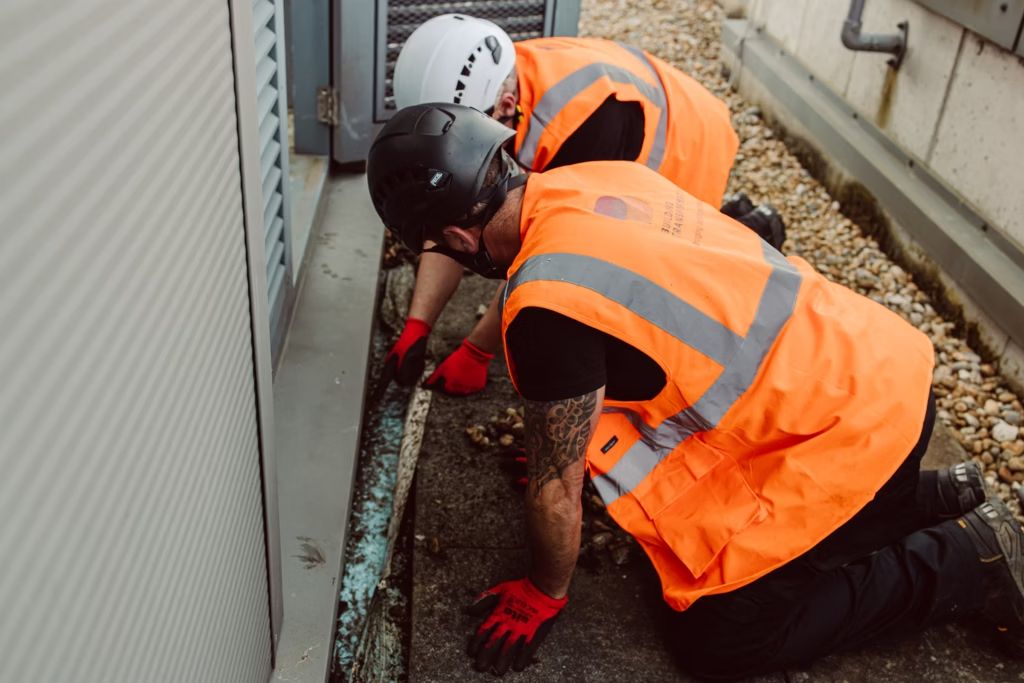
On-roof condition surveys allow defects to be examined at close quarters and within their construction context. It enables surveyors to understand how detailing has been developed, how drainage operates in practice, and how materials perform under load and exposure.
For technical diagnosis and risk assessment, on-roof inspection remains essential. Relying solely on remote inspection can result in missed defects, incomplete understanding, and inaccurate conclusions.
Leak Detection: Understanding How Water Really Enters Buildings
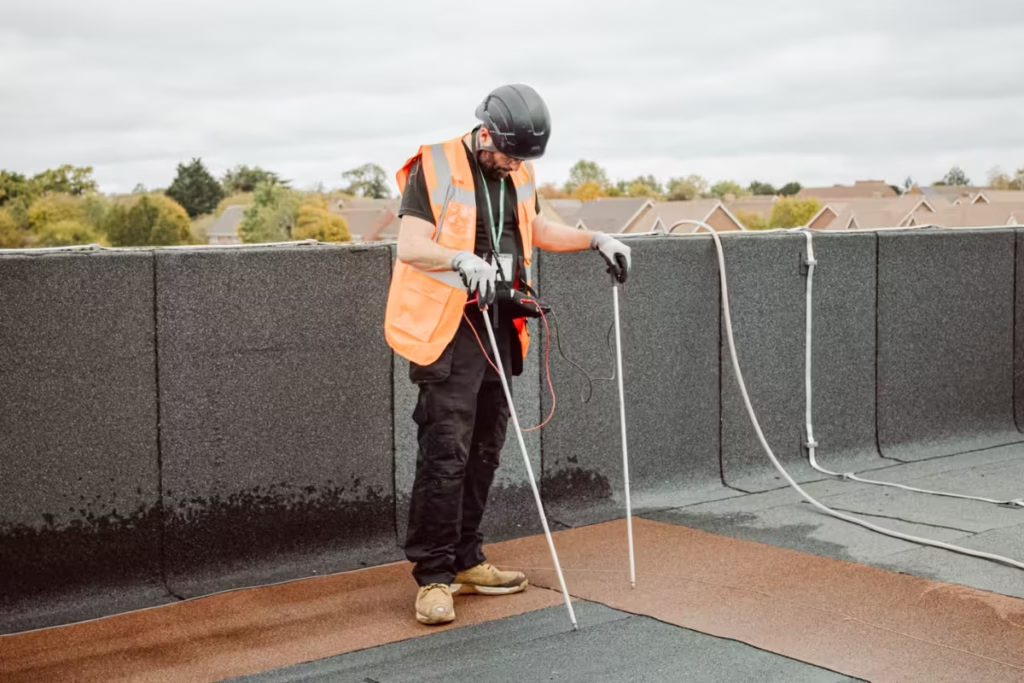
One of the most persistent challenges in roof leak investigation is locating the true source of water ingress.
Water rarely enters a building directly above the point where it becomes visible internally. Instead, it follows complex paths dictated by gravity, material interfaces, and construction geometry.
Common behaviours include:
- lateral movement across membranes
- tracking along insulation or structural elements
- ingress through one defect and emergence elsewhere
This complexity explains why repairs targeted at visible damage often fail to resolve leaks. Without understanding the route water is taking through the roof system, interventions are effectively guesswork.
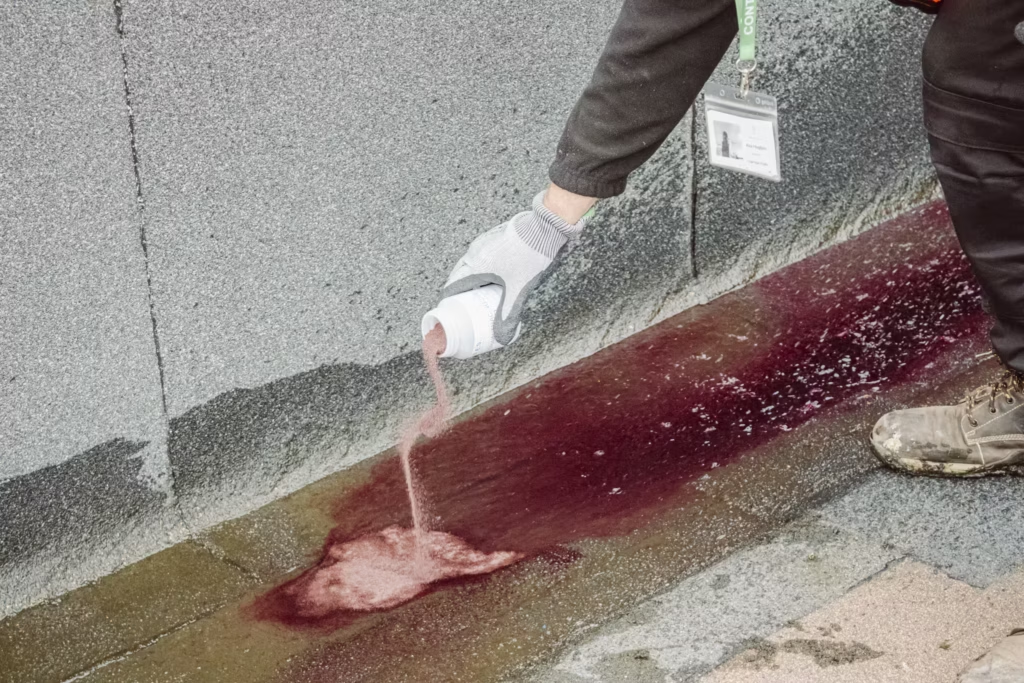
Specialist leak detection focuses on identifying how and where water enters the building, rather than reacting to where damage appears. This approach is critical in complex roofs, large buildings, and situations where repeated repairs have failed.
Roof Drainage Design and Long-Term Roof Performance
Roof drainage is a critical component of roof performance and one of the most common contributors to premature failure.
Effective drainage design ensures that water is removed from roof surfaces quickly and reliably. Where drainage is poorly designed, poorly installed, or inadequately maintained, water can pond on the roof surface.
Prolonged standing water increases:
- structural loading
- stress on waterproofing membranes
- the rate of material degradation
- the likelihood of failure during heavy rainfall
Drainage defects often develop gradually and may not be immediately visible from ground level. By the time water ingress becomes apparent internally, deterioration may already be advanced.
Assessing drainage design, falls, outlets, and discharge arrangements is therefore a critical element of roof condition assessment and long-term risk management.

BS 6229: The Role of Standards in Roof Risk and Longevity
BS 6229 guides the design, construction, and maintenance of flat roofs. It sets out principles intended to improve performance, durability, and resistance to failure.
Many existing roofs do not fully comply with BS 6229. This may be due to changes in standards over time, historic construction methods, or site constraints.
Common areas of non-compliance include:
- inadequate falls to drainage
- vulnerable detailing at interfaces and penetrations
- construction methods that do not support long-term performance
Non-compliance does not always lead to immediate failure, but it significantly increases long-term risk. Condition surveys can identify departures from BS 6229 and help explain recurring issues or patterns of deterioration.
Understanding how a roof aligns with current standards provides valuable context when planning repairs, refurbishment, or replacement.
Planning Ahead: Timing Surveys to Reduce Risk and Cost
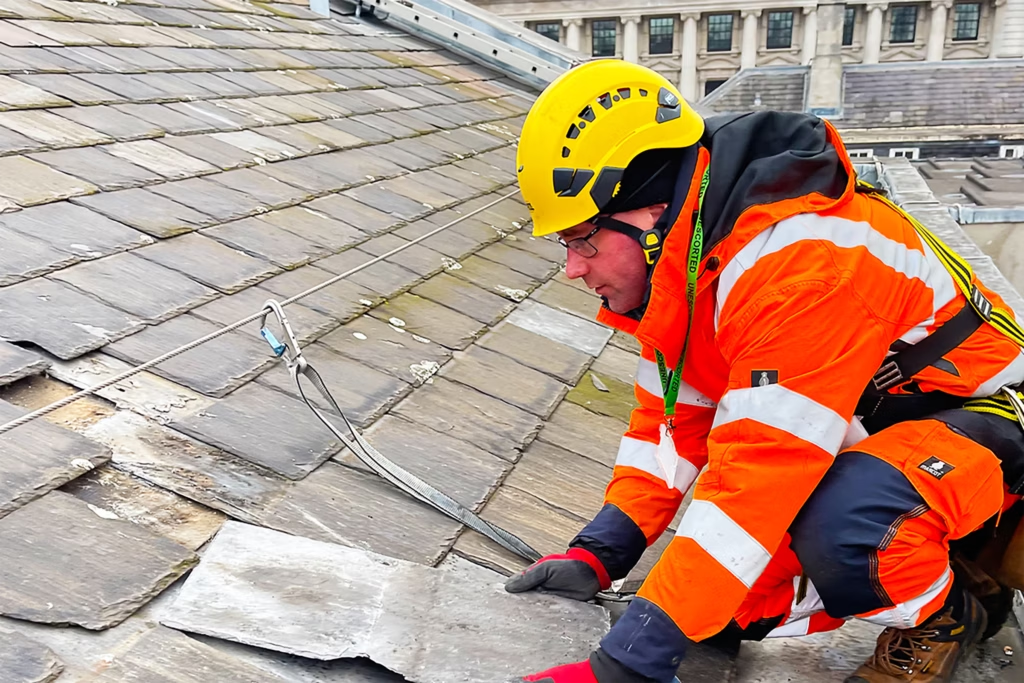
Roof problems are most commonly identified during periods of prolonged or intense rainfall. By this stage, access may be restricted, weather conditions may limit investigation, and the focus shifts to urgent mitigation.
Undertaking proactive roof condition surveys and investigations in the summer months has several advantages:
- safer access conditions
- clearer visibility of defects
- more time to plan appropriate works
- reduced reliance on emergency repairs
From a financial perspective, early investigation allows work to be planned and phased, rather than undertaken reactively under pressure.
Conclusion
Unfortunately, roof failures are rarely unavoidable.
Typically, they’re the result of gradual deterioration, inadequate drainage performance, misidentified leak origins, or construction that no longer reflects best practice.
When these issues are ignored, they eventually surface as disruptive and costly failures.
By using roof condition surveys, appropriate inspection methods, informed leak detection, and an understanding of standards such as BS 6229, building owners and estates teams can identify risks earlier and plan accordingly.
In roof management, the greatest costs are rarely associated with early investigation. They arise when problems are discovered too late, after deterioration has progressed and options have narrowed.