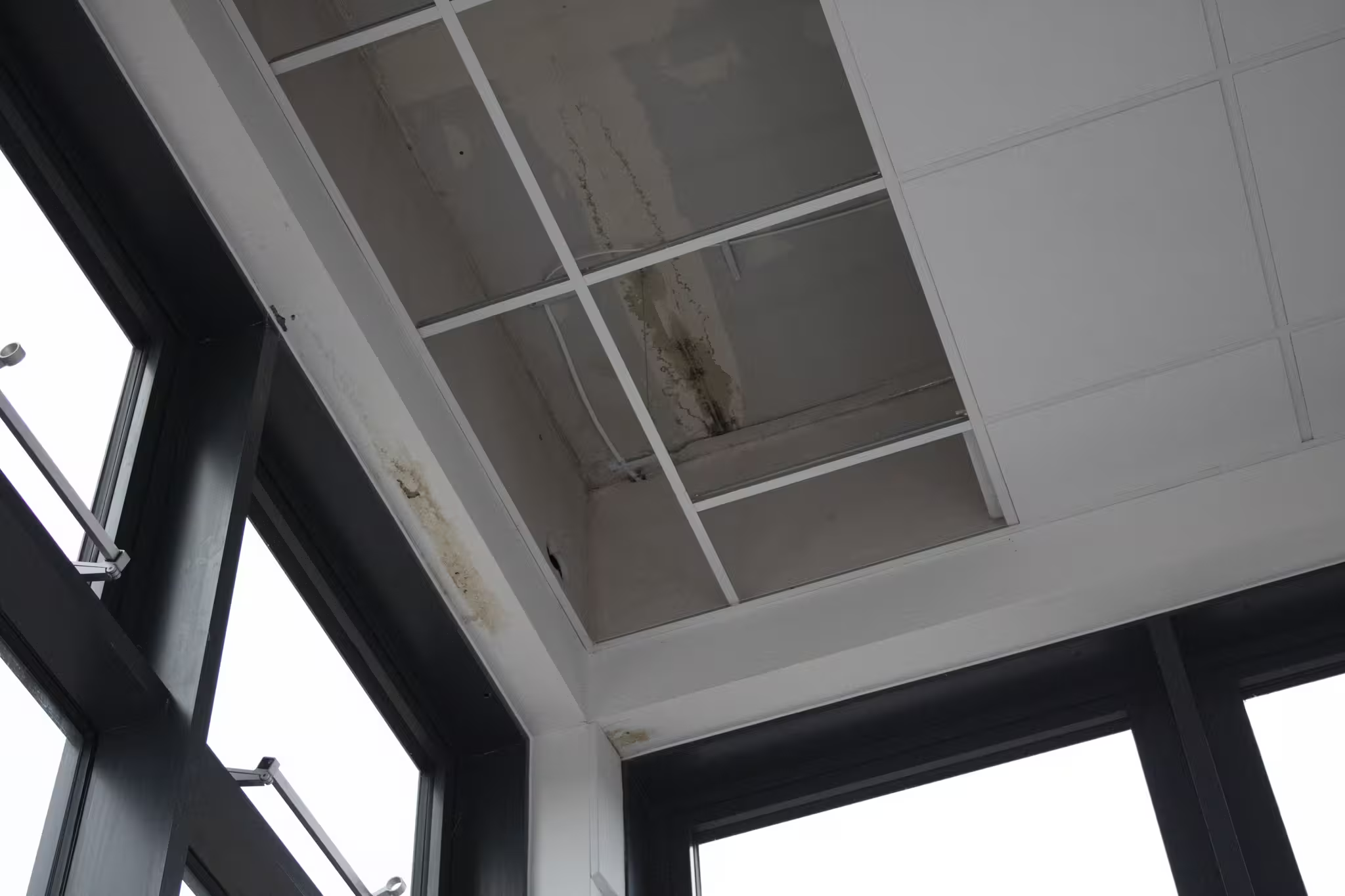
Building Transformation was appointed to investigate persistent water ingress affecting an internal corridor at a primary school in Berkshire.
The source of the leak was not immediately apparent. Water entering through one part of a building envelope can travel through roof build-ups, cavities and internal finishes before becoming visible, making the point where water appears an unreliable indication of where the defect is located.
Following reports that the problem had worsened after earlier testing, a structured investigation was required to isolate the affected roof elements, reproduce the leak under controlled conditions and identify the route taken by the water.
Building Transformation combined external roof testing with internal inspections, infrared imaging and moisture readings to distinguish between potential sources and provide the client with evidence-led recommendations for repair.
Project Challenges
The investigation presented several practical and technical challenges:
- Water was appearing internally some distance from the suspected entry point
- The delay between water entering the roof and becoming visible made the leak difficult to trace
- Both the gutter and adjacent roof-edge detailing were potential sources
- The affected area incorporated a felt roof system with a GRP perimeter trim
- Internal access was required above a staircase and corridor
- Roof access was through an internal ladder and opening rooflight
- Testing needed to be carefully controlled to avoid unnecessary internal damage
- The investigation had to be managed safely within a school environment
The testing sequence therefore needed to isolate each roof element individually, while maintaining continuous monitoring inside the building.
Investigation Strategy
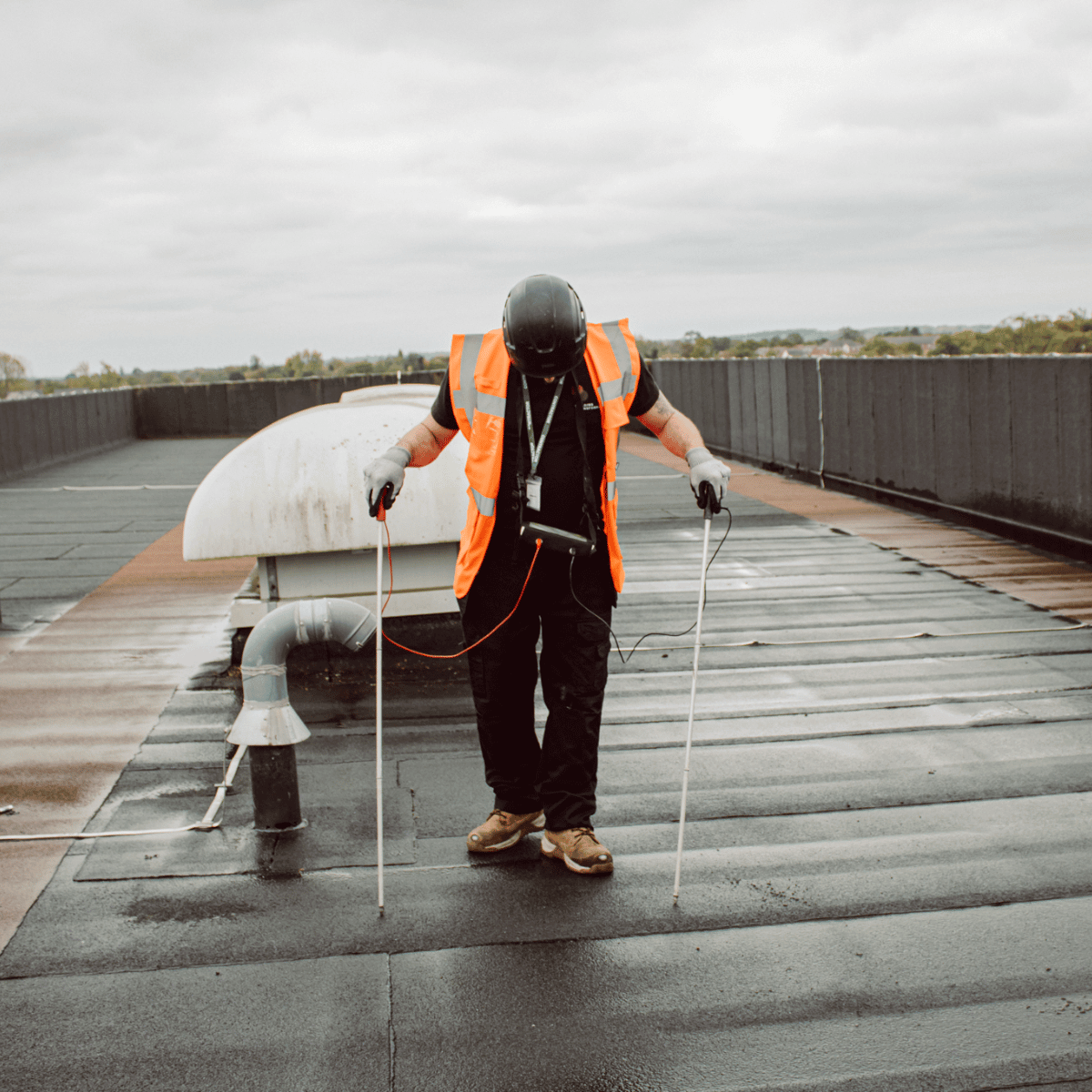
Before testing began, the team reviewed the internal area of water ingress and inspected the corresponding roof, gutter and perimeter details.
Safe access to the flat roof was gained through an internal rooflight, with existing edge protection providing protection around the working area. A PASMA-certified mobile access tower was used internally to reach the affected ceiling area and inspect the void above the corridor.
The roof leak investigation combined:
- Lap scribing and close visual inspection
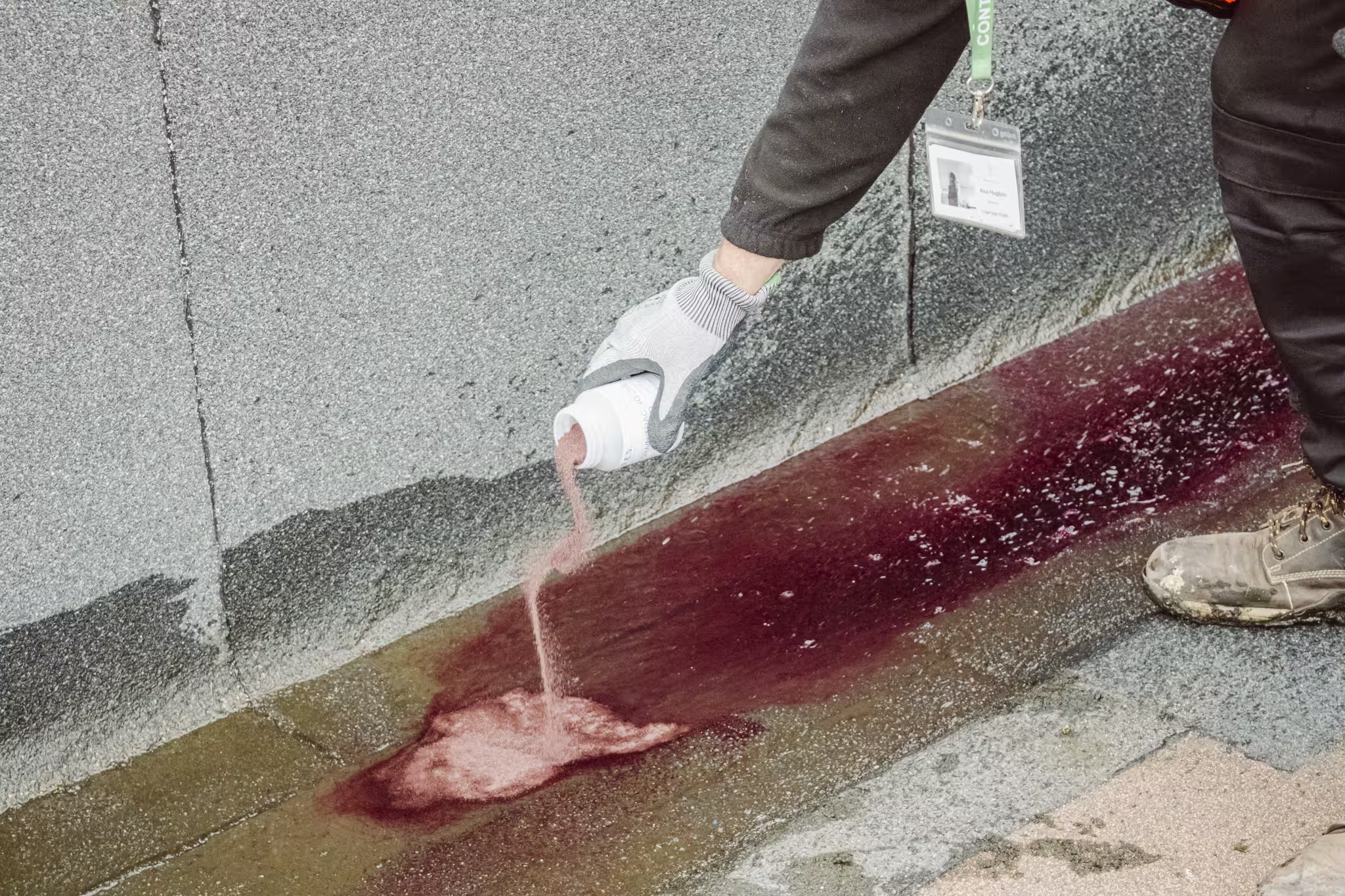
- Fluorescent dye testing
- Controlled flow and flood testing
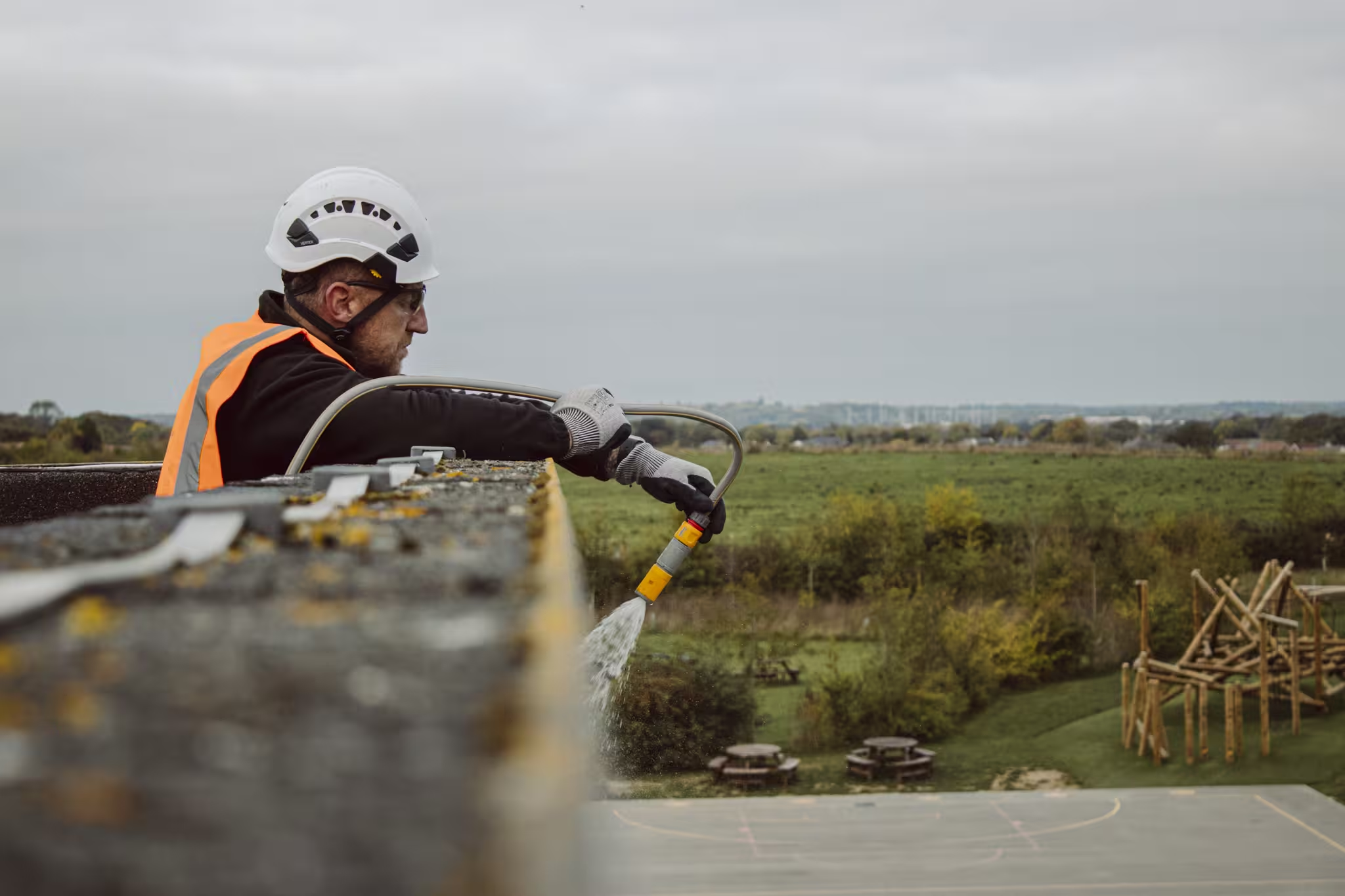
- Simulated rainfall testing
- Internal ceiling-void inspection
- Infrared thermal imaging
- Moisture-meter readings
- Photographic documentation
This staged approach allowed each suspected component to be assessed separately and prevented the gutter from being incorrectly identified as the source of the problem.
Gutter Dye Testing
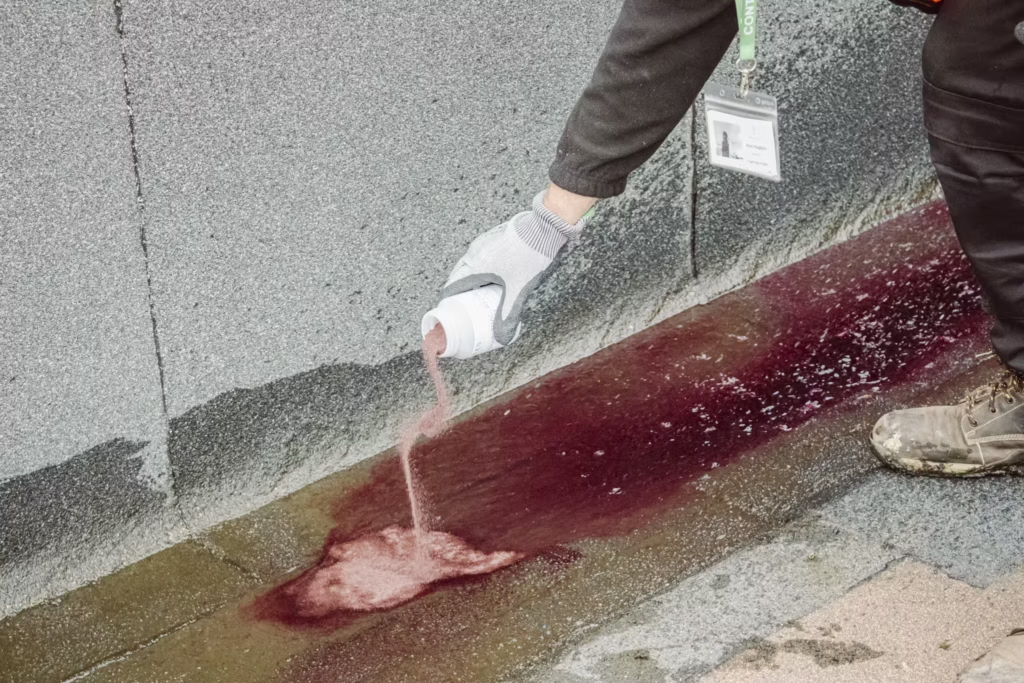
The gutter was initially considered a potential water ingress route.
Fluorescent red dye was introduced into the gutter, which was then tested for approximately 16 hours. The internal area was monitored throughout the test, but no dyed water or corresponding leakage was identified.
This demonstrated that the gutter was retaining water and was not responsible for the reported internal leak.
By eliminating the gutter as the cause, the investigation could focus on the interface between the felt roofing system, GRP trim and parapet detail.
Controlled Rain Simulation Testing
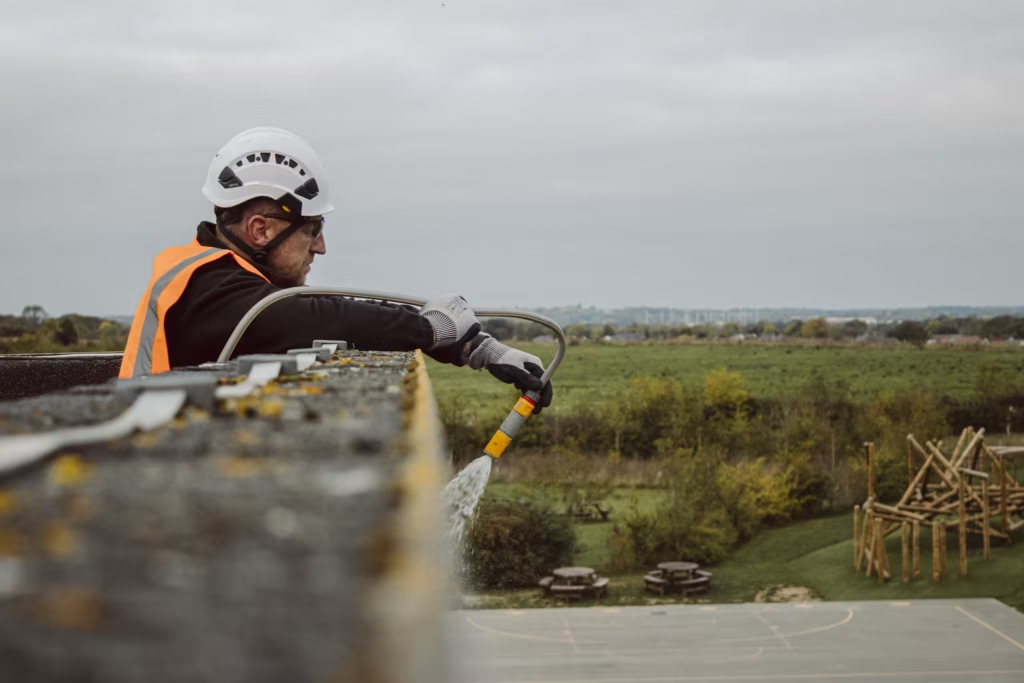
The team then carried out controlled rain simulation testing around the GRP trim at the corner of the roof upstand and parapet.
Water was applied to the detail for approximately five hours before the area was left overnight. When the team returned the following day, clear water was found dripping internally from the window-frame area.
Because the gutter had been tested using red dye, the appearance of clear water helped distinguish the two tests and confirmed that the leak was associated with the GRP trim rather than the gutter.
The controlled test successfully reproduced the reported water ingress and provided a direct link between the external roof-edge detail and the internal leak.
Tracing the Internal Water Path
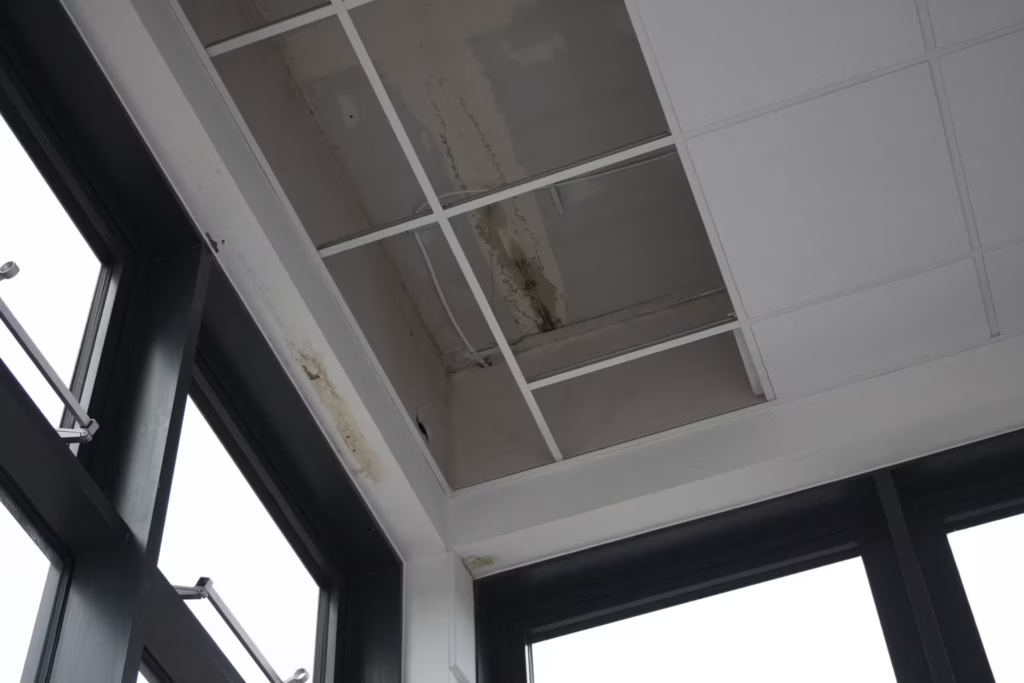
A close inspection within the ceiling void identified water dripping from a screw fixing projecting through the timber structure.
The investigation indicated that water entering through the defective GRP trim was tracking through the roof and wall construction before migrating through two layers of plasterboard. It then reached the window frame and discharged into the corridor below.
Approximately eight to nine hours elapsed between the external application of water and the leak becoming visible internally. This significant delay explained why the source had previously been difficult to identify and demonstrated the importance of allowing sufficient monitoring time during controlled water testing.
Infrared Imaging and Moisture Testing
Infrared imaging was used to identify cooling patterns associated with moisture in the plasterboard ceiling following the rain simulation test.
Moisture readings taken immediately above the window frame were also highly elevated, supporting the visual evidence and confirming the presence of moisture within the internal finishes.
Together, the rain simulation, ceiling-void inspection, infrared images and moisture readings provided multiple forms of evidence for the identified water path.
Investigation Findings
The investigation concluded that water ingress into the corridor was being caused by defects associated with the GRP trim at its interface with the felt roofing system.
The detail was not performing as intended, allowing rainwater to penetrate the roof edge, enter the structure and track internally before appearing around the window frame.
Key findings included:
- The gutter remained watertight throughout extended dye testing
- Controlled testing successfully reproduced the internal leak
- Clear water entered after testing the GRP trim and parapet detail
- Moisture was observed tracking through the internal ceiling void
- Infrared imaging identified moisture-related cooling in the plasterboard
- Moisture readings above the window frame were significantly elevated
- The delayed appearance of the leak confirmed a concealed internal migration route
Remedial Recommendations
As recent roofing work had reportedly been undertaken in the affected area, Building Transformation recommended that the client establish whether a workmanship or materials warranty remained in place.
The client was advised to contact the original roofing contractor and arrange for the defective GRP trim to be repaired or replaced. Any work should reinstate a fully weatherproof interface between the trim, felt roofing system and adjacent details while maintaining the requirements of the original roof warranty.
Further water testing should then be completed following the repairs to verify that the detail is watertight before internal finishes are reinstated.
Project Outcome
The investigation gave the client a clear, evidence-led diagnosis of the water ingress problem without resorting to widespread or speculative repairs.
Key outcomes included:
- Successful reproduction of the reported internal leak
- Elimination of the gutter as a potential source
- Identification of the defective GRP roof trim
- Confirmation of the concealed internal water path
- Thermal and moisture evidence supporting the diagnosis
- A detailed photographic record of the testing and findings
- Targeted recommendations for remedial work
- Reduced risk of unnecessary repairs to unaffected roof areas
- A clear route for progressing the issue through the original roofing warranty
By testing each potential source independently and monitoring both the external and internal areas, Building Transformation identified the defect and provided the client with the information required to arrange an appropriately targeted repair.

Our Expertise
Building Transformation provides specialist roof and building-envelope leak investigations for commercial properties, schools, hotels, public buildings and complex estates across the UK.
Our team combines controlled water testing, fluorescent dyes, thermal imaging, moisture mapping and detailed internal inspections to identify how water is entering and travelling through a building. This evidence-led approach helps clients move beyond assumptions, avoid unnecessary remedial work and address the underlying cause of water ingress.