Historic buildings require a careful balance of protection, practicality and technical skill. When restoration or maintenance work is needed at height, access becomes one of the most important decisions in the project. The method used must allow the work to be carried out safely, but it must also respect the building’s age, materials, condition and heritage value.
This is why rope access can play such an important role in historic property restoration. On listed buildings, churches, period commercial properties and architecturally sensitive structures, traditional access methods are not always the best fit. Scaffolding may be too disruptive, too invasive or too costly for the scale of the work. In some cases, it may also restrict access to delicate features or create unnecessary pressure on fragile areas of the building.
For surveyors, property managers, conservation teams and owners responsible for older buildings, rope access offers a practical and lower-impact way to inspect, clean, repair and maintain difficult-to-reach areas. However, as with any heritage-led work, success depends on planning, specialist judgement and a careful understanding of the structure itself.
Why access matters so much in historic property restoration
A historic or listed building is rarely simple to work on. Depending on its age, design and materials, this can make even routine maintenance decisions more sensitive than they would be on a modern structure.
Older buildings often include ornate stonework, parapets, towers, decorative facades, recessed windows, fragile roof areas, narrow access points, and complex architectural details that cannot be treated the same way as standard commercial construction. The building may also remain in use throughout the works, adding further constraints around disruption, safety and logistics.
In historic property restoration, access is not just a practical issue. It directly affects how safely and sensitively the building can be inspected and worked on. Poor access planning can lead to avoidable disruption, unnecessary physical impact or delays that increase cost and risk.
That is why specialist access planning is often essential from the outset. Read our case study on how we carried out a Roof Leak Investiagtion at Horse Guards Parade using Rope Access.

How is rope access used on historic and listed buildings?
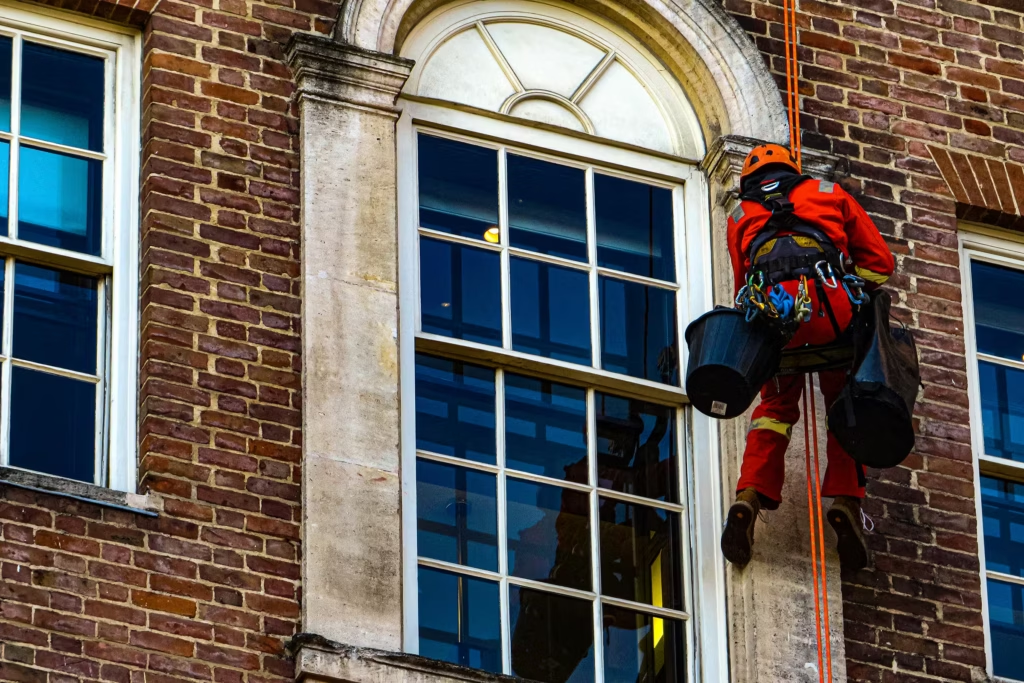
Rope access is used to reach high, restricted or awkward parts of historic buildings where conventional methods are difficult, disproportionate or unsuitable. It allows skilled specialists to work directly on targeted areas of the building without the need for extensive temporary structures.
On heritage and listed properties, rope access can support work such as:
- high-level inspections and condition surveys
- facade checks and defect investigations
- masonry inspections
- localised repair access
- roof-level inspections and maintenance
- cleaning of sensitive external surfaces
- access to towers, steeples and decorative elevations
- inspection of gutters, parapets and rainwater goods
- targeted pointing or minor external repairs
Because rope access is highly manoeuvrable, it can be especially useful on buildings with restricted surrounds, narrow streets, courtyards or limited ground-level access. It also allows teams to reach isolated problem areas without introducing more equipment and infrastructure than the job actually requires.
You can explore our wider specialist access services and related specialist access repairs where difficult access is a key part of project delivery.
When is rope access preferable to scaffolding on historic buildings?
Rope access isn’t automatically the right solution for every historic property restoration project. Some restoration works still require scaffolding, especially where large-scale repairs, prolonged hands-on works or heavy material movement are involved. However, there are many cases where rope access is the more appropriate choice.
It is often preferable when:
- The work is localised rather than full elevation
- The building facade is sensitive and should not be unnecessarily burdened
- Access needs to be achieved with minimal visual and physical disruption
- The surrounding space is restricted
- The building remains occupied or operational
- A survey, inspection or targeted repair is needed quickly
- Scaffolding would be disproportionate to the scope of the work
On historic buildings, one of the main advantages of rope access is that it can reduce the overall impact of the project. There is no need for a full scaffold build where only specific areas require close inspection or repair. That can mean less disruption to occupants, less interference with public space and less contact with the building fabric itself.
This is particularly relevant where conservation sensitivity and project proportionality matter just as much as access.
For a broader comparison, see rope access vs scaffolding.
What types of historic property restoration work can rope access support?
In the context of historic property restoration, rope access is most valuable where the task requires precise, targeted access rather than full encapsulation of the building.
Common examples include:
High-level inspection and survey work
Before repair or conservation work begins, high-level surveys are often needed to understand the condition of masonry, detailing, joints, flashings, gutters, decorative elements or roof interfaces. Rope access enables close visual inspection of these areas without requiring major setup.
Low-impact cleaning
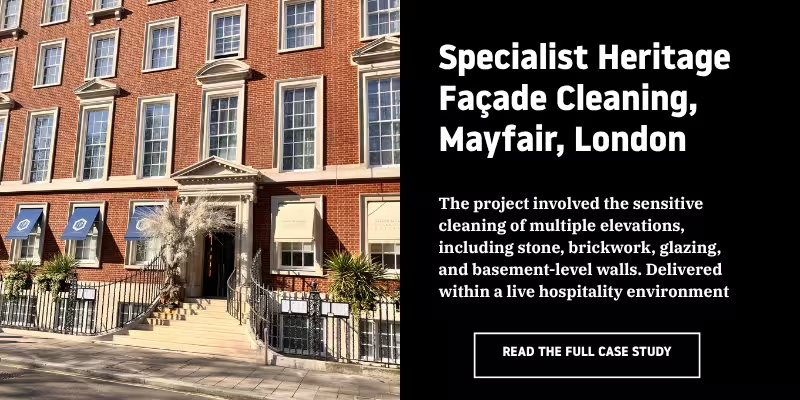
Historic facades often need cleaning to remove biological growth, staining or accumulated dirt, but this must be handled carefully. On listed and older buildings, methods such as conservation facade cleaning or low-pressure cleaning for listed buildings may be appropriate depending on the substrate and condition. Rope access can provide controlled access to these surfaces without introducing unnecessary structural interference.
Localised stone and masonry repairs
Some heritage buildings require targeted intervention rather than wholesale restoration. This may include minor pointing, sealant work, small masonry repairs, rainwater goods attention or high-level defect resolution in isolated locations.
Roof and parapet maintenance
Older buildings often develop issues at roof level, particularly around parapets, gutters, outlets and flashings. Rope access enables safe inspection and repair in areas where conventional roof access alone is not sufficient.
Difficult architectural features
Historic buildings frequently include steeples, towers, domes, gables, or decorative upper elevations that are difficult to access with standard methods. Rope access can offer a safer, more direct route to these features for inspection and maintenance.
Why heritage-sensitive working methods are essential
Historic and listed buildings can’t be approached like standard building maintenance projects. The building fabric could be fragile, and the detailing may be irreplaceable, so the consequences of poor handling would be long-lasting.
That is why rope access for historic property restoration heritage projects should be paired with careful working methods. The access system itself may be low impact, but the overall project still depends on the judgment and behaviour of the team carrying it out.
Heritage-sensitive delivery typically involves:
- understanding the age, condition and significance of the building
- avoiding unnecessary contact with delicate surfaces
- protecting vulnerable details during access and work activity
- selecting methods appropriate to the material and defect
- minimising disruption to occupants, visitors and public areas
- coordinating access with the specific needs of the building and site
This is particularly important on listed buildings, where repair and maintenance decisions often sit within a wider framework of approvals, conservation expectations and long-term stewardship.
The aim is not simply to complete the work, but to do so in a way that preserves the building’s integrity and supports its future life.
What planning is needed before rope access begins?
On historic buildings, rope access should never be treated as a quick or generic answer. The effectiveness of the method depends on how carefully it is planned.
Before work begins, the team needs to understand both the physical structure of the building and the nature of the required task. Access planning may involve reviewing building drawings, understanding roof access arrangements, identifying suitable rigging locations, assessing fragile or sensitive areas, and considering how the building is used day to day.
Planning usually includes:
- assessment of the building’s height, form and facade details
- review of access restrictions around the site
- consideration of public safety and exclusion zones
- identification of suitable anchor or rigging points
- sequencing of inspection, cleaning or repair activity
- protection measures for vulnerable surfaces or features
- coordination with occupants, managers or conservation stakeholders
This planning stage is particularly important for buildings in dense urban areas, sensitive public settings or sites with active tenants or visitors.
How does rope access help reduce disruption?
One of the most practical benefits of rope access on historic buildings is its ability to reduce disruption.
Scaffolding can be necessary on some projects, but it often introduces significant visual, physical and operational impact. On listed or prominent buildings, that may not always be desirable. It can affect how the building is used, obstruct public routes, alter the appearance of the facade and create longer lead times before work even begins.
Rope access is often more agile. It allows teams to mobilise faster, access targeted areas directly and remove equipment quickly once the work is complete. That can make a major difference where:
- The building must remain open to the public
- Tenant operations need to continue
- External access is limited
- The building sits in a constrained city-centre location, such as London
- Minimal visual intrusion is preferred
For many project teams, this makes rope access a commercially sensible option as well as a technically appropriate one.
What should clients look for in rope access listed building contractors?
Not every contractor offering rope access services will be suitable for heritage-led work. Listed building contractors in London require a more considered approach, and clients should look for evidence that the contractor understands both access challenges and building sensitivity.
That means looking for a team with experience in:
- difficult-access facades and high-level inspections
- older or listed building environments
- low-impact access planning
- repair and maintenance on sensitive external fabric
- working safely in live, occupied settings
- coordinating access with wider restoration aims
The key distinction isn’t just whether a contractor can reach the area. It is whether they can do so in a way that supports the building’s long-term care and the needs of the wider project.
You can also read more about rope access for heritage building conservation for related specialist context.
Rope access as part of practical historic property restoration
Historic buildings need thoughtful maintenance and restoration if they are to remain safe, usable and architecturally valuable. In many cases, the challenge is not only what work needs to be done, but how to reach the relevant parts of the building without unnecessary impact.
That is where rope access can offer real value in historic property restoration. It provides a safe, adaptable and lower-impact way to carry out high-level inspection, cleaning and targeted repair on listed and heritage buildings where scaffolding may be disruptive, impractical or excessive.
Used properly, rope access supports a careful balance: protecting the building, enabling essential work and reducing disruption to the site around it. For owners, managers and surveyors responsible for older buildings, it is often one of the most effective ways to approach difficult access challenges with sensitivity and control.