Rope access services are increasingly used across commercial building maintenance as a safe, efficient alternative to traditional access methods such as scaffolding or MEWPs.
For property managers, surveyors and asset owners, the key consideration is not just how rope access works — but where it fits within façade, roof and inspection strategies, and how it can be applied safely in real-world scenarios.
This guide explains what specialist rope access services involve, where they are used, and how they support rope access inspection and maintenance within a building maintenance context.
What Are Rope Access Services in Building Maintenance?
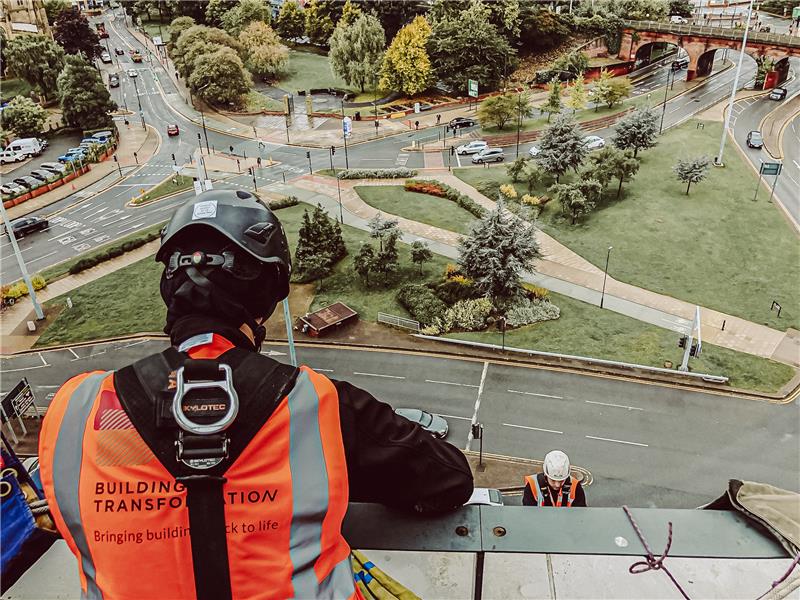
Rope access services are a method of working at height where technicians use ropes and specialist equipment to safely access façades, roofs and difficult-to-reach areas of a building.
In building maintenance, they are commonly used for rope access inspections and surveys, cleaning, repairs, and ongoing rope access maintenance, where traditional access methods are impractical or disruptive.
Rather than installing large-scale access systems such as scaffolding, rope access allows targeted work to be carried out exactly where it is needed.
What Are the Benefits of Rope Access Services for Maintenance?
Rope access is one of the most efficient ways to inspect, repair and maintain façades and roofs because it enables close-up access to areas where defects typically begin.
Most building envelope issues — such as failing sealants, loose fixings or early corrosion — develop gradually and are often missed without regular inspection. Rope access allows technicians to work directly on the building, identifying these issues early and carrying out targeted repairs before they escalate into costly damage or safety risks.
It also supports planned preventative maintenance (PPM), helping building managers move from reactive repairs to a structured approach based on condition surveys, defect mapping, and prioritised works.
Because industrial rope access services require minimal setup and disruption, they allow inspections, cleaning and minor repairs to be combined in a single programme — improving efficiency while reducing access costs and impact on building operations.
However, this efficiency is underpinned by detailed planning, not simplicity. All works must be carried out in line with strict safety procedures, including project-specific risk assessments, method statements and rescue planning, with rigging systems designed and approved before any work begins. You can read more in our guide to rope access safety, strategy and the truth about working at height.
At Building Transformation, all rope access works are delivered by IRATA-certified technicians and in line with the IRATA International Code of Practice. Combined with NFRC Gold Award recognition for health, safety and environmental standards, this supports a joined-up approach to roofing, access and building envelope maintenance delivered to consistently high safety and quality standards.
Learn more about how vital specialist rope access is for building maintenance
When Is Rope Access the Right Solution?
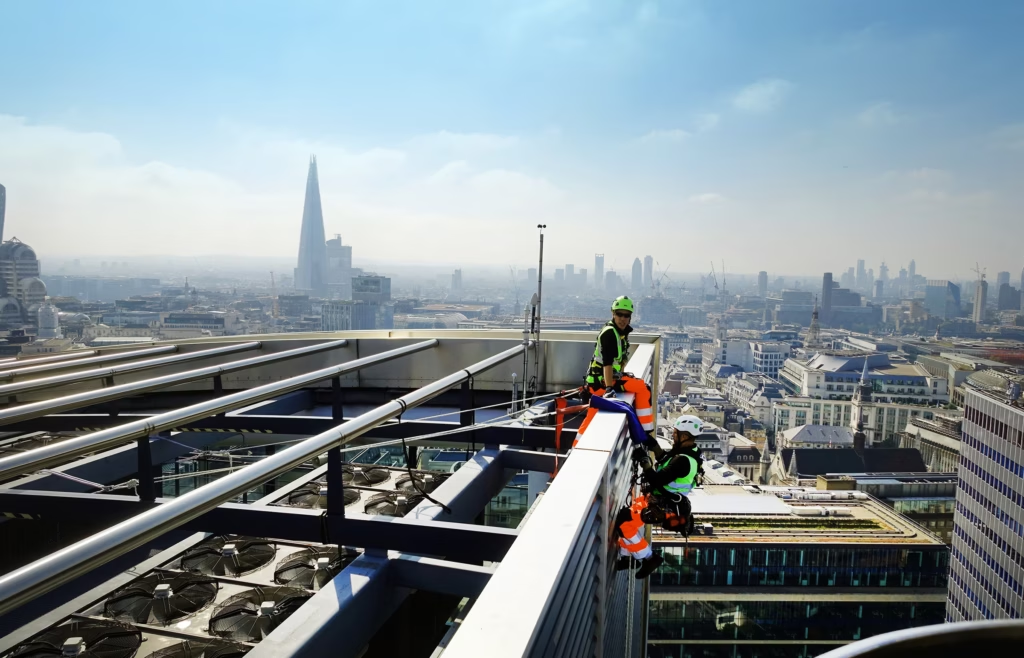
Rope access for building façade maintenance is most effective when:
- Access is constrained or obstructed
- Work is localised rather than full elevation
- Speed and minimal disruption are important
- The building is live and operational
- Traditional access methods are impractical or costly
Rope Access vs Scaffolding and MEWPs
Rope access is one of several access methods used in building maintenance, and the right approach depends on the scope of work.
- Rope access services are typically suited to short-duration, targeted works where flexibility and minimal disruption are important
- Scaffolding is more appropriate for long-term, large-scale or multi-trade projects requiring a stable working platform
- MEWPs (Mobile Elevating Work Platforms) can be effective for lower-level or easily accessible areas, but may be limited by reach and site constraints
In practice, access methods are often assessed together to determine the safest and most efficient solution for the building.
For buildings in dense urban environments, such as those requiring rope access services London-wide, this decision is often influenced by access restrictions, surrounding infrastructure and the need to minimise disruption.
It’s useful to know when industrial rope access isn’t the right solution. Some projects still require scaffolding or alternative systems depending on scope and risk.
Where Is Rope Access and Abseiling Used on Buildings?
Façade Inspection, Cleaning and Maintenance
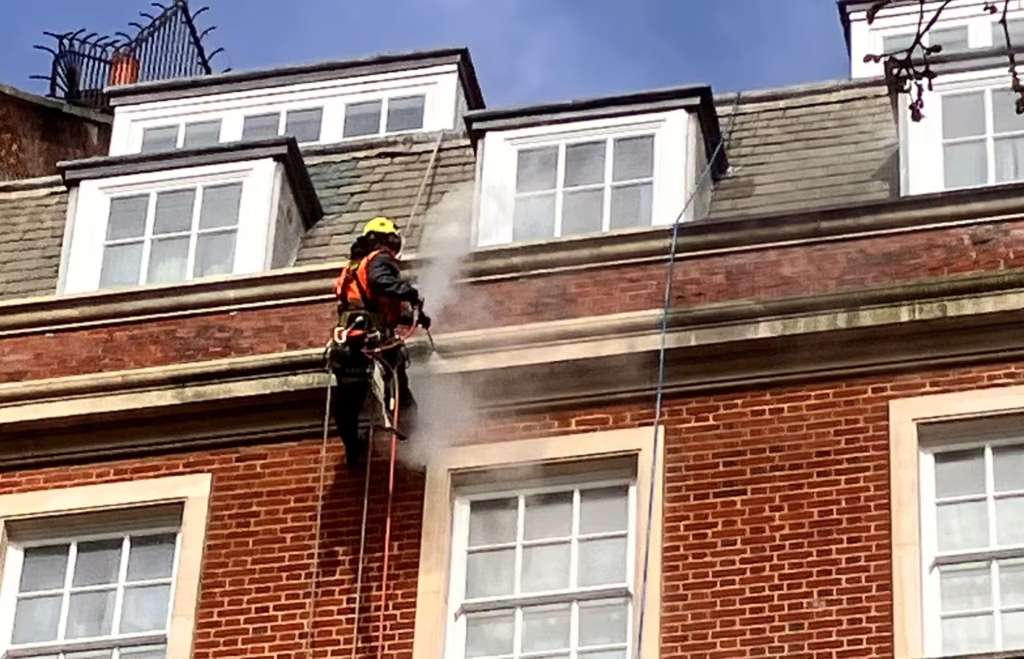
Rope access is commonly used across building façades, particularly where access is restricted or the building remains occupied. If your building needs facade cleaning and refurbishment, you need rope access.
Because rope access needs very little setup (providing suitable anchor points are available), it can be a practical option for short, targeted façade works on occupied buildings. It often helps reduce disruption around entrances and public areas, while still allowing close-up inspection, cleaning and localised repairs.
Roof-Level Access and Maintenance
Roof areas often present access challenges, particularly around edges, plant zones and drainage systems.
Rope access can support:
- Roof inspections and condition surveys
- Gutter and drainage maintenance
- Investigation of leaks and water ingress
- Access to difficult or restricted roof areas
In many cases, rope access is used alongside roofing works, forming part of a wider maintenance approach.
Inspections, Condition Surveys and Investigations
Access is often the limiting factor in building diagnostics. Rope access enables closer inspection of areas that would otherwise be difficult to assess.
This includes:
- High-level condition surveys
- Structural inspections
- Leak detection and building pathology investigations
- Lift shaft masonry surveys
- Bridge condition surveys
Cleaning and Restoration
Rope access is also used for specialist cleaning and restoration, particularly where sensitive materials or controlled methods are required.
This can include:
In these cases, access and method must be carefully aligned to protect the building fabric.
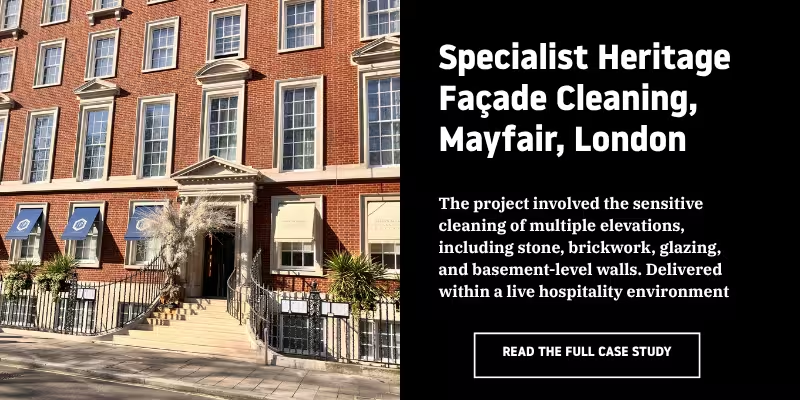
Our heritage façade cleaning project at the London Marriott Grosvenor Square is a good example of where rope access was the most practical solution, allowing safe access and sensitive cleaning in a live hotel setting without the disruption of scaffolding.
How Rope Access Work Is Planned
Site Assessment and Access Strategy
Every project begins with understanding the building, the defect and the constraints.
This typically involves:
- Site visits and initial inspections
- Identifying safe access points
- Assessing risks and limitations, and creating a unique set of RAMS
- Developing a bespoke access methodology and rescue plan
Level 3 IRATA-trained supervisors are always involved early in this process, working alongside the Safety and Compliance Lead to develop the plans.
Access Planning and Innovation
Buildings rarely present straightforward access scenarios. Complex façades, restricted roofs or live environments require tailored solutions.
Access planning may include:
- Designing bespoke rope systems
- Combining rope access with other methods
- Adapting approaches based on the building condition
This is particularly relevant for older buildings, complex structures or sites with limited access.
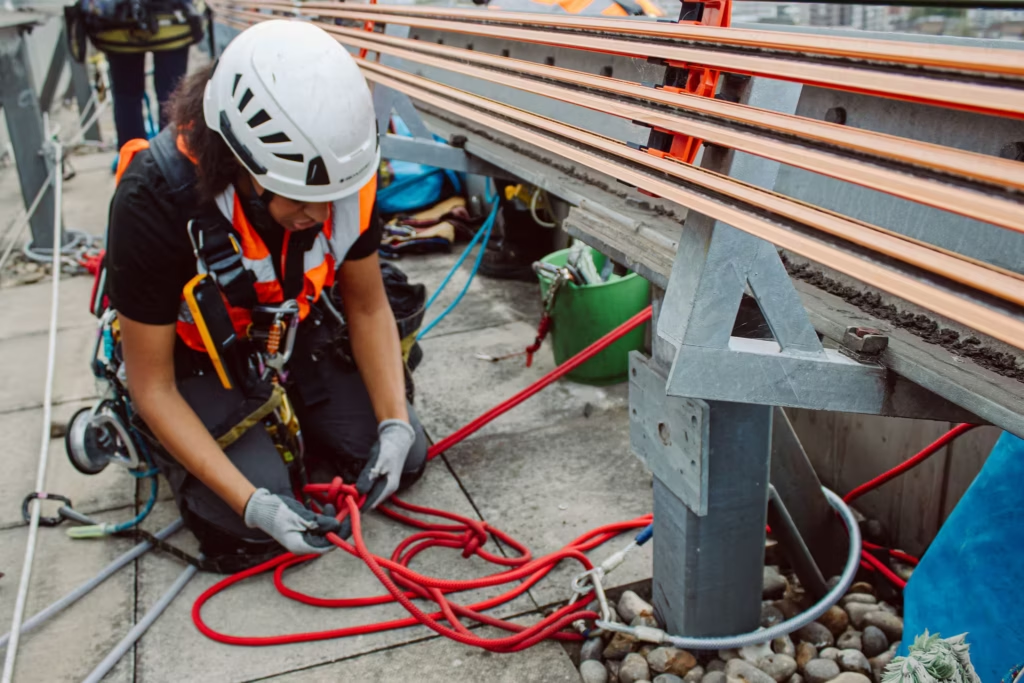
How Rope Access Projects Are Delivered
A typical rope access project follows a structured process to ensure safe and effective delivery:
- Initial survey and assessment – understanding the building, identifying defects and access constraints
- Access strategy development – selecting the most appropriate access method (or methods) based on risk, scope and building type
- Risk assessment and planning – preparing detailed method statements and rescue plans
- On-site delivery – carrying out inspection, cleaning or repair works using rope access systems
- Reporting and recommendations – documenting findings, identifying defects and advising on next steps
This structured approach ensures that access, inspection and maintenance are aligned from the outset.
Safety and Compliance in Rope Access
Safety is a central part of rope access services, particularly in commercial environments. It’s highly important to understand why safety and quality matter in building façade surveys when calculating costs.
Key elements include:
- Detailed risk and method statements
- Pre-planned (and practised) rescue procedures
- Compliance with industry standards (e.g. IRATA)
A Level 3 IRATA Specialist Access Manager always oversees:
- Preparation and review of risk and method statements
- Rescue planning
- Ongoing compliance and safety management
They also provide Authorised Person support, working alongside the client’s representative to ensure that all parties are aligned on working at height safety requirements and delivery.
How Rope Access Fits Into a Maintenance Strategy
Rope access is not just a way of reaching difficult areas, but is often a key part of safe inspection, diagnosis and maintenance planning.
In many cases, building defects cannot be properly assessed without a suitable access strategy. Rope access teams therefore help enable close-up inspection of façades, roofs and structural elements, supported by risk assessments and access planning from the outset.
Rope access is often used as:
- An initial investigation method to identify defects and their causes
- A safe way to carry out detailed façade and roof inspections
- A solution for targeted repairs and maintenance in difficult-to-access areas
- Part of planned preventative maintenance programmes
Because rope access technicians work directly on the building, they can also provide valuable real-time insight into defects, constraints and risks that may not be visible from ground level.
In this way, rope access services support both reactive investigations and longer-term maintenance strategies. If you need help planning rope access for building maintenance, get in touch with our team and speak to an expert.

Related Rope Access Services and Guides
Explore specific applications and approaches in more detail:
- Specialist Access Services
- Industrial Rope Access
- Specialist Access Repairs
- Drone Roof Surveys
- Lift Shaft Masonry Surveys
- Bridge Condition Surveys
You can also read more about access methods and planning:
- Rope Access vs Scaffolding
- When Rope Access Isn’t the Right Solution
- Choosing a Specialist Rope Access Company
Exploring the Right Access Approach for Your Building?
If you are planning a façade inspection, investigating a roof-level issue or reviewing safe access for maintenance works, you can explore Building Transformation’s specialist access services to understand the most suitable approach.
For project-specific guidance, you can also speak to a technical specialist to assess access options, risks and next steps based on your building.
Examples of Our Rope Access Services in London
We regularly deliver rope access services across London, supporting commercial property owners, asset managers and surveyors with inspection, maintenance and repair works on complex buildings.
Typical projects include:
- Heritage façade cleaning in Mayfair, such as our work at the London Marriott Grosvenor Square, where we used rope access to clean and protect a traditional stone façade without disrupting the surrounding area
- Façade condition surveys and repairs at Hilton Olympia, where we combined rope access with digital defect mapping to identify issues and carry out targeted repairs
- Façade refurbishment at Merchant Square, supporting large-scale inspection and repair works across a high-rise, mixed-use development
- Specialist façade works at Moor House, London, including glazing repairs, leak detection and replacement of façade components at height
In London, buildings are often tall, occupied and located in high-traffic areas. Rope access allows us to inspect, repair and maintain these buildings safely, while minimising disruption to tenants, pedestrians and day-to-day operations.
Frequently Asked Questions About Rope Access Services
Is rope access safe for building maintenance?
Yes — when carried out by IRATA International-trained professionals, rope access is a highly controlled and regulated method of working at height. It involves detailed risk assessments, certified equipment, and pre-planned rescue procedures, in line with IRATA and HSE standards.
How often should façades be inspected?
Façade inspections are usually carried out as part of a planned preventative maintenance programme, often on an annual or cyclical basis depending on the building type, materials and exposure to environmental conditions.
Is rope access cheaper than scaffolding?
For short-term or localised works, rope access is often more cost-effective because it requires less setup and equipment. However, for long-duration or large-scale projects, scaffolding may become more economical over time.
Can rope access be used on all buildings?
Rope access can be used on many buildings, but it depends on factors such as anchor points, building design, weather conditions and the type of work required. A site assessment is typically needed to confirm suitability.