Over time, any commercial or industrial building is exposed to constant wear, weather, loading, movement and operational demands. This, of course, starts to impact the condition of its structural steelwork, façades, roofs, masonry, concrete, glazing systems or other key building elements.
By employing a structural inspection, you can help identify defects, deterioration and maintenance risks before they develop into more serious and expensive problems. For facilities managers, property managers, asset managers, building surveyors and estates teams, inspections provide the evidence needed to plan repairs, manage risk and protect long-term asset performance.
In many cases, a structural inspection is the first stage in a wider inspection-to-repair process. It helps establish what is happening, why it is happening, how urgent it is, and what should be done next.
What is a structural inspection?
A structural inspection is an assessment of a building’s key structural and building-envelope elements to understand their condition, performance, and any signs of deterioration.
For commercial and industrial buildings, this may include inspecting structural steelwork, concrete, masonry, façades, roofs, gutters, glazing systems, fixings, joints, coatings and difficult-access areas.
The aim is to identify visible or developing defects, assess the level of risk, and provide clear recommendations for maintenance, monitoring or repair.
A structural inspection may include:
- A review of existing drawings, reports or maintenance history
- Visual inspection of key structural and external building elements
- Assessment of cracking, movement, corrosion, staining or water ingress
- Inspection of steelwork, coatings, fixings, joints and connections
- High-level or difficult-access inspections using specialist access methods
- Photographic evidence of defects and deterioration
- Prioritised recommendations for repair, monitoring or further investigation
Output usually includes a thorough report that allows the building owner, facilities team or project team to make informed maintenance and repair decisions.
Why structural inspections matter
A minor leak can lead to corrosion. Failed sealant can allow water into a façade system. Blocked drainage can create standing water on a roof. Damaged coatings can expose steelwork. Small cracks can indicate movement, stress or deterioration.
If these issues are not identified early, they can become more complex, disruptive and costly to repair.
Structural inspections matter because they give building owners and managers a clearer understanding of asset condition. It helps move maintenance away from reactive emergency repairs and towards planned, evidence-led decision-making.
This is particularly important for industrial and commercial buildings where downtime, access restrictions, safety concerns and operational disruption can all have a significant impact.
What defects can structural inspections identify?
Structural inspections can identify a wide range of defects across the building structure and external envelope.
Common issues include:
- Cracking in masonry, concrete or render
- Movement, settlement or distortion
- Corrosion to structural steelwork
- Failed or deteriorating protective coatings
- Spalling concrete
- Exposed or corroding reinforcement
- Water ingress through roofs, façades or joints
- Failed sealants, gaskets or curtain walling components
- Loose, missing or defective fixings
- Damaged cladding or façade panels
- Blocked or defective gutters and drainage systems
- Roof sagging, ponding or localised deterioration
- Impact damage
- Fire, chemical or weather-related damage
- Unsafe or poorly executed previous alterations
Not every defect presents an immediate structural risk. But even lower-risk issues can affect long-term building performance if they are not consistently monitored over time or repaired before they worsen.
Structural inspections for industrial buildings
Industrial buildings often face more demanding conditions than standard commercial properties.
They may be exposed to vibration, heavy loading, plant equipment, chemicals, moisture, heat, vehicle impact, roof-level services and operational wear. Many also include large-span steel frames, cladding systems, high-level gutters, gantries, silos, tanks, loading bays or difficult-access elevations.
Structural inspections are necessary for industrial sites because they can help identify:
- Corrosion to steel frames, columns, beams and connections
- Coating failure on exposed steelwork
- Movement or distortion caused by loading or impact
- Roof defects caused by plant, drainage issues or weather exposure
- Water ingress affecting internal operations or structural elements
- Deterioration around loading bays, service yards or high-traffic areas
- Defects in gutters, downpipes, parapets and roof edges
- Areas where access restrictions have prevented routine maintenance
Industrial inspections are often closely linked to planned preventative maintenance. By identifying defects early, site teams can plan repairs around operational requirements rather than waiting for failures to cause disruption.
Structural inspections for commercial buildings
Commercial buildings also require regular inspection, particularly where they are occupied, publicly accessible or part of a wider estate.
Offices, retail buildings, hotels, healthcare premises, education buildings and mixed-use properties all rely on the performance of their façades, roofs, glazing systems, drainage and structural components.
A structural inspection can help identify defects that may affect safety, appearance, weather performance or long-term value.
For commercial buildings, common inspection areas include:
- Façade cracking, staining or movement
- Curtain walling defects
- Failed gaskets, mullions or sealants
- Roof leaks or drainage failures
- Loose façade elements or fixings
- Stonework or masonry deterioration
- Water ingress around windows, glazing or roof interfaces
- Deterioration caused by age, weather exposure or previous repairs
For occupied commercial properties, early inspection is particularly valuable because repairs can often be planned to reduce disruption to tenants, staff, visitors and the public.
Structural steel inspection
Structural steel inspection is an important part of many industrial and commercial building assessments.
Steelwork can deteriorate when protective coatings fail, when moisture is present, or when the building is exposed to aggressive environments. In industrial settings, corrosion may be accelerated by chemicals, humidity, coastal exposure, process activity or poor drainage.
A structural steel inspection may assess:
- Visible corrosion
- Coating condition
- Section loss
- Steel deformation or distortion
- Bolted and welded connections
- Fixings, brackets and support points
- Fire protection or intumescent coatings
- Areas affected by water ingress or trapped moisture
- Previous repairs or alterations
The inspection may identify whether steelwork requires cleaning, coating removal, repainting, corrosion treatment, strengthening, repair or further investigation.
Where required, findings can also support a more detailed repair specification for industrial coating removal, surface preparation and protective coating works.
Difficult-access structural inspections
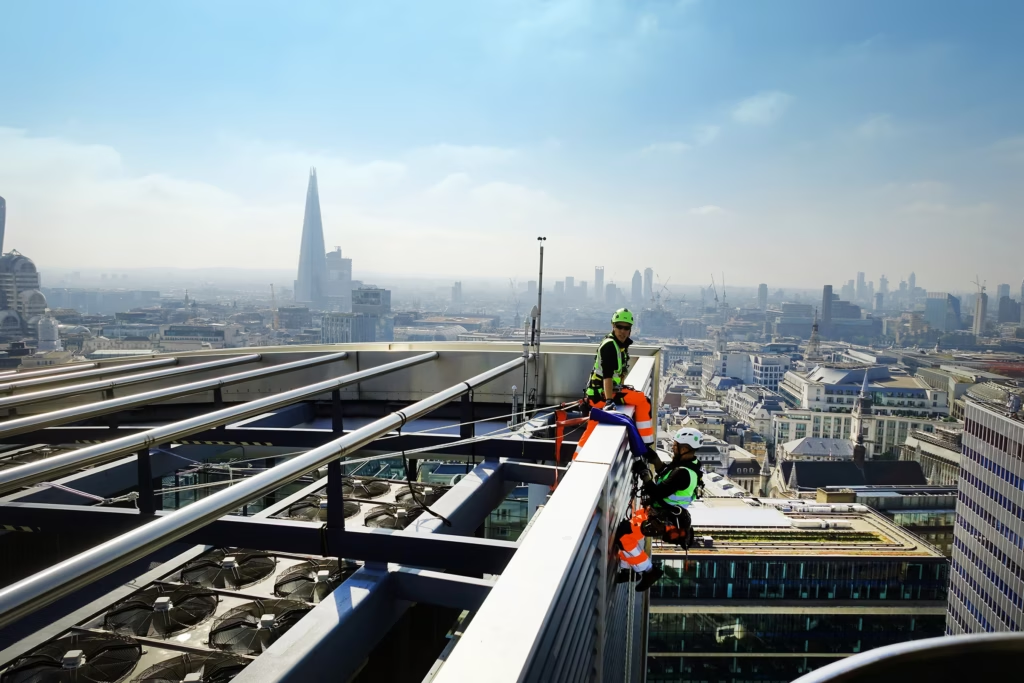
A lot of defects tend to occur in areas that are difficult to inspect from ground level. And locations like high-level façades, roofs, gutters, atrium glazing, roof edges, parapets, steelwork, cladding and external envelope interfaces can all be difficult to access safely without the right method.
Specialist access is often required to inspect these areas properly.
Difficult-access inspection methods may include:
- Rope access
- MEWPs
- Scaffolding
- Roof access systems
- High-level cameras
- Drone surveys
- Localised opening-up works
Rope access can be particularly useful where defects are localised, high-level or difficult to reach using traditional methods because it allows trained technicians to get close to the building fabric, inspect specific areas in detail and gather photographic evidence without always requiring large-scale scaffold installation.
This can be valuable for façade inspections, curtain walling assessments, roof edge inspections, gutter checks, glazing investigations and difficult-access maintenance surveys.
Building Transformation provides specialist access services for buildings and structures where standard access methods may be disruptive, restricted or impractical.
From inspection to repair planning
A structural inspection isn’t just about identifying defects, it’s about helping the client understand what needs to happen next. For this reason, a good inspection report should provide clear, practical information that supports maintenance and repair planning.
This may include:
- The location and type of defect
- Photographic evidence
- Likely cause of the issue
- Severity or risk rating
- Recommended remedial action
- Urgency of repair
- Areas requiring monitoring
- Areas requiring further investigation
- Suggested access method for repair works
This will help property and facilities teams prioritise work based on risk, budget and operational need.
For example, an inspection may identify that a roof leak is not simply a roofing issue, but is linked to failed façade sealant, defective guttering or deteriorated curtain walling components. Understanding the root cause helps ensure the repair addresses the actual problem rather than just the visible symptom.
This inspection-to-repair approach can reduce repeat defects, avoid unnecessary work and support better long-term building performance.
How inspections support planned maintenance
Structural inspections are a useful tool for planned maintenance because they give building owners evidence rather than assumptions.
Instead of reacting to leaks, corrosion, cracking or failures as they appear, inspection findings can be used to create a prioritised maintenance plan.
This may include:
- Immediate safety-critical repairs
- Short-term remedial works
- Medium-term maintenance planning
- Long-term capital expenditure planning
- Monitoring of lower-risk defects
- Budget forecasting
- Access planning
- Contractor procurement
- Compliance records
For estates teams and asset managers, this creates a clearer view of building condition across one property or a wider portfolio.
It also helps prevent small defects from becoming large repair projects.
When should a building be inspected?
A structural inspection may be required for several reasons.
Common triggers include:
- Visible cracks, movement or deformation
- Water ingress or repeated leaks
- Corrosion to steelwork or fixings
- Deterioration to façades, roofs or cladding
- Storm, fire, flood or impact damage
- Concerns about structural integrity
- Planned refurbishment or change of use
- Installation of new plant, machinery or loading
- Pre-acquisition or lease-related due diligence
- Insurance requirements
- Planned preventative maintenance
- Ageing buildings or assets with limited maintenance history
Commercial buildings may be inspected as part of routine planned maintenance, while industrial buildings may require more frequent inspections depending on use, exposure, loading and risk profile.
Where a defect is visible or worsening, it is usually better to inspect early rather than wait for the issue to escalate.
The benefits of early defect identification
Early defect identification can significantly reduce long-term repair costs and disruption.
When issues are identified early, repairs can often be smaller, more targeted and easier to plan. This is especially important on occupied commercial buildings and operational industrial sites, where emergency works can be expensive and disruptive.
The benefits of early inspection include:
- Reduced repair costs
- Lower risk of operational disruption
- Better maintenance planning
- Improved safety management
- Longer asset lifespan
- Clearer budget forecasting
- Reduced likelihood of emergency repairs
- Better evidence for insurance, compliance and stakeholder reporting
Early inspection also allows building owners to make better decisions about whether to repair, monitor, replace or investigate further.
Structural inspections and Building Transformation’s inspection-to-repair approach
At Building Transformation, inspections are often the first stage in a wider maintenance and repair process.
Our work covers difficult-access buildings, façades, roofs, curtain walling, glazing, industrial coatings and specialist access repairs. This means inspection findings can be connected directly to practical remedial works, helping clients move from diagnosis to action.
Relevant services include:
- Specialist access
- Façade maintenance
- Roof services
- Curtain walling gasket, mullion and sealant maintenance
- Façade and curtain walling maintenance
- Atrium and glazing repairs
- Façade cleaning
- Specialist access repairs
- Industrial coating removal
- Industrial coatings
When you combine inspection, access planning and repair delivery, you can reduce delays between identifying a problem and resolving it.

FAQs
What is a structural inspection?
A structural inspection is an assessment of a building’s structural and external elements to identify defects, deterioration, movement, corrosion, water ingress or other risks that may affect condition, safety or long-term performance.
What does a structural inspection identify?
A structural inspection can identify cracks, movement, corrosion, coating failure, concrete deterioration, water ingress, roof defects, failed joints, damaged fixings, façade issues, structural steel defects and areas requiring repair or further investigation.
Who needs a structural inspection?
Structural inspections are commonly required by facilities managers, property managers, asset managers, building surveyors, commercial property owners, estates teams and main contractors responsible for maintaining commercial or industrial buildings.
When is a structural inspection required?
A structural inspection may be required when visible defects appear, after storm or impact damage, before refurbishment, during planned maintenance, as part of due diligence, or where there are concerns about water ingress, corrosion, movement or structural integrity.
How often should industrial buildings be inspected?
The inspection frequency depends on the building type, age, use, exposure and risk profile. Industrial buildings exposed to heavy use, moisture, chemicals, vibration or high loading may require more frequent inspections than standard commercial buildings.
Can difficult-access areas be inspected without scaffolding?
Yes. Difficult-access areas can often be inspected using rope access, MEWPs, drones, roof access systems or other specialist access methods. The right approach depends on the building, the area being inspected and the level of detail required.
How do inspection findings support repair programmes?
Inspection findings help define the scope of work, prioritise repairs, identify root causes, plan access, support budgets and provide evidence for maintenance decisions. This allows repair programmes to be planned more effectively and delivered with less uncertainty.
Need a structural inspection for a commercial or industrial building?
If you are concerned about building defects, water ingress, corrosion, façade deterioration, roof issues or difficult-access areas, Building Transformation can help.
Our team can inspect high-level and complex building areas, identify defects, advise on access requirements and support the next stage of maintenance or repair planning.
Speak to our expert team about structural inspection, specialist access and building envelope maintenance for your commercial or industrial asset.
