Understanding the true condition of a building façade requires more than a visual inspection. Detailed condition surveys, digital defect mapping, and specialist building pathology testing provide building owners and facilities managers with the evidence needed to identify defects early, understand material deterioration, and plan effective maintenance strategies.
At Building Transformation, our condition surveys combine specialist access techniques, digital reporting systems, and laboratory analysis to deliver accurate, data-driven insight into the performance of façades, roofs, glazing systems, and structural elements.
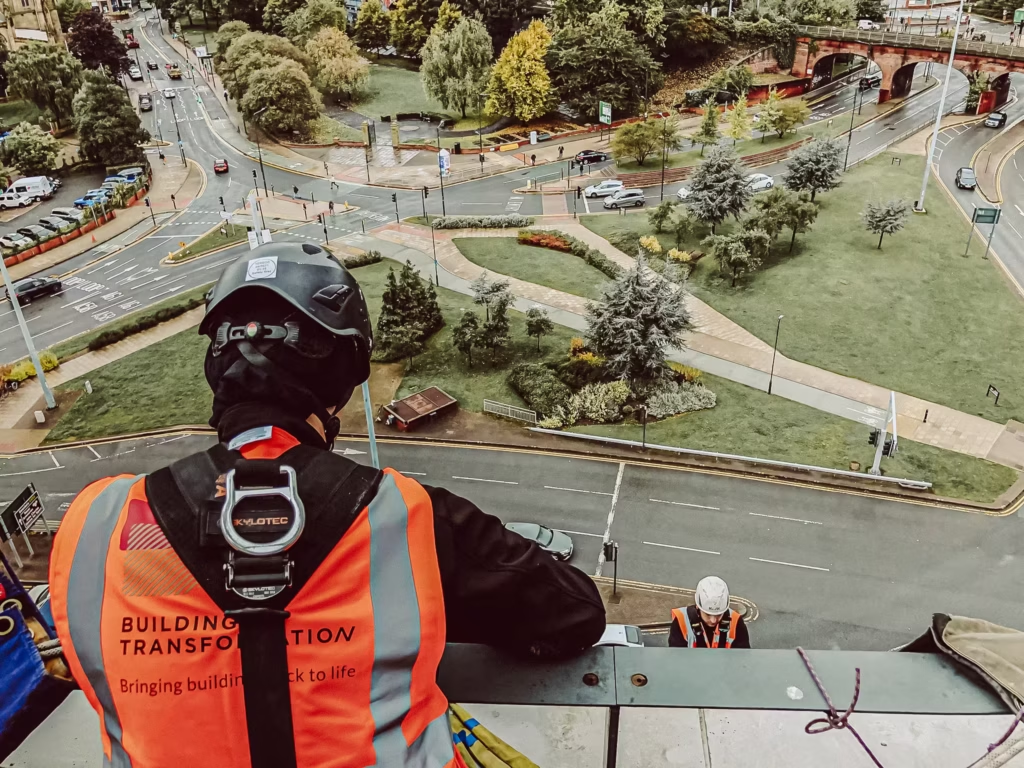
Detailed Façade, Roof, Glazing, And Atrium Condition Surveys
We deliver detailed condition surveys using a combination of rope access, cradles, and MEWPs to safely reach all areas of the building envelope.
Our surveys capture a wide range of façade performance indicators, including:
- Cracking, displacement, or deterioration of façade materials
- Failing sealants, loose gaskets, and degraded curtain wall components
- Glazing defects, blown units, and movement-related damage
- Roof waterproofing issues and drainage failures
- Structural and weathering defects within atrium glazing systems
All survey information is recorded digitally using integrated survey platforms, such as R Drive, creating a secure and accessible database of building condition data.
This digital approach ensures accurate reporting, traceability, and clear communication between surveyors, building managers, and asset owners.
Digital Defect Mapping & Real-Time Analysis
Defects identified during surveys are translated into digital defect maps, providing a precise visual representation of issues across the building façade.
Using specialist inspection software, we deliver:
- Accurate defect location mapping across façades, roofs, glazing, and structural elements
- Real-time capture of survey data during inspections
- Digital records that support asset management and long-term maintenance planning
- Visual reporting tools that assist with budgeting and stakeholder communication
Defects can also be categorised using Red Amber Green (RAG) prioritisation, enabling building managers to quickly understand risk levels and determine where immediate repairs or preventative maintenance are required.
Digital defect mapping transforms inspection data into practical intelligence, supporting better planning and proactive maintenance strategies.
Building Pathology Testing & Material Investigation
Where visual inspections indicate deeper material issues, we undertake specialist building pathology testing to determine the root cause of deterioration or failure.
Our building pathology investigations may include:
- Masonry testing to assess stone or brick degradation and structural condition
- Pollutant and environmental contamination testing to identify chemical factors affecting façade materials
- Paint and coating analysis to evaluate performance, adhesion, and chemical composition
- Borehole sampling to extract material cores for laboratory testing and structural analysis
All samples are analysed through UKAS-approved laboratories, ensuring accurate and accredited testing results.
These investigations help determine the mechanisms behind façade deterioration, enabling precise repair specifications and long-term remediation strategies.
Turning Survey Data into Actionable Repair Strategies
A condition survey only delivers real value when the information collected can be translated into clear, practical maintenance and repair strategies. For building owners and asset managers, understanding where defects exist is only the first step. The next stage is determining how those issues should be addressed, prioritised, and budgeted.
Our survey reports convert inspection findings, defect mapping, and building pathology testing results into structured recommendations that support informed decision-making.
This includes:
Prioritised repair recommendations
Each identified defect is assessed for its impact on safety, weather performance, and long-term façade integrity. Issues are categorised using a risk-based system, helping building managers quickly understand which items require immediate action and which can be scheduled within planned maintenance programmes.
Budget forecasting and lifecycle planning
Survey findings help clients move beyond reactive repairs by identifying where façade elements may be approaching the end of their service life. This allows maintenance teams to develop realistic capital expenditure forecasts and integrate façade repairs into wider asset management plans.
Integration with planned preventative maintenance (PPM)
Defect mapping and survey data can be incorporated into long-term maintenance programmes, including the widely used 33% annual inspection rotation, ensuring every section of the building envelope is regularly assessed and monitored.
Targeted repair strategies
Rather than undertaking large-scale façade replacement projects prematurely, many issues can be resolved through targeted interventions via rope access such as sealant replacement, gasket repairs, localised glazing replacement, or façade fixing remediation.
By combining survey intelligence, digital defect mapping, and building pathology testing, building owners gain a clear roadmap for protecting façade performance, managing risk, and extending the life of their building assets.
Supporting Proactive Façade Maintenance
Condition surveys and building pathology testing form a critical part of a planned preventative maintenance (PPM) strategy. When integrated with regular façade inspections and digital defect tracking, they provide building owners with continuous insight into the performance of their assets.
By combining rope access inspections, digital survey platforms, defect mapping, and laboratory testing, Building Transformation helps clients move from reactive repair work to structured, proactive façade management.
The result is clearer decision-making, improved safety, and longer-lasting building performance.