Every commercial building surveyor knows the pressure: a client wants to see a cheaper quote. “What can we cut?”
Clients want value, not waste.
But often, what looks like a saving upfront quickly becomes a liability when defects are missed, data is incomplete, or access has been managed unsafely.
When it comes to façade surveys, there’s a fine line between saving money and exposing a building (and your reputation) to unnecessary risk.
This article will look into how working practices directly affect the quality, safety and credibility of a façade inspection, and how surveyors can use this understanding to help clients make better-informed decisions.
The Real Cost of “Cheap” Façade Surveys
A façade survey isn’t just about ticking boxes. It’s about understanding a building’s true condition, both visible and hidden, and delivering recommendations that prevent future failure.
When clients choose the cheapest quote, here’s what often happens:
- Surveys are rushed or limited in scope.
- Testing is carried out using a single method, missing underlying issues.
- Lone working is used to cut labour costs, compromising safety.
- Reports lack actionable insight or budgets, forcing clients to guess what’s next.
It’s easy to undercut on price when corners are cut. But that’s not professionalism.
True value lies in certainty, and certainty comes from thoroughness, safety and transparent reporting.
What to Expect from a Comprehensive Façade Survey
A quality building façade inspection should be systematic, safe, and standards-led. Here’s what surveyors (and their clients) should expect from a best-practice building condition survey:
- Multiple testing methods
Every building is unique, and unfortunately, a single test won’t tell the full story. By combining visual inspections with water testing, material sampling, and CWCT standard testing, this will ensure data is complete, not partial.
- Multiple access solutions
No two façades are the same, and neither should the access method be. Rope access, MEWPs, scaffolding, or cradles may all play a role. Using the right combination allows for better coverage and minimal disruption.
- Two-person teams for tall buildings
Lone working at height is never acceptable, and it’s one of the biggest dangers in the industry. Working in partner teams not only protects safety, but it also enhances accuracy. Two sets of eyes can catch more, allowing one person to focus on recording while the other tests.
- Safety and compliance as standard
Membership with recognised bodies such as IRATA and strict adherence to health and safety regulations demonstrate professional accountability. Every survey should be backed by risk assessments, rescue plans, and method statements.
- Detailed, actionable reporting
Clients should receive more than a document; they should receive clarity. Reports should include photographs, RAG-rated findings (Red–Amber–Green), and costed recommendations to form a preventive maintenance plan for the building.
- Clear communication and ongoing monitoring
A periodic façade inspection is not a one-off event. The real value lies in tracking changes over time, monitoring conditions, validating repairs, and informing preventive building maintenance programmes.
Our Approach to Safety, Certainty and Solutions
At Building Transformation, we work differently because we know our survey outcomes influence high-value decisions. Our goal is not simply to inspect, but to empower surveyors and building owners with confidence and clarity.
Here’s how we do it:
No lone working, ever.
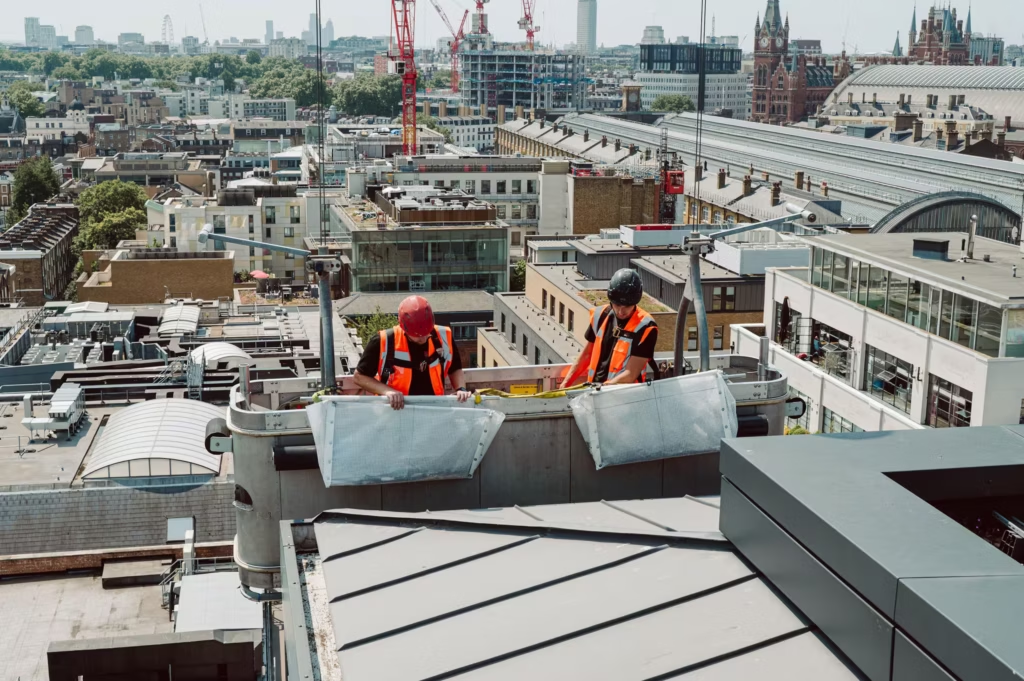
Two-man teams, as a minimum, conduct all façade condition surveys to ensure safety and accuracy. We never compromise on this principle, no matter the budget or timeframe.
Multiple testing methods, one mobilisation.
Wherever possible, we carry out multiple testing methods in one visit, for example, combining visual assessments with in-depth digital defect mapping. This saves time, reduces access costs, and delivers a more comprehensive dataset.
Multiple access solutions for every site.
We assess each building’s design, location and materials to choose the safest and most efficient access method, whether that’s rope access, MEWP or a temporary platform.
Detailed reports that support decision-making.
Every report includes a full condition summary, photographic evidence, and RAG-rated recommendations with indicative budgets. This makes it easier for surveyors to justify costs and guide clients through prioritisation.
Safety and compliance at every stage.
As IRATA International Members, our teams operate under strict compliance and quality control. From risk assessments to rescue plans, safety is non-negotiable.
Communication that builds trust.
We maintain clear communication throughout every project, from pre-survey planning to final report handover. Progress updates, shared findings and transparent reporting mean no surprises for clients.
Helping Building Surveyors Sell Value Over Cost
From speaking to our customers, we hear that many building surveyors often face the tough conversation of explaining to clients why the cheapest option isn’t the safest or smartest. Our approach and our reporting style are designed to make that easier.
By providing detailed evidence, photographic records and costed RAG-rated summaries, surveyors can clearly show where risk lies, what action is needed, and what can safely wait.
When clients see the difference between a one-page summary and a comprehensive façade condition report with clear preventive maintenance recommendations, the decision becomes obvious.
A good preventive maintenance plan for a building isn’t just a cost, it’s an investment that extends asset life, reduces emergency repairs and safeguards occupant safety.
The Takeaway
In façade and building condition surveys, “cheap” rarely means “good value.” Proper safety, comprehensive testing and clear communication are what deliver real certainty for the surveyor, the client and the building itself.
By aligning working practices with safety standards and by choosing experienced, compliant teams who do things the right way, surveyors can protect both their clients and their own professional integrity.
At Building Transformation, we believe best practices should never be optional.
Because safety, compliance and clarity are worth far more than a low-cost shortcut.