Corrosion is one of the most common causes of deterioration in industrial structures. Everything from structural steelwork, bridges, exposed metalwork to façade elements can all be impacted
Without the correct treatment, corrosion can weaken materials over time, damage protective coatings, affect building performance and increase long-term maintenance costs. In industrial and commercial environments, it can also cause operational disruptions, safety concerns, and costly repair needs if defects are allowed to progress.
Corrosion control is the process of identifying, treating and protecting metal surfaces to slow deterioration, extend asset life and support long-term structural performance.
Effective corrosion control is a vital part of planned maintenance and asset protection.
What is corrosion control?
Corrosion control involves managing corrosion on metal surfaces through inspection, cleaning, coating removal, surface preparation, corrosion treatment and the application of protective coating systems.
The aim is to prevent further deterioration by protecting structural steelwork and metal components, and reducing the risk of premature failure.
For industrial structures, corrosion control may involve:
- Inspecting steelwork, fixings, façade elements or metal components
- Identifying areas of corrosion, coating failure or surface breakdown
- Removing failed coatings, rust or contaminants
- Preparing the surface to the correct standard
- Treating corrosion where required
- Applying primer, intermediate and topcoat systems
- Planning future maintenance and inspection cycles
A good corrosion control strategy doesn’t just cover over visible rust. It looks at the condition of the substrate, the cause of deterioration, the surrounding environment and the protective system needed to improve long-term performance.
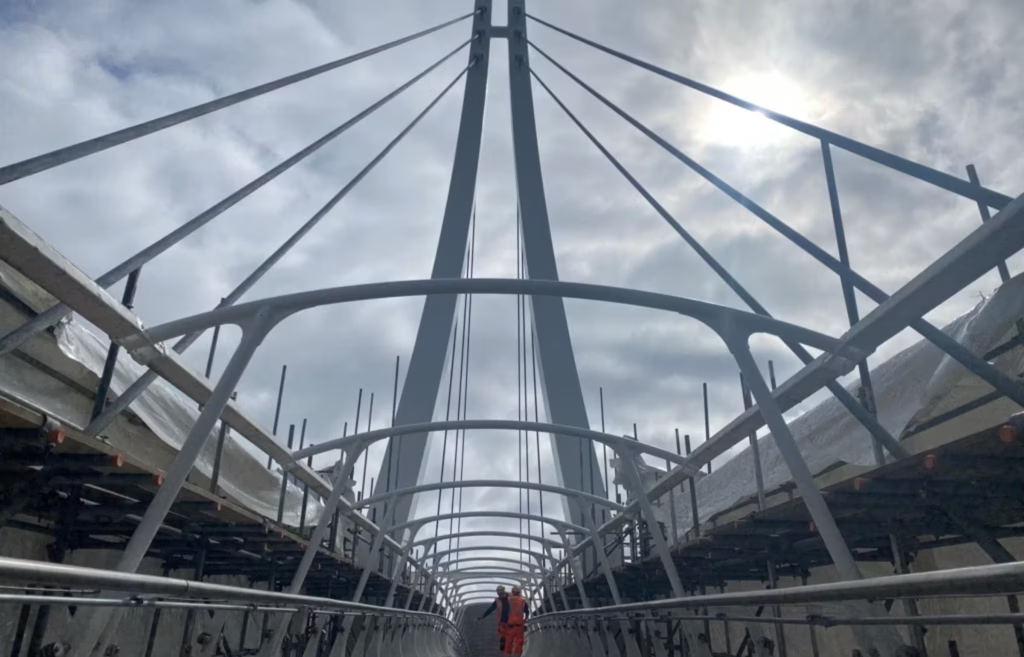
Why corrosion is a risk for industrial structures
Industrial structures are often exposed to demanding conditions.
Steelwork and metal elements can be affected by moisture, pollutants, chemicals, poor drainage, weather exposure, heat, humidity, salt, abrasion or previous coating failure. Over time, these factors can break down protective systems and allow corrosion to develop.
Once corrosion begins, it can spread beneath coatings, reduce the thickness of steel, weaken connections, damage fixings and compromise the appearance and performance of the structure.
Common risks include:
- Structural steel deterioration
- Section loss in steel members
- Coating failure
- Rust staining
- Reduced asset lifespan
- Increased repair costs
- Water ingress around façade or roof interfaces
- Damage to fixings, brackets and support systems
- Safety risks from weakened or loose components
- Disruption caused by emergency repairs
For industrial and commercial sites, the cost of corrosion is rarely limited to the repair itself. It may also affect operations, access, safety planning, asset value and future maintenance budgets.
Common causes of corrosion
Corrosion can be caused or accelerated by a range of environmental and building-related factors.
These include:
- Water exposure from leaks, ponding or defective drainage
- Failed or damaged protective coatings
- Poor surface preparation during previous works
- Exposure to pollutants or chemicals
- Coastal or high-humidity environments
- Trapped moisture behind façade elements or fixings
- Damaged sealants, gaskets or joints
- Abrasion from industrial processes
- Heat, condensation or ventilation issues
- Lack of routine inspection and maintenance
Sometimes corrosion can be linked to another building envelope issue, such as failed guttering, defective roof details, damaged curtain walling seals or poor drainage, which can all allow water to reach steelwork and metal components.
This is why corrosion control should be considered as part of a wider building maintenance strategy rather than treated as an isolated painting exercise.
Corrosion control treatments
Corrosion control treatments depend on the condition of the steelwork or metal surface, the extent of deterioration and the environment the structure is exposed to.
Here’s what a typical process may include:
- Inspection and condition assessment
The affected area is inspected to identify corrosion, coating failure, contamination, water ingress and any underlying defects. - Access planning
The safest and most practical access method is selected, particularly where steelwork, façade elements or roof-level structures are difficult to reach. - Coating removal
Failed, loose or deteriorated coatings are removed to expose the underlying substrate and allow proper preparation. - Surface preparation
The surface is cleaned and prepared to the required standard so the new protective coating can bond effectively. - Corrosion treatment
Corroded areas are treated according to the condition of the material and the specification required. - Protective coating application
A suitable coating system is applied to protect the surface from further corrosion and environmental exposure. - Inspection and maintenance planning
The completed works can be recorded and used to inform future inspection and maintenance cycles.
Each stage matters. If corrosion is simply painted over without proper preparation, the new coating may fail early and the underlying issue may continue to develop.
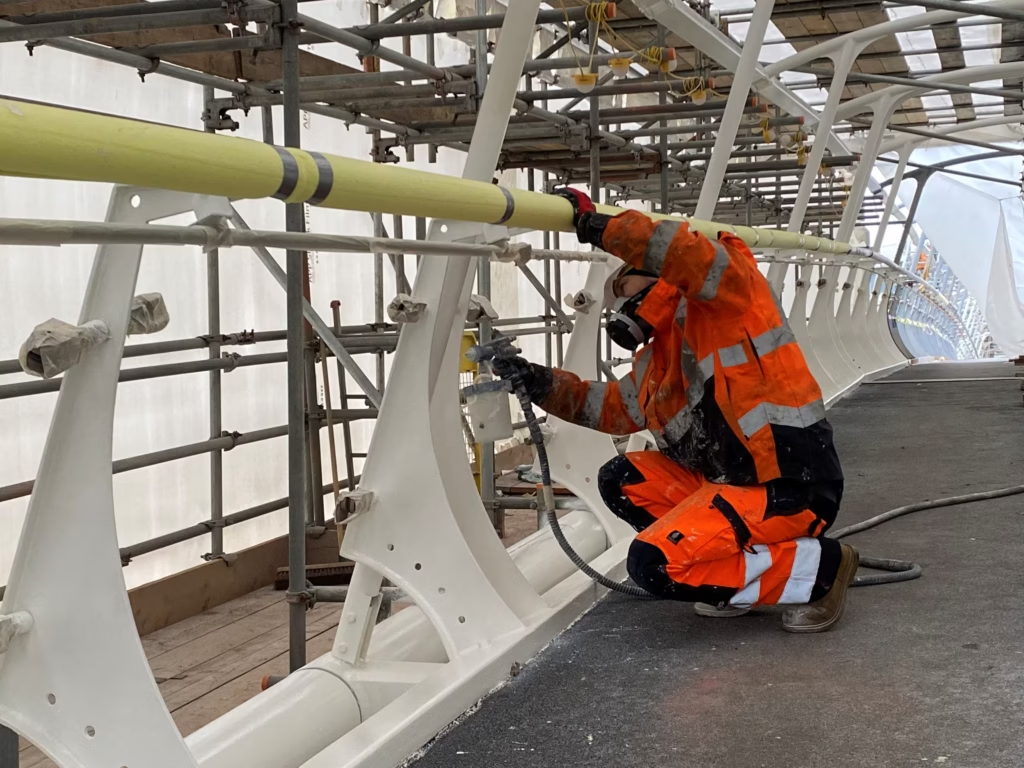
Protective coatings and surface preparation
Protective coatings play a central role in corrosion control because they create a barrier between the metal surface and the surrounding environment, which helps to protect steelwork and metal components from moisture, oxygen, pollutants and chemicals.
But the performance of any protective coating depends heavily on the quality of the surface preparation.
If old coatings, rust, grease, salts, contaminants or loose material are left behind, the new coating system may not adhere properly. This can lead to blistering, flaking, early coating failure and renewed corrosion.
Surface preparation may involve:
- Cleaning the surface
- Removing loose rust and failed coatings
- Mechanical preparation
- Abrasive preparation where appropriate
- Degreasing and contaminant removal
- Preparing edges, joints and difficult details
- Checking the surface condition before coating
Once prepared, the surface can be treated with an appropriate protective coating system. This may include primers, intermediate coats and topcoats, depending on the structure, exposure level and performance requirements.
For industrial assets, protective coatings are not just cosmetic; they are part of the building or structure’s long-term maintenance and protection strategy.
Corrosion control for industrial structures
Industrial corrosion control is often required on structures and assets that are exposed, high-level, difficult to access or operationally sensitive.
This typically tends to incliude:
- Structural steel frames
- Exposed beams and columns
- Bridges and walkways
- Gantries and platforms
- Roof-level steelwork
- Façade support systems
- Metal cladding and panels
- Canopies and entrance structures
- Plant enclosures
- Service yards and loading areas
- Balustrades, rails and fixings
- Industrial doors and frames
- Gutter supports and roof edge details
In many of these areas, corrosion control needs to be carefully planned around live operations, public access, site logistics and safety requirements.
For example, corroded roof-level steelwork may require specialist access to inspect, prepare and coat the affected areas without disrupting the building below. Similarly, façade-related corrosion may need to be addressed alongside sealant replacement, curtain walling maintenance, cladding repairs or water ingress investigation.
Building Transformation supports industrial and commercial clients with specialist access services, façade maintenance, roof services and difficult-access remedial works.
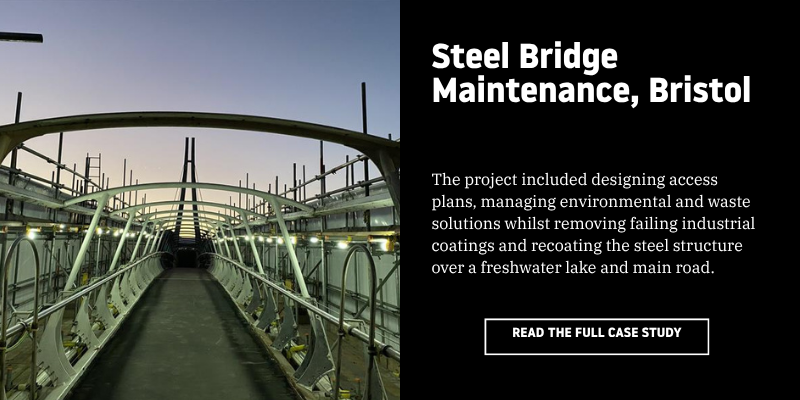
Coating removal for corrosion control
Coating removal is often an important stage in corrosion control. Coatings can fail, crack, flake, blister, or lose adhesion, and they may need to be removed before a new system is applied. This allows the underlying steel or metal surface to be properly inspected and prepared.
Coating removal can help identify:
- Hidden corrosion beneath failed coatings
- Areas of section loss
- Poor previous preparation
- Contamination
- Surface defects
- Water-related deterioration
- Weak points around edges, joints and fixings
On industrial structures, coating removal may be required before repainting, corrosion treatment, protective coating application or more detailed repair works.
Building Transformation provides industrial coating removal for difficult-access structures and assets where existing coatings need to be removed safely and methodically before further treatment.
Protective coatings for corrosion control
Protective coatings for corrosion control are designed to improve the durability and resilience of steelwork and metal components. The right coating system will depend on the asset, exposure conditions, expected lifespan, access constraints and maintenance requirements.
Protective coating systems may be used to:
- Protect structural steel from moisture and pollutants
- Extend the service life of existing structures
- Reduce future maintenance requirements
- Improve weather resistance
- Protect exposed metalwork
- Support refurbishment and asset renewal
- Improve the appearance of visible steelwork or façade elements
For commercial and industrial buildings, coating works may form part of a wider planned maintenance programme. This could include roof repairs, façade works, curtain walling maintenance, sealant replacement, gutter repairs or structural steel treatment.
We provide industrial coatings as part of our specialist access and building envelope maintenance services.
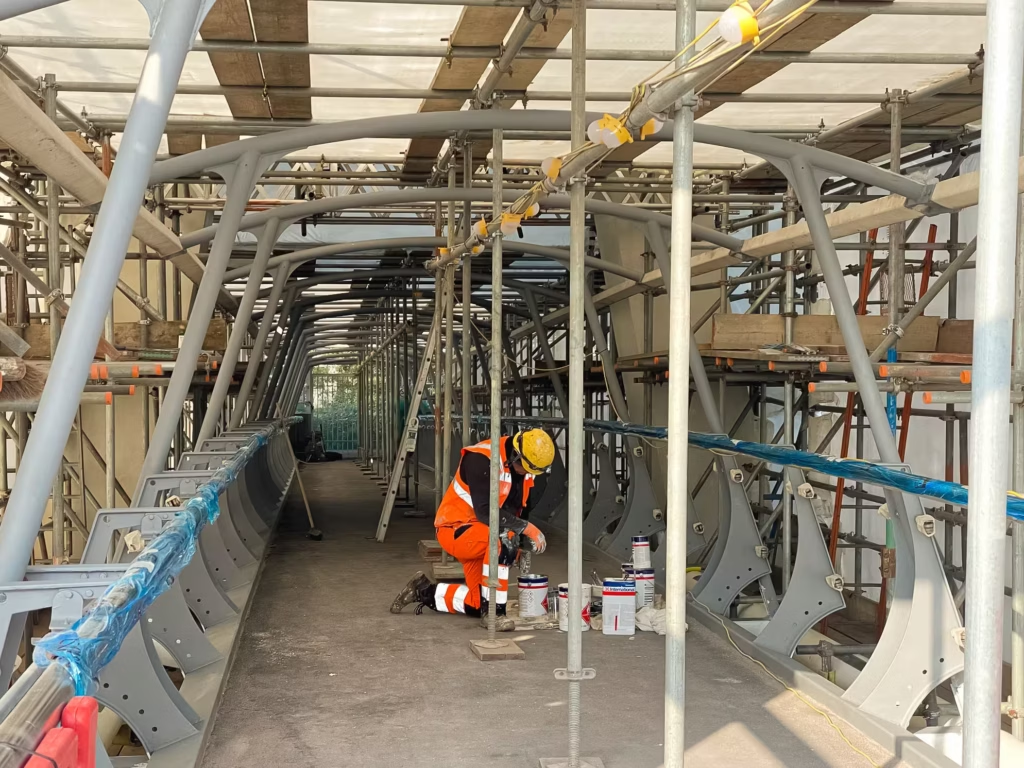
Specialist access solutions for corrosion control
A lot of corrosion control projects involve areas that are difficult to access safely using standard methods. This might include high-level steelwork, façades, bridges, roof edges, atria, gantries and industrial structures, which may require specialist access planning before inspection, preparation or coating works can begin.
Access methods may include:
- Rope access
- MEWPs
- Scaffolding
- Roof access systems
- Temporary platforms
- Combined access strategies
Rope access can be particularly effective where corrosion is localised, difficult to reach or spread across complex areas. This is because it allows trained technicians to work more closely to the structure, so they can inspect affected areas and carry out targeted preparation and coating works without always needing large-scale scaffold installation.
This reduces disruption, shortens programme times and improve access efficiency on live commercial and industrial sites.
Specialist access can be especially useful for:
- High-level steelwork
- Façade support elements
- Roof edge details
- Atrium and glazing structures
- Bridges and walkways
- Difficult-access coating removal
- Localised corrosion treatment
- Inspection-to-repair works
Building Transformation’s specialist access repairs support clients where corrosion, coating failure or deterioration affects difficult-access areas of a building or structure.
Corrosion control as part of planned maintenance
Corrosion control is most effective when it forms part of a planned maintenance strategy.
Waiting until corrosion is advanced can make repairs more complex, more expensive and more disruptive. In some cases, untreated corrosion can lead to structural weakening, safety concerns or the need for replacement rather than repair.
A planned approach will allow building owners and asset managers to:
- Identify corrosion early
- Understand the cause of deterioration
- Prioritise affected areas
- Plan access requirements
- Budget for repair and coating works
- Reduce reactive maintenance
- Extend asset lifespan
- Protect structural performance
- Reduce operational disruption
Inspection findings can also help determine whether the issue is isolated or part of a wider building envelope problem.
Corrosion to façade fixings may be connected to failed gaskets or sealants. Corrosion around roof-level steelwork may be linked to drainage issues or standing water. Rust staining on external elements may indicate hidden coating failure or water tracking from another area.
By identifying both the visible defect and the underlying cause, corrosion control can support better long-term maintenance decisions.
Corrosion control and building envelope performance
Corrosion does not only affect exposed steelwork. It can also affect wider building envelope performance.
Metal façade elements, fixings, brackets, curtain walling components, roof interfaces, gutter supports and cladding systems can all be vulnerable to corrosion if water is entering or trapped within the building envelope.
This can lead to:
- Failed fixings
- Loose façade elements
- Water ingress
- Staining
- Movement or distortion
- Reduced weather performance
- Deterioration around joints and interfaces
- Higher future repair costs
This is why corrosion control may need to be considered alongside façade and curtain walling maintenance, curtain walling gasket, mullion and sealant maintenance, atrium and glazing repairs and façade cleaning.
A connected approach helps ensure the source of the problem is addressed, not just the visible corrosion.

FAQs
What is corrosion control?
Corrosion control is the process of preventing, slowing or treating corrosion on metal surfaces. For industrial structures, this usually involves inspection, coating removal, surface preparation, corrosion treatment and the application of protective coatings.
Why is corrosion control important for industrial structures?
Corrosion control helps protect steelwork and metal components from deterioration. It supports structural longevity, reduces maintenance costs, protects asset value and lowers the risk of disruption caused by advanced corrosion or emergency repairs.
What causes corrosion on industrial structures?
Corrosion is commonly caused by moisture, oxygen, pollutants, chemicals, failed coatings, poor drainage, water ingress, condensation or exposure to aggressive environments. In many cases, corrosion is linked to wider building envelope defects.
What is the role of protective coatings in corrosion control?
Protective coatings create a barrier between the metal surface and the surrounding environment. They help protect against moisture, pollutants and other factors that cause corrosion. Their effectiveness depends on correct surface preparation and suitable coating specification.
Why is surface preparation important before applying protective coatings?
Surface preparation is essential because coatings need a clean, stable and properly prepared surface to bond effectively. If rust, failed coatings or contaminants are left behind, the new coating may fail prematurely.
Can corrosion control be carried out using rope access?
Yes. Rope access can be used for corrosion control where steelwork, façade elements or industrial structures are high-level, difficult to reach or unsuitable for full scaffold installation. It can support inspection, coating removal, surface preparation and protective coating application.
What types of structures may need corrosion control?
Corrosion control may be needed for structural steel frames, bridges, gantries, platforms, roof-level steelwork, façade elements, metal cladding, canopy structures, walkways, fixings, brackets and other exposed metal components.
Is corrosion control part of planned maintenance?
Yes. Corrosion control is an important part of planned maintenance for industrial and commercial structures. Early identification and treatment can reduce long-term repair costs, extend asset lifespan and prevent more disruptive remedial works later.
Need support with corrosion control or protective coatings?
If you need support with corrosion, coating failure or deterioration on an industrial structure, Building Transformation can help.
Our expert team can inspect affected areas, plan safe access, remove failed coatings, prepare surfaces and apply protective coating systems to support long-term asset protection.
Speak to us about corrosion control, specialist access, industrial coating removal and protective coatings for commercial and industrial structures.
