Architecture shapes how we experience the places where we live, work, learn and spend time. A building’s layout, scale, materials and relationship with its surroundings all contribute to its character and how people use it.
Much of this discussion focuses on design. Yet buildings continue to change long after construction is complete. Weathering, water ingress, ageing components and maintenance decisions influence how they look and perform throughout their life.
For building owners, surveyors and facilities managers, caring for the existing building fabric is a practical way to protect architectural character and support continued use.
How architecture shapes our experience of places
A welcoming entrance, a distinctive façade or a bright atrium can contribute to our impression of a building. Layout and circulation influence how easily people navigate a space, while materials and architectural details help give places their identity.
Buildings also form part of a wider setting. Historic stonework, contemporary glazing and industrial structures each contribute to the character of streets, campuses and commercial districts.
These qualities depend partly on the condition of the building itself. Glazing, external finishes, masonry and roofing all need appropriate care if they are to remain serviceable.
Maintaining a building helps preserve the physical features that make it distinctive while supporting the needs of its users.
Why building condition matters after construction
Every building is exposed to conditions that affect its fabric over time. Rainfall, wind, temperature changes, pollution and general wear can contribute to deterioration across roofs, façades and glazing systems.
Some changes are mainly visual. Others may indicate defects affecting weather resistance, safety or the use of internal spaces.
Common concerns include:
- Cracked or deteriorating masonry.
- Loose external components.
- Failed sealants and displaced gaskets.
- Damaged glazing and rooflights.
- Corroded fixings or exposed metalwork.
- Peeling or deteriorating coatings.
- Blocked gutters and defective drainage.
- Recurring leaks and internal moisture damage.
The significance of each issue depends on the building and its condition. Staining below a gutter, for example, may point to repeated overflow. A damp patch around a window may originate from a defect elsewhere on the façade.
Understanding the cause helps building managers select an appropriate response.
Maintaining façades and architectural character
The façade is often the most recognisable part of a building. Its materials, proportions, finishes and details contribute to both its individual identity and the surrounding streetscape.
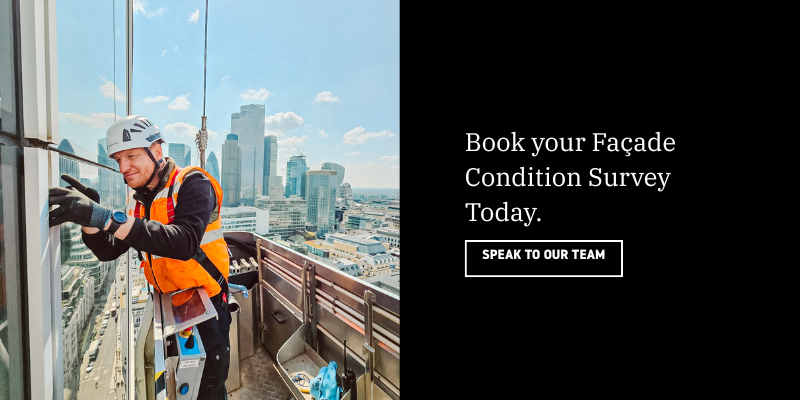
Our façade inspections and condition surveys help establish the condition of external elements, including masonry, architectural features, glazing interfaces, joints and fixings.
Photographic records and defect mapping provide a basis for prioritising work and monitoring deterioration. This is particularly useful where high-level details cannot be assessed adequately from the ground.
Following assessment, appropriate façade maintenance may include localised repairs, sealant replacement, cleaning or redecoration, depending on the materials and defects identified.
The objective is to protect the building through work suited to its condition, avoiding unnecessary intervention.
Caring for historic and sensitive building fabric
Older buildings often contain materials and craftsmanship that are difficult to replace. Their care requires an understanding of original construction, previous repairs and the significance of the affected features.
Our historic façade conservation services support the repair and maintenance of sensitive external fabric, prioritising the retention of existing materials where appropriate.
Cleaning methods also need careful consideration. The substrate, surface condition, type of soiling and previous treatments should inform the approach. Preliminary assessment and test areas can help establish a suitable method before wider work proceeds.
Where staining is associated with defective drainage or persistent water movement, the underlying cause also needs attention. Improving appearance alone may leave the building vulnerable to further deterioration.
Protecting roofs, glazing and building interfaces
Architectural features work as part of a wider building envelope. Roofs, façades, windows, atriums and drainage systems all contribute to keeping internal spaces protected from the weather.
Defects often occur where these elements meet. Flashings, rooflights, parapets, joints and glazing interfaces can become vulnerable as materials age or components deteriorate.
Our roof condition surveys help identify roofing defects and inform maintenance priorities. Where water penetration is reported, our leak detection surveys and water ingress investigations help establish its source and route.
Depending on the construction and suspected defect, investigations may involve moisture mapping, thermal imaging, controlled water testing or other suitable diagnostic techniques.
This evidence supports targeted repairs and helps reduce repeated interventions that fail to resolve the underlying problem.
Reaching complex architectural features
The features that make buildings distinctive can also make them challenging to maintain. Curved façades, recessed glazing, roof slopes, parapets and high-level stonework may require specialist access for close inspection and repair.
Considering access early helps define what can be assessed, how work will be delivered and how disruption to building users will be managed.
Our rope access and specialist access services support inspections and maintenance in difficult-to-reach locations.
Where suitable, rope access can provide close access for localised work and reduce the extent of scaffolding required. Other tasks may need MEWPs, cradles, scaffolding or a combination of methods.
The access strategy should reflect the building, the work required and the surrounding environment, including entrances, public routes and occupied areas.
Planning maintenance around the people using the building
Offices, hotels, universities and public buildings often need to remain operational while maintenance takes place.
Delivery planning should therefore consider how people use the site. Access routes, working areas, noise, temporary restrictions and the timing of activities all need coordination with the building management team.
Combining related inspection and repair activities can also help reduce repeated mobilisation and disruption. For example, a planned access visit may provide an opportunity to inspect nearby components as well as investigate a reported defect.
This helps connect individual maintenance tasks with a clearer understanding of the building’s wider condition.
Preserving buildings through planned maintenance
A repair can resolve an immediate problem, but continued care helps protect the building over time.
A planned preventative maintenance programme brings together scheduled inspections, maintenance activities, defect monitoring and prioritised remedial works.
The programme should reflect the building’s age, materials, exposure, condition and use. Activities may include roof and façade inspections, gutter clearance, glazing checks and monitoring of known defects.
Clear records help building managers understand what has changed, which repairs have been completed and where future investment may be needed.
This approach can improve budget visibility, support the retention of serviceable components and reduce avoidable deterioration.
Protecting the buildings people use
Architecture gives buildings their identity. Inspection, repair and planned maintenance help preserve that character while keeping the building working for the people who use it.
Building Transformation combines specialist access with technical expertise across façades, roofing, glazing and structural steel to investigate defects, deliver targeted repairs and plan ongoing maintenance.
Whether you are assessing weathered masonry, investigating recurring leaks or developing a maintenance strategy for a complex building, our team can help establish the appropriate next steps.
Speak to our team about protecting your building’s condition and performance.