We know how much industrial rope access has transformed how many buildings are inspected, maintained, and repaired. It gives you speed, reduces disruption, and provides access to areas that would otherwise require extensive scaffolding or MEWPs. In the right conditions, with the right planning and expertise, it is an extremely effective work-at-height solution.
But, rope access is not always the answer.
At Building Transformation, we sometimes advise clients not to use rope access where it could introduce unnecessary risk, compromise compliance, or simply isn’t the most efficient or appropriate method.
When you understand the limitations of rope access, you realise they’re just as important as the benefits, especially when safety and long-term asset protection are at stake.
This blog post will explore when rope access is not the best option and why an experienced service partner should be confident enough to say so.

Industrial Rope Access Misconceptions
One of the most common misconceptions we come across is the assumption that industrial rope access is always a safer, cheaper or more compliant method than other access methods. And, in many cases, this is true.
But it’s important to emphasise that rope access is simply a means of access. It must sit within a wider framework of technical assessment, risk management and regulatory compliance. Without that context, even well-executed rope access can become the wrong solution for the building, the task, or the people involved.
Every project should start with the question: What is the safest and most appropriate way to carry out this work?
When buildings lack rope access anchor points
Safe rope access depends entirely on the presence of suitable, load-bearing anchor points. Where these cannot be verified or installed without compromise, rope access should not proceed.
This is particularly relevant in older, heritage or non-standard buildings, where structural details may be concealed, undocumented, or unsuitable for sustained loading. Lightweight façades, ageing roof structures, or elements never designed to accommodate fall-arrest systems can present significant limitations.
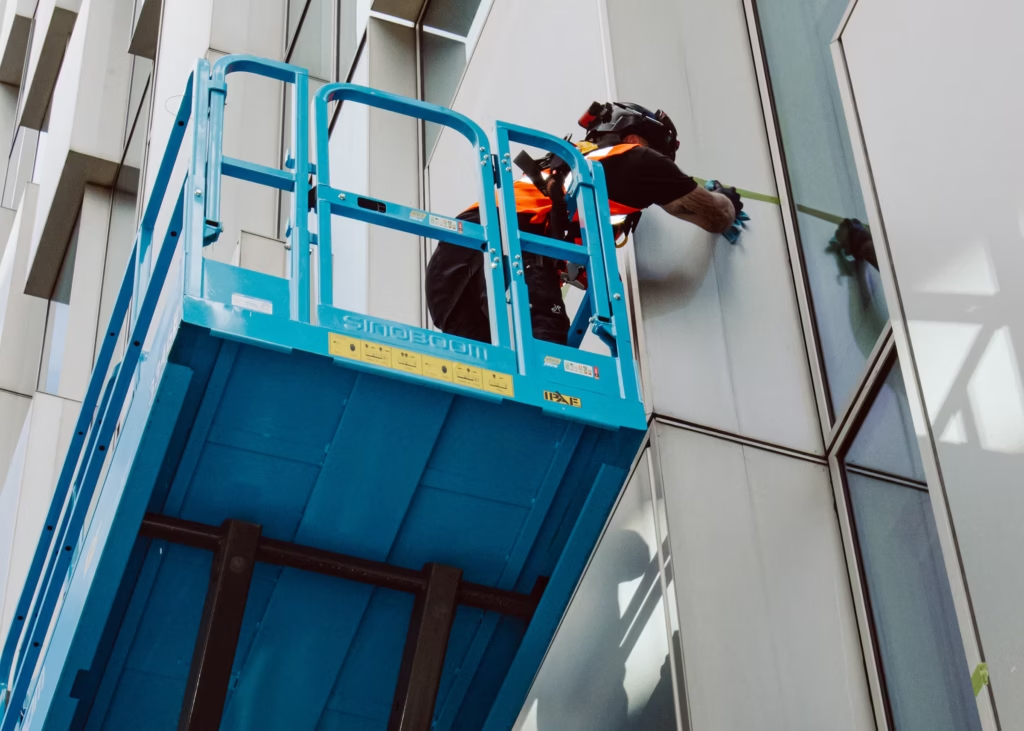
In these circumstances, attempting to make rope access work can introduce greater risk than alternative access methods such as scaffold or MEWP.
A competent service partner should always be prepared to recommend an alternative where anchor integrity cannot be confidently assured.
Industrial rope access: Environmental exposure and weather sensitivity
Unlike scaffolded environments, rope access offers limited protection from weather and environmental conditions. Wind, rain, temperature extremes and electrical storms all have a direct impact on safety and productivity.
On exposed elevations, at coastal sites, or on high-rise buildings, weather dependency can significantly disrupt programmes and increase risk. Where conditions are unpredictable or frequently marginal, alternative access solutions may provide greater control and consistency.
Consequently, rope access should never be selected on the assumption that weather risk can be managed on the day.
Material-intensive or high-volume works?
Rope access is highly effective for targeted inspections, investigations and repairs. But it becomes far less efficient where works involve continuous movement of heavy materials, repeated hauling, or large-scale replacement activities.
As material volume increases, so too do fatigue, handling risks and system complexity. In these scenarios, scaffold or MEWP often delivers better outcomes, both in terms of safety and overall project efficiency.
Selecting rope access purely to avoid scaffold costs can be a false economy when productivity and risk exposure are properly considered.
Working over public or high-traffic areas
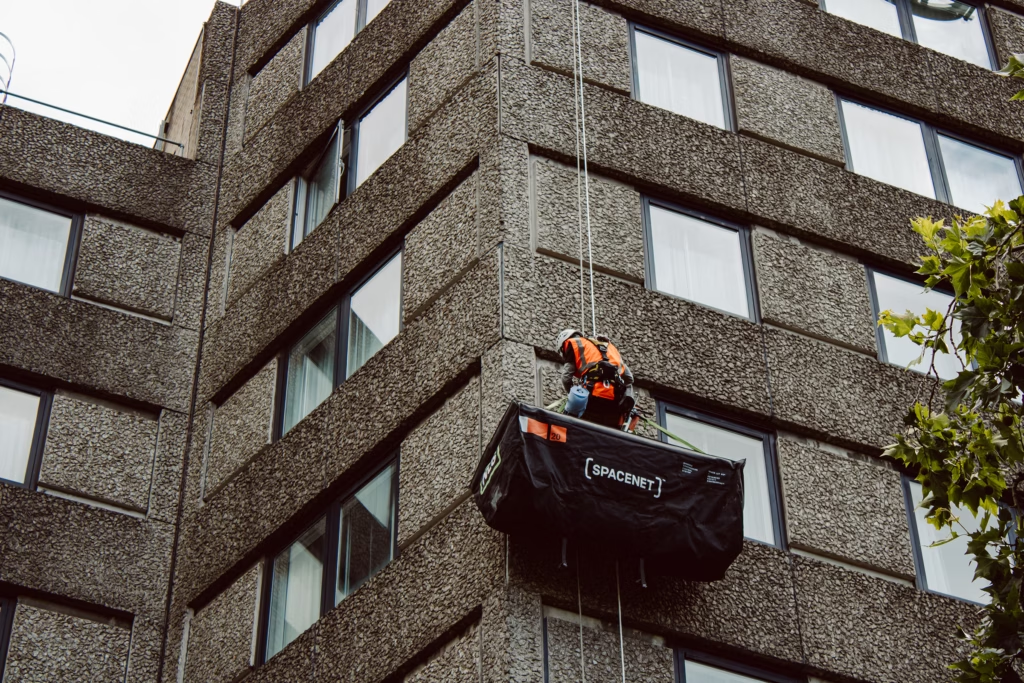
Many rope access projects take place above live environments such as building entrances, pavements, transport routes or occupied commercial spaces. Working directly over public areas significantly raises the consequences of dropped objects, emergency evacuation or system failure. Exclusion zones at ground level should, of course, always be in place, but this alone is not enough.
Look for a service partner who can demonstrate they have robust safety measures in place. For example:
- Do they produce specific and tailored RAMS for every project, including detailed rescue plans?
- Do they have rescue kits (such as IKAR) on-site for controlled descent and emergency scenarios?
- How will they ensure all tools are secured using tethering systems?
- Are their staff trained to IRATA, IPAF, and PASMA standards?
When specialist engineering expertise is required
Rope access qualifications alone do not equate to technical or engineering competence. Where works involve structural repairs or complex glazing systems, for example, combined with work at height, the rope access technician may not have the right experience to conduct the work.
However, when working with a reputable and experienced service partner and the system is rigged by an IRATA Level 3 technician, it may be possible to lower a non-rope access structural engineer to inspect an element of a facade to help inform the extent of the repair needed.
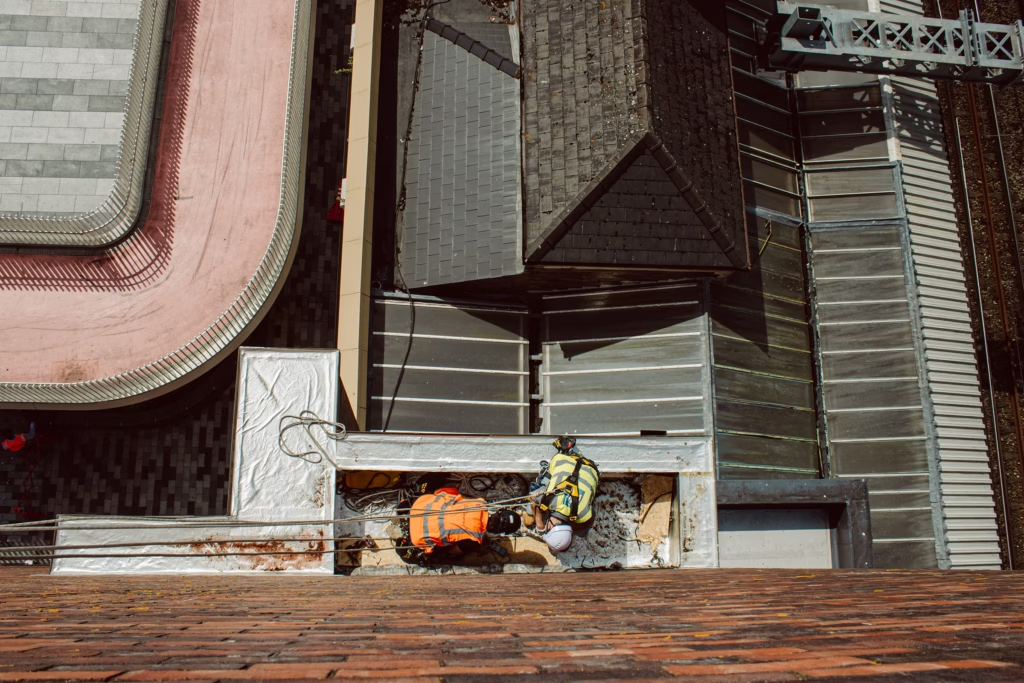
On one of our recent projects, to facilitate a detailed façade condition and structural integrity assessment, where conventional access was not feasible, a non-rope-access Structural Engineer was safely lowered to inspect the steel support beam. The client was then able to make an informed decision on the next steps required.
Choosing judgment over convenience
The most reliable industrial rope access providers are those who are willing to say, “This is not the right solution”.
At Building Transformation, we assess rope access as one option within a broader work-at-height strategy, considering compliance, safety, technical requirements and long-term asset performance.
Rope access can be an excellent solution, but only when it is genuinely appropriate.
If a service partner cannot clearly explain both the benefits and the limitations of rope access for your building, that should prompt further questions.