Facilities managers, property managers and building owners carry responsibility for façade and roof risk. However, key areas—including high façades, roof interfaces, glazing systems and structural elements—are frequently difficult to access, making thorough inspection and early identification of defects challenging.
In our experience, building envelope issues rarely appear suddenly. Most problems start as small defects, such as deteriorating sealants, loose fixings, cracked glazing units, or early corrosion, which worsen gradually over time.
Without regular condition surveys and maintenance by a reputable rope access company, these minor defects can escalate into costly façade repairs, internal water ingress, or safety risks.
Using an industrial rope access company for planned maintenance is often the most efficient and cost-effective way to inspect and maintain complex buildings, and this blog will explain why.
Why Planned Preventive Maintenance Matters
A façade condition survey should form part of a structured planned preventative maintenance (PPM) programme within a building’s overall management strategy.
In reality, façade inspections are often inconsistent or removed altogether as other operational priorities take precedence. Frequently, these decisions are made without a clear understanding of the façade’s current condition, and over time, this can create hidden risks.
Loose or deteriorating façade components, including cladding panels, glazing units, gaskets, mullions, and sealants, can compromise building performance, regulatory compliance, and public safety.
Façade materials are constantly subjected to environmental stresses, including wind loads, thermal movement, and structural settlement. These forces place continuous strain on joints, fixings, and sealants.
Without regular inspection, gradual deterioration can go unnoticed until a leak or structural issue occurs.
A proactive façade maintenance programme provides building managers with critical information about the building’s condition and allows maintenance budgets to be planned around targeted repairs rather than large reactive projects.
Why Rope Access Is the Most Cost-Effective Maintenance Method
Many traditional façade maintenance programmes rely on scaffolding or large access platforms. While these methods are sometimes necessary, they can significantly increase project costs and disruption.
Working with a specialist rope access company often provides a more efficient alternative.
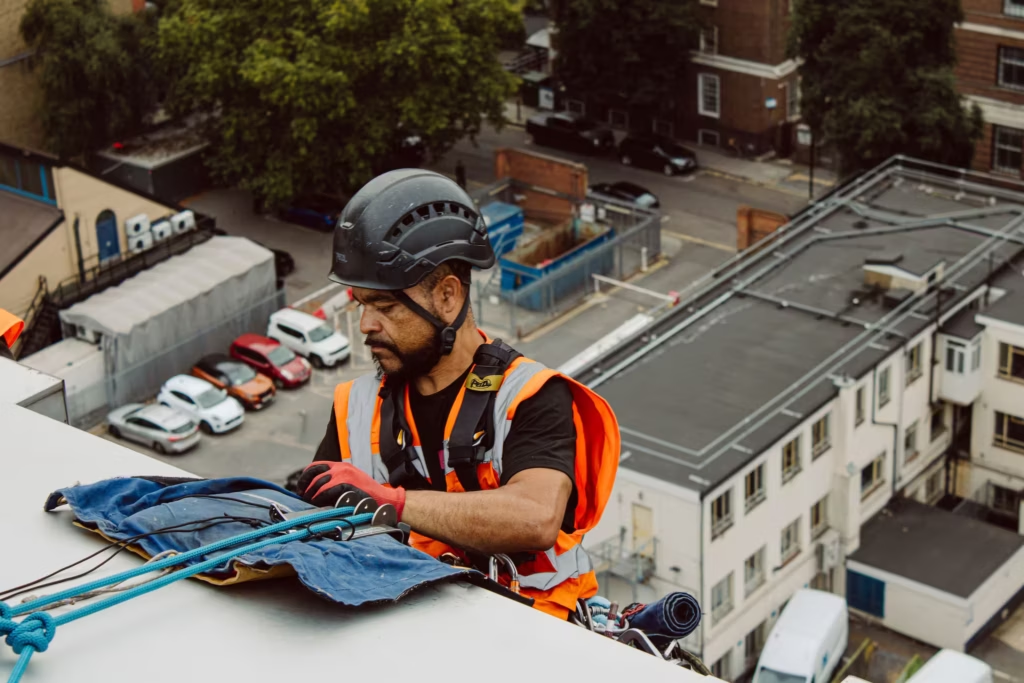
Rope access services allow technicians to work directly on the façade, providing close-up inspections and targeted repairs without the need for extensive temporary access installations.
Compared with traditional access methods, rope access offers several advantages:
- Rapid mobilisation without complex access installation
- Minimal disruption to tenants and building operations
- Direct access for detailed, hands-on façade inspection
- Reduced access costs, allowing budgets to focus on repairs
- Greater flexibility for tall or complex buildings
Because technicians are positioned directly against the façade surface, they can carry out detailed inspections that would not be possible from distant platforms. For many buildings, industrial rope access is the fastest and most practical method for façade maintenance and inspection.
What’s Included in a Building Envelope Maintenance Plan
An effective building envelope maintenance plan always begins with a detailed survey of façade conditions.
This initial survey establishes a clear understanding of the building’s condition and identifies defects requiring monitoring or repair.
A typical façade planned preventative maintenance programme includes annual or 33% annual inspections, so every façade is inspected within a three-year period.
During these inspections, rope access technicians typically carry out:
- An inspection of façade fixings and support systems
- Identification of cracked or failed glazing units
- Assessment of sealants, gaskets, and expansion joints
- Cleaning of minor leaching or surface soiling
- Re-securing loose façade elements
- Stabilising weak sections of façade materials
- Visual corrosion inspections
All findings are logged and tracked using specialist defect mapping software.
Following the inspection, defects and recommended actions are categorised using a Red–Amber–Green (RAG) risk system, allowing building managers to prioritise repairs and plan maintenance budgets more effectively.
This structured approach helps shift building management from reactive repairs to proactive asset protection.
Combining Façade Cleaning with Inspection
Combining façade cleaning with inspection is another key advantage of working with rope access specialists, as multiple maintenance activities can be delivered within a single, coordinated access programme. In practice, façade cleaning schedules can often run alongside detailed inspections and minor remedial works, making better use of time on the building and reducing the need for repeat access setups.
This approach is particularly effective for curtain walling and glazed façade systems, where technicians already have direct, close-contact access to the building envelope. While carrying out cleaning works, they can simultaneously identify early sealant deterioration, cracked glazing units, minor façade damage, movement within fixings, and the first signs of corrosion.
Integrating cleaning and inspection in this way enables building managers to spot developing issues sooner, plan targeted maintenance more effectively, and significantly reduce the risk of costly reactive repairs later.
Key Benefits of Working with a Rope Access Company
Working with an experienced rope access company provides several important advantages when managing commercial buildings.
Prevent Costly Damage
Minor façade defects can escalate quickly if left untreated. Even small issues like sealant failure or loose façade fixings can lead to water ingress, structural deterioration, or insulation failure.
Because rope access technicians work directly on the building façade, they can carry out close-up, methodical inspections that identify defects long before they become major problems. Early intervention significantly reduces long-term repair costs.
Protect Façade System Warranties
Most modern cladding and curtain walling systems require evidence of regular inspection and maintenance to keep manufacturer warranties valid, and without documented maintenance records, warranties may be void if defects occur.
A structured façade inspection programme provides the documentation needed to demonstrate that maintenance has been carried out correctly.
Planned maintenance plays an important role in minimising tenant disruption, particularly when compared with emergency façade repairs, which often require urgent access installations, reactive call-outs, and more intrusive building works. Rope access services offer a far more flexible approach, allowing maintenance activities to be carefully scheduled around day-to-day building operations.
Work can be timed to avoid peak pedestrian footfall, coordinated around tenant activity, and carried out outside standard business hours where needed. Early morning or nighttime inspections are also possible, helping to ensure essential maintenance is completed with minimal interference to occupants and visitors.
This flexibility is especially valuable in hotels, office buildings, residential towers, and government properties, where maintaining normal operations and occupant comfort is a priority.
Maintain the Building’s Appearance
For many commercial buildings, the façade is a key part of the building’s identity. Visible deterioration, such as staining, cracked glazing, or damaged cladding, can affect tenants’ perception and asset value.
Regular façade maintenance and cleaning programmes help preserve the building’s visual appearance while identifying emerging maintenance issues.
Maintaining façade performance and aesthetics protects both the building’s brand image and long-term value.
Integrated Access Solutions for Complex Buildings
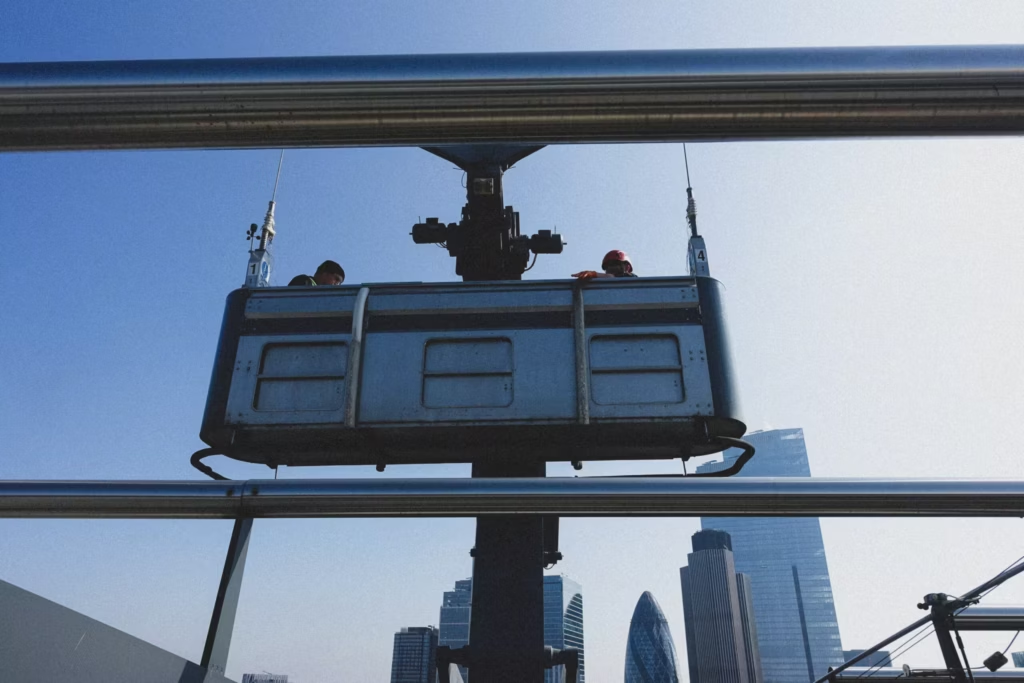
Maintaining tall or architecturally complex façades often requires specialist access techniques.
At Building Transformation, unlike other rope access companies, façade inspection and maintenance may involve a combination of access methods depending on the building’s design and requirements.
These include:
- IRATA industrial rope access and abseiling
- Cradle systems
- Mobile Elevating Work Platforms (MEWPs)
- Limited scaffold installations where necessary
Rope access is typically the preferred method wherever possible because it provides safe, flexible access with minimal disruption to the building.
Moving from Reactive Repairs to Proactive Façade Protection
Too many building owners address façade issues only after visible defects or leaks appear. By that point, repairs are often more complex, more expensive, and more disruptive.
A proactive building envelope maintenance programme delivered by rope access specialists provides a more effective strategy.
Regular inspections, targeted repairs, and detailed monitoring allow building managers to identify risks early, protect façade warranties, and extend the life of critical façade systems.
Book a Façade Condition Survey
If you are responsible for managing a commercial building, understanding the condition of your façade is the first step in preventing costly future repairs.
Building Transformation provides specialist rope access façade inspections, maintenance programmes, and building envelope repairs across London and the UK.
Book a façade condition survey today with a specialist rope access company to gain the insight needed to protect your building and plan long-term maintenance with confidence.