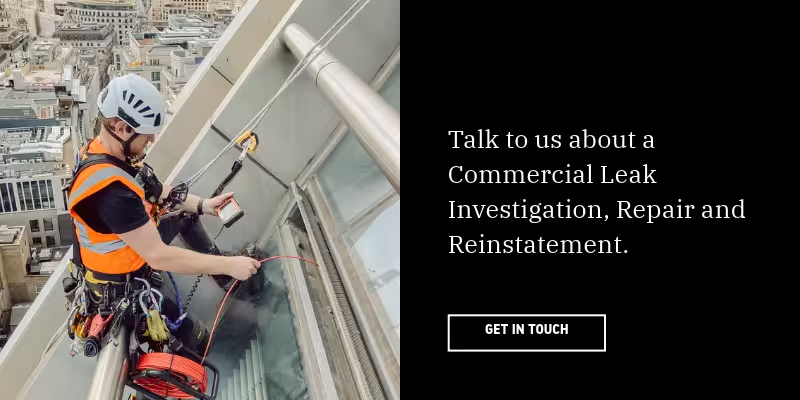
Water ingress in commercial buildings is notoriously difficult to diagnose. This is largely because the leak source isn’t always immediately visible. Consequently, water can travel through roofing systems, façades, glazing and structural interfaces before it ever appears internally, sometimes some distance from its original entry point.
For facilities managers, building owners and property management teams, this presents a logistical and financial challenge. The immediate priority may be to contain the leak and protect the building’s occupants and assets, but identifying the underlying cause is essential before permanent remedial work can begin.
A professional water ingress investigation is the most effective way to identify the likely source of a leak, assessing the condition of the affected areas and determining the most appropriate course of action.
In this blog, we’ll look at how commercial building leak investigations can be approached for the most accurate diagnoses, plus the techniques used to identify defects and how the findings can inform targeted repairs and ongoing building maintenance.
Why water ingress can be difficult to trace in commercial buildings
Water ingress isn’t always as straightforward as a damaged roof covering or a visibly defective seal. Commercial buildings incorporate numerous materials, systems and structural interfaces, each of which can create potential pathways for water to enter.
Common areas of vulnerability include:
Roofing systems: Damaged membranes, defective flashings, deteriorating joints and poorly maintained drainage systems can allow water to penetrate the building.
Building façades: Cracks, failed seals, defective cladding joints and deterioration around structural interfaces can provide routes for moisture ingress.
Curtain walling and glazing: Failed gaskets, deteriorating sealants and defects around glazing systems can allow water to enter, particularly during periods of wind-driven rain.
Atriums and rooflights: Complex glazing arrangements, joints and drainage details can make water ingress particularly challenging to investigate.
Gutters and drainage systems: Blockages, deterioration or inadequate drainage can cause water to accumulate and enter through vulnerable areas of the building envelope.
But it’s important to remember that the location of an internal leak doesn’t necessarily indicate where water is entering the building.
For example, water penetrating a defective roof joint may travel along structural steelwork, insulation or other concealed building components before becoming visible as staining on a ceiling several metres away.
Repairing the area directly above the visible leak may therefore fail to address the actual defect.
In other cases, water ingress might only occur under particular weather conditions, such as prolonged rainfall or wind-driven rain. This makes intermittent leaks especially difficult to trace, as the symptoms may not be present during the initial inspection.
Understanding this is an important part of the investigation process. Rather than treating the visible symptoms of water ingress, the goal should always be to first establish where water is entering, how it is travelling through the building, and what is causing the problem.
How commercial leak investigations are approached
A professional leak detection service should follow a structured investigation process. The scope and methods will be determined by the building’s construction, the reported symptoms and the areas suspected of contributing to the leak.
The investigation typically begins with an initial assessment of the affected areas and a review of the available information.
Information about when and where water ingress occurs can provide us with useful clues. For example, if a leak only appears during heavy, wind-driven rain may suggest a different vulnerability from one that develops following prolonged periods of rainfall.
Broader information about the building such as previous maintenance records, technical drawings, and the history of earlier repairs can provide valuable context, especially where leaks have been recurring or previous attempts to resolve have been unsuccessful.
Assessing the building and identifying potential defects
Following the initial review, the investigation progresses to an assessment of the relevant parts of the building envelope.
Depending on the nature of the reported leak, this may involve inspecting roofing systems, façades, curtain walling, glazing, atriums or drainage interfaces.
Our goal is to identify visible defects, assess the condition of potentially vulnerable components and establish which areas require more detailed investigation.
For large commercial and industrial buildings, the process may involve multiple locations or construction elements, particularly where water has travelled through concealed pathways before becoming visible internally.
Building an evidence-based diagnosis
These initial assessment findings help determine which inspection and testing methods are appropriate.
Rather than relying on assumptions about the location of a leak, investigators use the available evidence to narrow down the potential sources of water ingress.
Where the findings are inconclusive, additional inspections or diagnostic testing may be required.
Choosing the right methods to investigate water ingress
Unfortunately, we cannot give you a single method or answer for identifying every source of water ingress. The most appropriate approach depends on the building’s construction, the accessibility of the suspected defect and the information required to support a diagnosis.
A commercial water ingress investigation may involve several complementary techniques. We explain them further below.
Close-quarter visual inspections
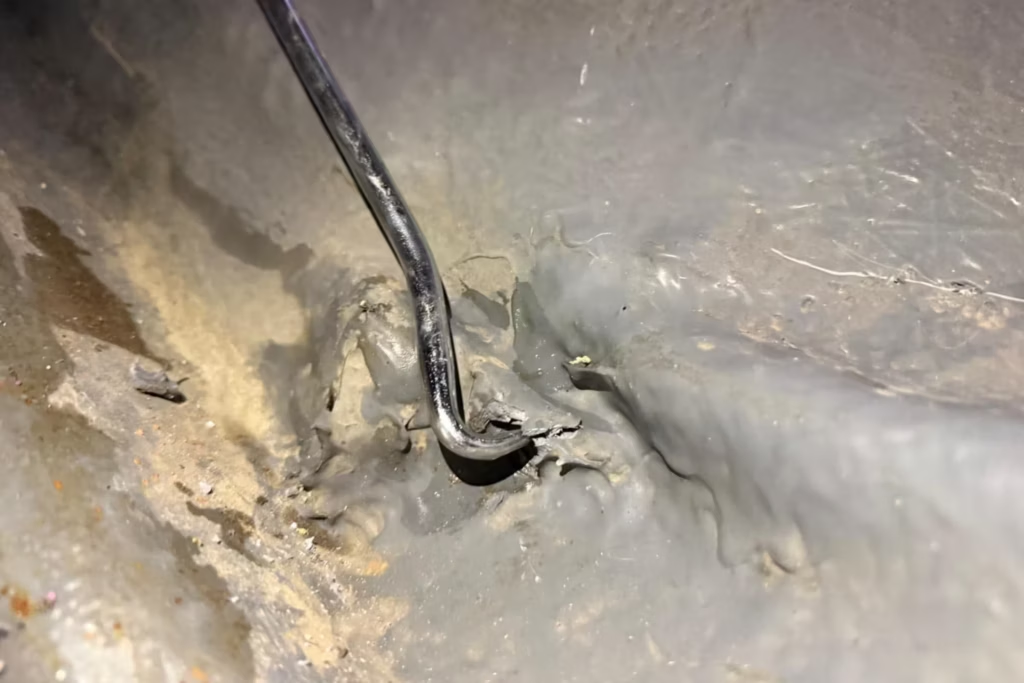
Direct inspection allows technicians to assess the condition of roofing materials, joints, seals, flashings, glazing interfaces and other potentially vulnerable components.
This can help identify visible deterioration, damage or defects that may be contributing to water ingress.
Close-quarter inspections are particularly valuable where potential defects cannot be adequately assessed from ground level.
Moisture mapping and thermal imaging surveys
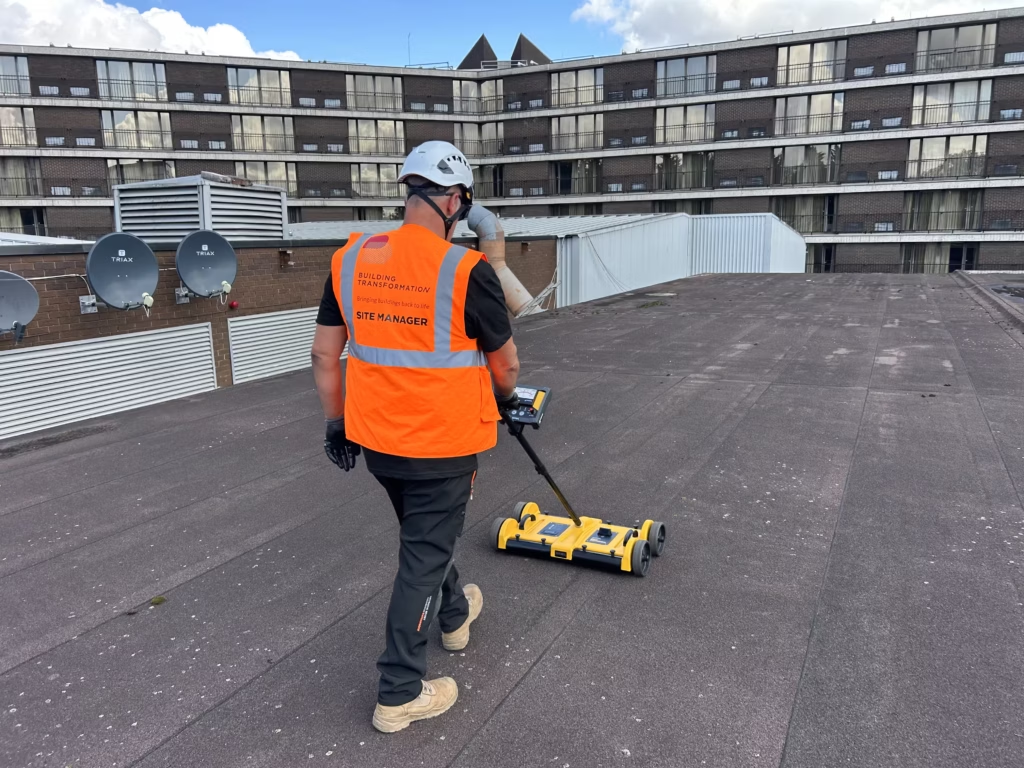
Moisture mapping can help establish the extent and distribution of moisture within affected building materials, providing information about areas that may require further investigation.
Thermal imaging surveys may also be used to identify temperature variations across building surfaces that could indicate moisture accumulation or other anomalies. But thermal imaging doesn’t directly detect water, and temperature differences can arise for several reasons. Your findings need to therefore be interpreted alongside other inspection evidence and the conditions within the building.
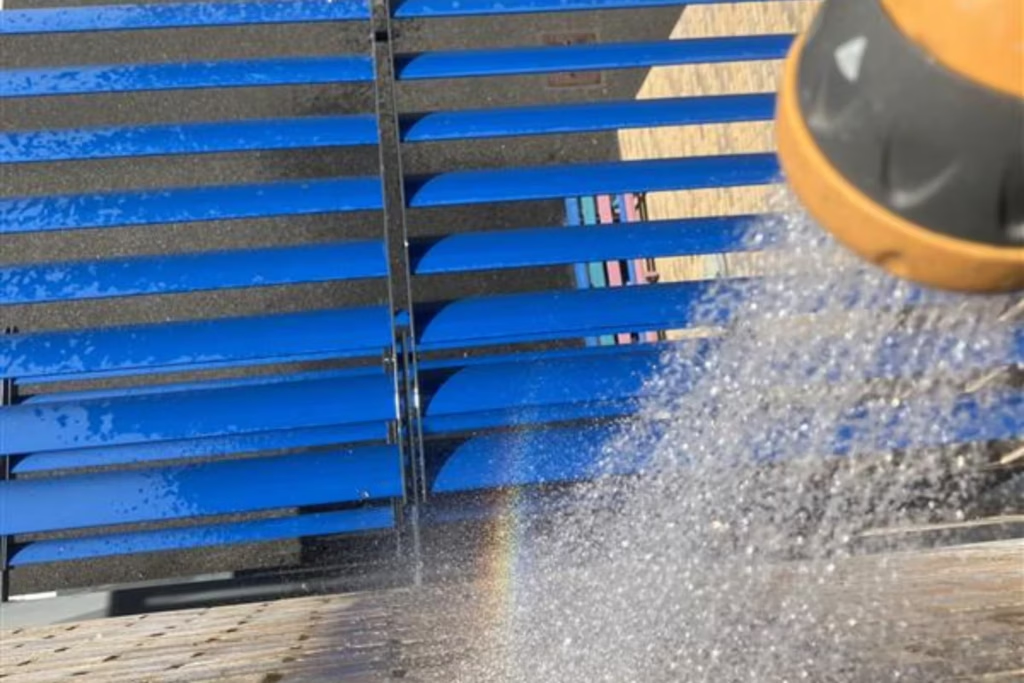
Controlled water testing
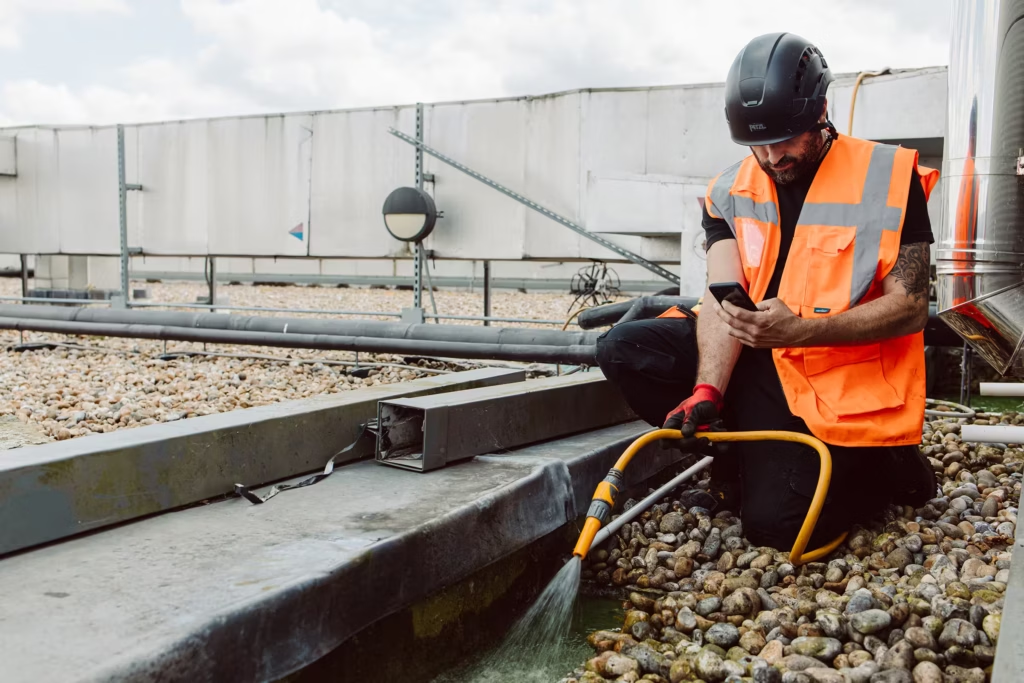
Where appropriate, controlled water testing can help assess suspected points of water entry.
By introducing water to selected areas under controlled conditions and monitoring the response, investigators may be able to narrow down the likely source of ingress.
The testing approach must account for the building’s construction, drainage arrangements and the potential risks associated with introducing water.
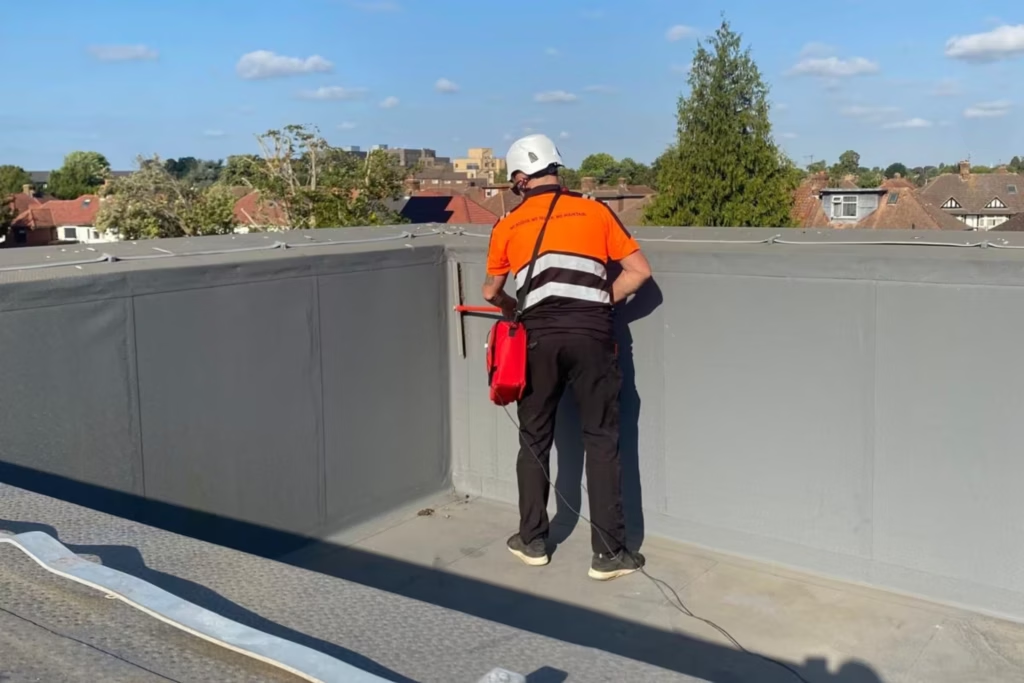
ELD (Electronic Leak Detection) and Dye Testing
Electronic leak detection uses electrical currents to help pinpoint breaches in the waterproofing layer that may not be visible during a conventional inspection. It’s commonly used to identify defects in certain roofing membranes and waterproofing systems.
Dye Testing on the other hand, uses a coloured tracer into a suspected water entry point or drainage system. By monitoring where the dye appears, investigators can help establish potential pathways for water ingress and identify areas requiring remedial attention.
The choice of testing method will depend on the building’s construction and the nature of the suspected defect, with techniques selected to provide reliable evidence and support appropriate repair recommendations.
Investigating leaks in difficult-to-access areas
One of the most significant challenges associated with commercial water ingress investigations is gaining safe access to the areas requiring inspection.
Large industrial facilities, office buildings, hotels and public buildings often incorporate high-level roofs, complex façades, glazed atriums and other areas that cannot be easily reached using conventional access methods.
The size, layout and operational requirements of a building can also influence how an investigation is carried out.
For example, a specialist roof leak investigation on a large commercial property may require access to multiple roof levels, drainage outlets, flashing details and service penetrations.
Selecting the appropriate access method
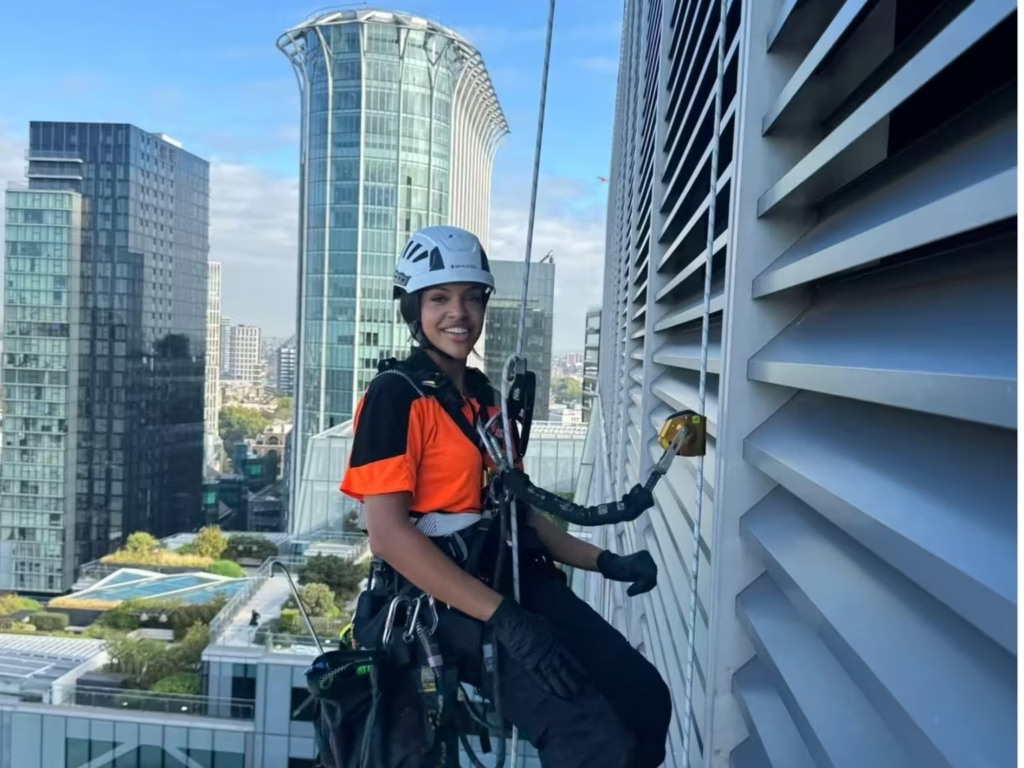
Depending on the building and the work required, access may be achieved through scaffolding, mobile elevating work platforms (MEWPs) or specialist rope access techniques.
Rope access can provide a practical solution for reaching high-level or restricted areas where conventional access equipment may be difficult to install or unsuitable for the building’s configuration.
It can enable IRATA member technicians to inspect individual components at close quarters without the need for extensive temporary structures like scaffolding.
An appropriate access method should always be determined through a site-specific assessment of the building, the inspection requirements and the associated risks.
Managing investigations in occupied commercial buildings
Water ingress investigations need to also account for the operational requirements of the property. In hotels, offices, hospitals and industrial facilities, closing areas of the building or interrupting normal operations may not always be practical.
Access planning should properly consider the safety of building occupants, the positioning of equipment, working areas and any restrictions associated with ongoing activities.
Careful coordination with the facilities management team can help minimise disruption while allowing the necessary inspections to take place.
From investigation findings to targeted repairs
Identifying the likely source of water ingress is an important milestone, but the investigation should also provide a practical basis for deciding what happens next.
Once inspections and testing have been completed, the findings can be documented to support decisions about remedial work.
Depending on the scope of the investigation, reporting may include:
- The areas inspected and the methods used.
- Details of observed defects and areas of deterioration.
- Photographic evidence and relevant testing findings.
- The likely source or contributing factors associated with the water ingress.
- Recommendations for further investigation, remedial repairs or ongoing monitoring.
This information helps building owners and facilities managers make informed decisions about the most appropriate course of action.
In some cases, a localised repair may be sufficient to address the identified defect, such as replacing a failed seal, repairing a damaged flashing or addressing a specific drainage issue.
But if the investigation reveals a wider deterioration or multiple vulnerabilities, it may require a more comprehensive maintenance or refurbishment strategy.
The key is to ensure that remedial work addresses the identified problem rather than simply concealing the visible symptoms of water ingress.
Where appropriate, further testing or post-repair inspections may help assess whether the remedial work has addressed the identified defect.
Planning ahead: water ingress and preventative maintenance
In a commercial property, it’s important to avoid depending entirely on a leak becoming visible before intervening.
Autumn and winter place additional pressure on roofing, drainage and building envelope systems, with prolonged rainfall, wind-driven rain and freezing temperatures potentially exposing existing defects, so it’s a good time to act in a preventative manner
Known leaks, roof drainage systems, gutters, flashings, seals and other exposed components can also be inspected as part of a planned preventative maintenance (PPM) programme.
Where water ingress has already caused damage, it’s important to consider the reinstatement work required once the source of the leak has been identified and repaired. This may include repairing damaged ceilings and plasterwork, treating affected areas and redecorating to restore the internal condition of the building.
Building Transformation can manage the entire process, from the initial leak investigation and external remedial works through to internal reinstatement.
Using investigation findings to inform ongoing maintenance
The information gathered during a water ingress investigation can provide value beyond the immediate repair.
Regular condition surveys and planned inspections can help facilities managers monitor these vulnerabilities, prioritise maintenance activities and identify where more detailed investigations may be necessary.
By incorporating investigation findings into ongoing asset management, property teams can make more informed decisions about repair priorities, maintenance budgets and the long-term condition of the building.
Commercial water ingress investigations with Building Transformation
Water ingress in commercial buildings can be complex, particularly where leaks involve high-level roofing systems, façades, curtain walling or difficult-to-access glazing.
Understanding the source of the problem relies on more than simply identifying where water becomes visible internally. It requires a structured investigation, appropriate specialist access and diagnostic evidence to inform the next steps.
At Building Transformation, we support commercial property owners, facilities managers and building management teams with specialist water ingress investigations and leak detection surveys.
Our approach combines appropriate access planning, detailed inspections and diagnostic techniques to help establish the likely cause of water ingress and inform targeted remedial work.
Contact Building Transformation to discuss your building, or call 01234 589807 to speak to our team.