Understanding the different types of render is essential when planning façade cleaning, render repairs, repainting or wider maintenance works on commercial and older buildings.
People often think of render as a simple external finish. But it actually plays an important role in protecting the building envelope from weathering, moisture, pollution and environmental exposure. When it’s performing correctly, it helps shield the underlying structure while contributing to the building’s appearance. When it fails, it can allow water to enter, trap moisture, crack, stain, delaminate or accelerate deterioration behind the surface.
The correct maintenance approach depends heavily on the render type. Cement render, concrete render, acrylic render, silicone render and traditional lime-based systems all behave differently. They also require different cleaning, repair and repainting strategies.
For older buildings in particular, this matters. Applying the wrong coating, carrying out aggressive render cleaning, or using incompatible repair materials can make façade problems worse rather than better.
What are the different types of render?
There are several types of render used across commercial, residential, older and heritage buildings. Some are traditional mineral-based systems, while others are modern proprietary systems designed for flexibility, appearance, weather resistance or low-maintenance performance.
The main render types commonly found on commercial and older buildings include:
- Cement render
- Concrete render or cementitious render finishes
- Lime render
- Acrylic render
- Silicone render
- Modern insulated render systems
- Previously painted or coated render systems
Each system has different properties. Some are hard and dense. Some are more breathable, while some are flexible. Some are more prone to cracking if the substrate moves, and some require highly specific coatings or repair materials.
This is why render maintenance should begin with inspection. Before cleaning, repairing or repainting rendered walls, it is important to understand what system is already in place and how it is performing.
Cement render: durable, but prone to cracking if movement occurs
Cement render is one of the most widely used external render systems. It is typically made from sand, cement and water, and is applied to masonry, brickwork or blockwork to create a hard, protective external surface.
It can be durable and weather-resistant when correctly applied and maintained. However, because cement render is relatively rigid, it can be vulnerable to cracking where the building moves, where there are thermal changes, or where the underlying substrate is unstable.
Common maintenance issues with cement render include:
- Hairline cracking
- Hollow or debonded areas
- Water ingress through cracks
- Staining and pollution deposits
- Failed paint or coatings
- Localised impact damage
- Poor adhesion around edges, openings and junctions
On older buildings, cement render can also create problems if it has been applied over a substrate that originally required more breathable materials. If moisture becomes trapped behind a hard cementitious layer, deterioration may occur within the masonry or original building fabric.
Where cement render is cracked, stained or failing, the priority is to understand the cause before specifying repair. A local patch repair may be suitable in some areas, but wider movement, trapped moisture or failed coatings may require a broader façade maintenance strategy.
Concrete render and cementitious finishes
Concrete render and cementitious finishes are commonly found on commercial buildings, apartment blocks, public buildings and older structures that have undergone previous refurbishment.
These systems are often robust, but they can still suffer from cracking, surface erosion, coating failure, staining and water ingress. Where concrete is part of the wider façade build-up, it is also important to consider whether visible render issues may be linked to deeper substrate problems, including corrosion of embedded metalwork or spalling.
Cleaning and repairing concrete render should be approached carefully. Dirt and staining may only be surface-level, but repeated staining below joints, window openings or façade projections can indicate water movement. Similarly, cracking may be cosmetic, or it may suggest a wider issue with movement, adhesion or substrate condition.
For commercial buildings, concrete render repairs should sit within a wider façade repair and maintenance strategy, particularly where defects are recurring or difficult to access.
Lime render: breathable and sensitive to inappropriate repairs
Lime render is more commonly associated with older and heritage buildings. Unlike cement render, lime-based materials are more breathable and flexible, allowing moisture to move through the building fabric rather than becoming trapped.
This breathability is one of the reasons lime render has historically been used on older masonry buildings. Many older structures were designed to manage moisture differently from modern sealed façade systems. They rely on compatible materials that allow the building fabric to dry out naturally.
Problems occur when lime render is repaired with hard cement-based materials or coated with impermeable paints. This can trap moisture, accelerate decay, cause blistering or lead to further cracking and detachment.
Common issues with lime render include:
- Surface erosion
- Cracking
- Loss of adhesion
- Damp staining
- Salt contamination
- Incompatible previous repairs
- Trapped moisture caused by unsuitable coatings
On older buildings, render repairs should therefore be specified with sensitivity to the existing fabric. The aim is not simply to make the façade look clean or new, but to protect its long-term performance.
Acrylic render: flexible, but reliant on compatible maintenance
Acrylic render is a modern render system that contains acrylic resins to improve flexibility and adhesion. It is often used where a smoother, decorative finish is required, and it can offer better crack resistance than traditional cement render.
However, acrylic render is not maintenance-free. It can still suffer from staining, algae growth, coating failure, cracking, impact damage or poor adhesion if incorrectly applied or exposed to persistent moisture.
Cleaning acrylic render requires care. Aggressive cleaning methods can damage the surface finish, while unsuitable chemicals may affect colour, texture or coating performance. If repairs are needed, they should be compatible with the existing system to avoid visible patching, adhesion failure or different movement characteristics.
Repainting acrylic render also requires the correct coating specification. Applying the wrong paint system can affect breathability, water shedding, flexibility and long-term durability.
What is silicone render?
Silicone render is a modern render system designed to provide flexibility, weather resistance and water-repellent properties. It is often used on contemporary commercial façades and insulated render systems because it offers good resistance to staining, cracking, and algae growth when properly maintained.
The key characteristic of silicone render is that it is vapour-permeable while also helping shed water from the surface. This means it can allow some moisture vapour to escape while reducing the amount of water absorbed by the façade.
However, silicone render still needs appropriate maintenance. Dirt, pollution, and biological growth can still accumulate, particularly on shaded elevations, in areas below ledges, or on buildings exposed to heavy traffic pollution.
When cleaning, repairing or repainting silicone render, compatibility is critical. Silicone render paint or coating systems must be selected carefully to avoid compromising the original performance of the render system.
How render type affects façade cleaning
Render cleaning is not a one-size-fits-all process. The correct method depends on the render type, age, condition, texture, coating and level of contamination.
A rendered façade may need cleaning because of:
- Algae or biological growth
- Traffic pollution
- Carbon staining
- General grime
- Water runoff marks
- Staining below sills, joints or architectural details
- Previous coating breakdown
However, before cleaning begins, the render should be inspected for cracks, hollow areas, loose material or failed coatings. Cleaning a defective rendered façade without understanding its condition can worsen the problem.
For example, excessive pressure may damage fragile render or force water into cracks. Chemical cleaning products may be unsuitable for some coatings. A heavily stained area may not be a cleaning issue at all, but a sign of water ingress or poor drainage.
We can provide specialist façade cleaning as part of our wider façade maintenance, which helps commercial property teams understand whether staining is superficial or linked to a deeper defect.
How render type affects repair strategy
The success of render repairs depends on compatibility. Repair materials need to work with the existing render, substrate and exposure conditions.
A cement render repair may need a cementitious repair mortar, but that same approach may be unsuitable on a lime-rendered heritage façade. Acrylic and silicone render systems may require proprietary repair products to ensure adhesion, texture, colour and movement compatibility.
Render repairs also need to consider why the defect occurred. If a crack has formed because of building movement, simply filling it may not solve the problem. If render has failed because moisture is trapped behind the surface, patching the visible defect will not address the underlying cause.
A proper repair strategy should consider:
- Render type and composition
- Substrate condition
- Moisture levels
- Crack pattern and movement
- Coating condition
- Previous repairs
- Exposure and drainage
- Access requirements
- Repainting or recoating needs
This is where façade inspections are critical. They allow defects to be diagnosed before works are specified, reducing the risk of repeat failures.
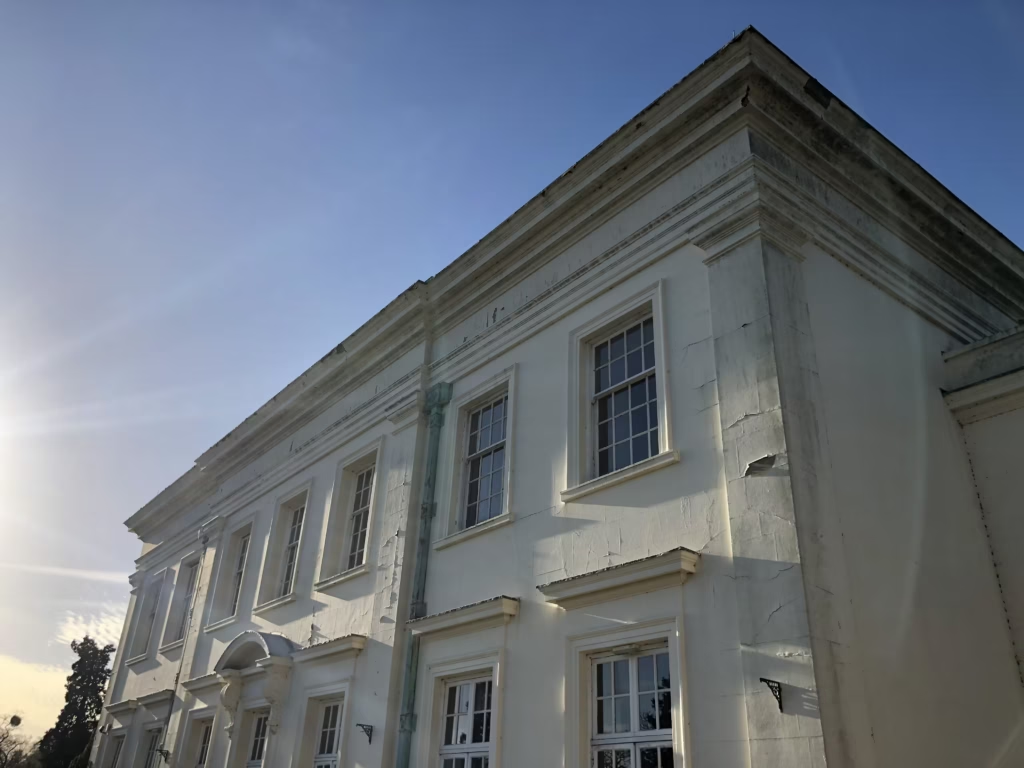
Can old render be repaired or repainted?
Old render can often be repaired or repainted, but only once its condition has been properly assessed.
If the render is generally sound, localised repairs followed by cleaning and repainting may be suitable. If the render is hollow, debonded, heavily cracked, damp or affected by incompatible previous coatings, more extensive remediation may be required.
Repainting rendered walls can improve appearance and provide additional weather protection, but paint should never be used to hide unresolved façade defects. If cracks, moisture problems or failed coatings remain beneath the surface, the new coating is likely to fail.
The coating also needs to match the render type. Older breathable façades should not be sealed with impermeable coatings that trap moisture. Modern acrylic or silicone systems may require compatible paint systems to maintain performance.
Our façade redecoration services help ensure preparation, repair and coating works are planned together, rather than treated as separate tasks.
Why older buildings need a different maintenance approach
Older buildings often have more complex façade requirements than modern buildings. They may contain mixed materials, historic repairs, breathable substrates, lime-based renders, older coatings or areas of previous patching.
They may also have defects that are difficult to diagnose from ground level, especially where staining, cracking or water ingress appears at height.
A maintenance approach for an older rendered building should consider:
- The original building fabric
- Whether the façade needs to breathe
- Previous repair materials
- Moisture movement
- Heritage sensitivity
- Coating compatibility
- Access constraints
- Long-term durability, not just appearance
Using modern materials on older buildings is not automatically wrong. However, those materials must be compatible with how the building manages moisture, movement and exposure.
Where there is uncertainty, a quality façade survey should be carried out before cleaning, repair or redecoration works are specified.
Why façade surveys via rope access matter
Many render issues are difficult to assess properly from ground level. Cracks, hollow render, staining patterns, failed coatings and water ingress points may only become clear when inspected close-up.
Rope access allows IRATA-qualified trained technicians to inspect and maintain difficult-to-reach areas of a rendered façade without always requiring full scaffolding. This is particularly useful on occupied commercial buildings, high-level elevations or restricted sites where access needs to be controlled.
Through close-range inspection, our teams can identify whether a façade needs cleaning, localised render repairs, coating removal, repainting, leak investigation or wider remediation.
This supports a more accurate, cost-effective maintenance strategy. Instead of relying on assumptions, building owners and property managers can make decisions based on the actual condition of the façade.
Our guide on how to spot a failing façade explains some of the early warning signs to look for, including cracking, staining, water ingress and material deterioration.
Planning the right maintenance strategy for rendered façades
The different types of render used on commercial and older buildings all require different maintenance considerations.
Cement render, concrete render, acrylic render, silicone render and lime render each behave differently. Each one responds differently to cleaning, repair, repainting, moisture and movement.
That is why the right starting point is always inspection. Before cleaning, repairing or repainting a rendered façade, the render type and cause of deterioration should be understood.
At Building Transformation, we provide specialist façade maintenance, façade cleaning, render repairs, leak investigation and façade redecoration for commercial and difficult-access buildings.
If your rendered façade is showing signs of cracking, staining, coating failure, trapped moisture or general deterioration, we can inspect the building, identify the likely cause and recommend a practical maintenance strategy that protects the façade for the long term.