Commercial buildings, industrial facilities and infrastructure assets all require ongoing maintenance to remain safe, weather-resistant and operational.
Some maintenance can be planned. Roofs can be inspected, gutters can be cleared and protective coatings can be renewed before serious deterioration occurs. Other problems are less predictable. Water ingress may appear suddenly, a section of masonry may become loose or a roof defect may require an immediate response.
This is why most organisations need a combination of PPM and reactive maintenance. Planned preventative maintenance helps identify and address deterioration before it becomes critical. Reactive maintenance responds to defects after they have occurred or been reported.
Used together, these approaches help facilities managers, property managers, surveyors and asset owners protect building performance, reduce disruption and make more informed decisions about maintenance investment.
What Is PPM and Reactive Maintenance?
PPM and reactive maintenance are two different but connected approaches to managing buildings and assets. Planned preventative maintenance, or PPM, is maintenance carried out at scheduled intervals to reduce deterioration and lower the risk of unexpected failure. Reactive maintenance is work carried out after a defect, fault or building problem has been identified.
The main difference is timing. PPM takes place before an anticipated failure. Reactive maintenance takes place after something has gone wrong. In practice, both approaches are often required.
A planned roof inspection may identify defects that need corrective repairs. A reactive leak investigation may reveal a recurring drainage problem that should be added to the future maintenance programme.
The objective is not to eliminate reactive maintenance completely. It is to reduce avoidable failures and respond more effectively when unexpected problems occur.

What Is Reactive Maintenance?
Reactive maintenance is work initiated because a building component has failed, deteriorated or stopped performing as intended.
Common examples include:
- Water ingress
- Roof leaks
- Loose masonry
- Failed sealants
- Blocked or overflowing gutters
- Damaged cladding
- Broken glazing
- Coating failure
- Storm damage
- Unsafe building components
Reactive maintenance does not always indicate that a building has been poorly maintained. Some problems remain concealed until weather conditions expose them. Others may result from accidental damage, material failure or changes to the building.
However, repeated reactive repairs in the same location can indicate that the underlying cause has not been properly diagnosed. A successful reactive maintenance response should therefore do more than restore the visible defect. It should help establish why the problem occurred and whether further investigation or planned work is needed.
Types of Reactive Maintenance
Reactive maintenance can take several forms depending on the urgency and consequences of the defect.
Emergency Maintenance
Emergency maintenance is required when a defect creates an immediate safety, operational or property risk. Examples may include falling façade materials, significant roof damage or water entering areas containing electrical equipment. The first priority is usually to make the area safe. A permanent repair strategy can then be developed once the immediate risk has been controlled.
Corrective Maintenance
Corrective maintenance restores a defective component to an acceptable condition. The issue may not be an emergency, but it requires action to prevent it from worsening or affecting other parts of the building. For example, repairing a leaking gutter joint can help prevent staining, masonry deterioration and water ingress below.
Deferred Maintenance
Deferred maintenance is work that has been identified but postponed because of budget, access, procurement or operational constraints. Deferring work can be reasonable when the risk is understood and monitored. However, repeated delays can increase the scale and cost of the eventual repair.
Run-to-Failure Maintenance
Run-to-failure means allowing an asset to remain in use until it stops working or reaches the end of its serviceable life. This may be suitable for inexpensive, non-critical and easily replaced components. It is less appropriate for roofs, façades, drainage systems and structural elements where failure could create safety risks, water damage or major disruption.
What Is Planned Preventative Maintenance?
Planned preventative maintenance is inspection and maintenance work scheduled before an expected failure occurs. The purpose is to preserve asset condition, identify defects early and reduce the likelihood of unplanned repairs.
PPM may include:
- Roof inspections
- Façade condition surveys
- Gutter and drainage cleaning
- Sealant inspections
- Localised masonry repairs
- Protective coating maintenance
- Cladding inspections
- Access-system inspections
- Cleaning of sensitive materials
- Monitoring known defects
Planned maintenance should not mean replacing every component according to a fixed calendar. The most effective programmes consider asset condition, exposure, previous defects, operational requirements and the consequences of failure.
A roof on an exposed industrial building may require more frequent inspection than a sheltered roof with a reliable maintenance history. Likewise, a façade above a busy public entrance may require greater scrutiny than an area where failure would have limited consequences.
What Is the Difference Between Reactive and Planned Maintenance?
Reactive maintenance begins when a defect has already occurred or been identified. Planned maintenance is scheduled in advance to reduce the likelihood or impact of that failure.
Reactive maintenance is usually driven by an immediate building problem. Planned maintenance is driven by condition, risk, inspection findings or an agreed maintenance schedule.
Reactive work can be less predictable and may need to be completed at short notice. Planned work is easier to budget, schedule and coordinate around building operations.
However, planned maintenance cannot prevent every failure. Severe weather, concealed defects and accidental damage can still create unexpected requirements. For this reason, most commercial property strategies combine planned and reactive maintenance rather than choosing one approach exclusively.
Find out about our Building Envelope Maintenance Programme
How Do Planned and Reactive Maintenance Work Together?
A strong maintenance strategy treats planned and reactive maintenance as part of the same cycle.
The process typically begins with an inspection survey. The condition of the asset is reviewed and defects are identified.
The findings are then prioritised according to risk, urgency and the consequences of failure. Some work may need to be completed immediately. Other defects can be monitored or included in a future maintenance programme.
Once the work is completed, the findings and repairs should be recorded. This information can then be used to improve future PPM schedules. For example, repeated reactive repairs to a particular gutter or roof area may show that the asset requires more frequent inspection or a permanent replacement solution.
The maintenance cycle can be summarised as:
- Inspect
- Prioritise
- Plan
- Maintain
- Record
- Review
This approach allows maintenance decisions to become more evidence-led over time.
Advantages of Reactive Maintenance
Reactive maintenance can be appropriate where the consequences of failure are low.
Potential advantages include:
- No maintenance expenditure before a fault occurs
- Resources are directed towards confirmed problems
- Simple assets can remain in use for their full service life
- Urgent defects can be controlled quickly
- Localised repairs may avoid unnecessary replacement
It may be suitable for inexpensive and easily replaced components. Reactive maintenance can also be useful where an unexpected defect could not reasonably have been predicted.
The key is understanding which assets can safely be managed in this way.
Disadvantages of Reactive Maintenance
Overreliance on reactive maintenance can create significant commercial and operational risks.
Unpredictable Costs
Emergency access, labour and materials may need to be arranged at short notice. The organisation may also have limited time to compare options or coordinate the work efficiently.
Greater Disruption
Unexpected defects do not always occur during a convenient maintenance window. Entrances, workspaces or production areas may need to be closed while the problem is investigated.
Larger Repair Requirements
A minor defect can affect adjoining materials if it is not identified early. Failed sealant can allow water ingress. A damaged coating can expose steelwork to corrosion. Blocked drainage can damage roofs and façades.
Repeat Callouts
Temporary repairs may control the immediate symptom without addressing the cause. This can result in repeated visits to the same problem area.
Limited Asset Information
A purely reactive strategy makes it harder to understand building condition, forecast budgets and prioritise future work.
Predictive Maintenance vs Preventative Maintenance
Preventive and predictive maintenance both aim to reduce unexpected failures, but they use different triggers. Preventive maintenance is completed according to a schedule, expected deterioration pattern or risk assessment. Predictive maintenance uses condition data to indicate when intervention is likely to be required.
Predictive maintenance information can come from:
- Moisture readings
- Thermal imaging
- Repeated photographic surveys
- Crack monitoring
- Coating-thickness testing
- Corrosion assessments
- Water-ingress testing
- Drone imagery
- Condition survey records
- Sensors and monitoring equipment
A roof inspected every year is being managed preventatively. If inspection data shows that a coating or membrane is deteriorating at a measurable rate and maintenance is scheduled according to that evidence, the strategy becomes condition-based or predictive.
Predictive maintenance can reduce unnecessary work, but it depends on reliable information and clear intervention criteria.
Reactive and Planned Property Maintenance
Reactive and planned property maintenance can cover every part of the building envelope.
This may include:
- Commercial roofs
- Façades
- Curtain walling
- Cladding
- Glazing
- Masonry
- Render
- Sealants and movement joints
- Gutters and drainage
- Protective coatings
- Balconies and walkways
- Access systems
- High-level structures
These elements should not always be treated in isolation. A blocked gutter can damage the façade below. Failed roof drainage can create internal water ingress. Cracked masonry can allow moisture to reach embedded metalwork. A defective curtain wall joint may affect internal finishes several floors below.
A coordinated maintenance strategy considers how these components interact.
How Inspections Support Maintenance Planning
Effective maintenance begins with understanding asset conditions.
Inspections help identify:
- Deterioration
- Water ingress
- Failed sealants
- Loose materials
- Damaged coatings
- Corrosion
- Roof defects
- Drainage problems
- Access requirements
- Immediate safety concerns
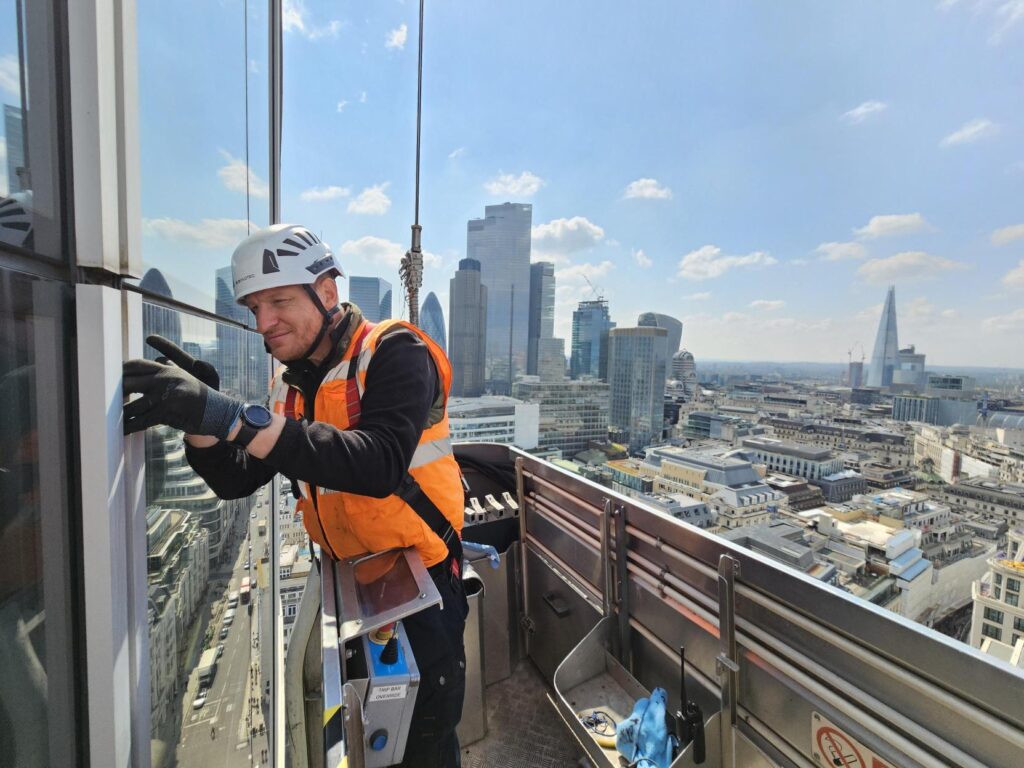
A comprehensive building condition survey can provide an overview of current building condition and identify areas requiring more detailed investigation. This is particularly valuable where maintenance records are incomplete, responsibility for the building has changed or several recurring defects have been reported. Inspection findings help property teams separate immediate repairs from planned work and longer-term replacement.
Commercial Roof Condition Surveys
Commercial roofs contain many vulnerable details that may not be visible from inside the building. These can include drainage outlets, penetrations, flashings, seams, rooflights and changes in level. A commercial roof condition survey can help identify deterioration, establish repair priorities and support maintenance budgeting.
Where physical access is restricted, drone roof surveys can provide an initial overview of roof condition. Drone surveys can help identify visible defects and target areas for closer investigation, although they do not replace every hands-on inspection.
Façade and Curtain Walling Maintenance
Façade defects can affect safety, weather resistance and building appearance.
Common issues include:
- Failed sealants
- Loose masonry
- Cracked render
- Damaged cladding
- Corroded fixings
- Staining
- Water ingress
- Coating deterioration
Planned façade and curtain walling maintenance helps identify vulnerable areas before deterioration affects larger sections of the building.
Where defects are already present, a close inspection may be needed to establish whether the visible damage is localised or part of a wider failure.
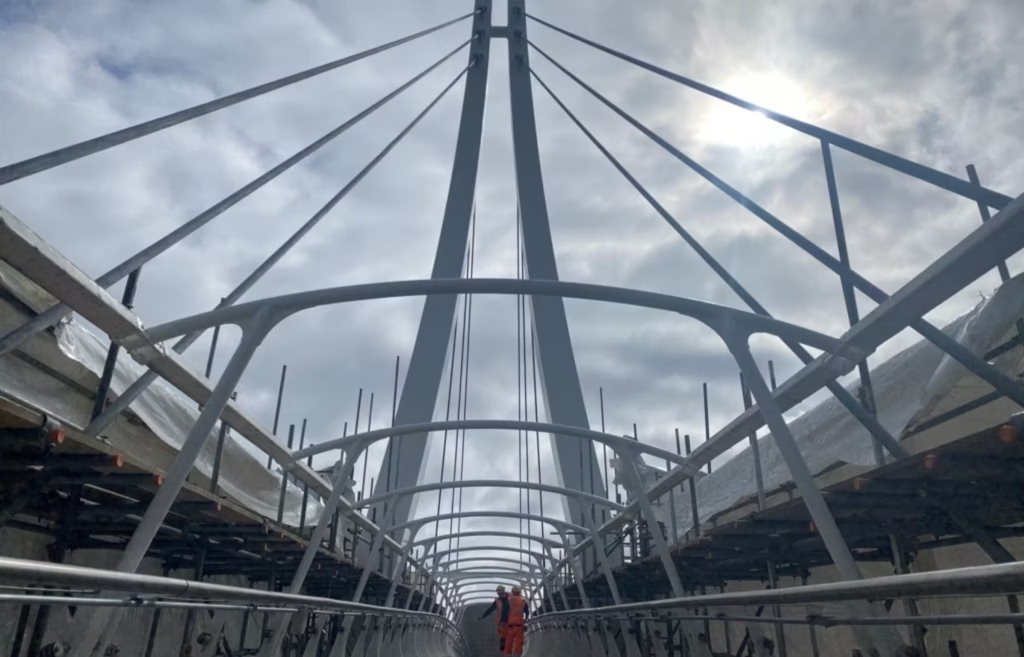
Bridge and Infrastructure Condition Surveys
Bridges, walkways and connecting structures can be difficult to inspect using conventional access methods. Exposed steelwork, coatings, joints and structural components may deteriorate in areas that cannot be examined safely from ground level.
Specialist bridge condition surveys can help identify corrosion, coating failure and wider maintenance requirements. The findings can then support a planned programme of cleaning, treatment, repair and protective work.
Corrosion and Protective Coating Maintenance
Corrosion is a common maintenance concern for industrial structures and exposed steelwork. If protective coatings fail, moisture and pollutants can reach the underlying metal.
Over time, this can lead to:
- Material loss
- Coating delamination
- Increased repair costs
- Structural deterioration
- Safety risks
- Reduced asset life
Maintenance may require cleaning, surface preparation, corrosion treatment and the application of a compatible protective system. Where existing coatings have failed or become unsuitable, industrial coating removal may be required before new protection can be applied. Painting should not be treated as a cosmetic exercise alone. Surface condition, moisture, corrosion and previous coatings all influence the performance of the new system.
This guide to rope access methods for building painting explains how access planning and surface preparation contribute to a successful result.
High-Level Maintenance
High-level maintenance includes inspection, cleaning and repair work carried out on elevated parts of commercial and industrial buildings.
This may include:
- Roof-edge maintenance
- Façade repairs
- Gutter clearance
- Masonry repairs
- Painting
- Protective coating work
- Sealant replacement
- Glazing maintenance
- Cladding inspections
- Removal of loose materials
The technical work may be straightforward, but safely reaching the area can be complex.
Building height, roof access, ground conditions, public areas and the quantity of materials all influence how the work should be delivered.
Difficult-Access Maintenance
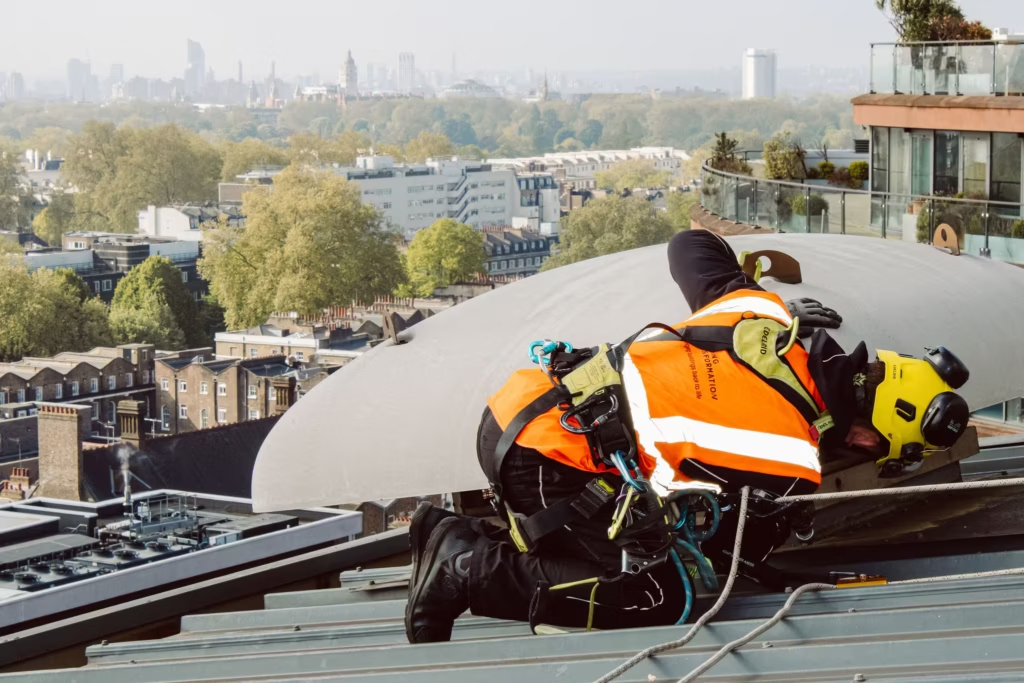
Difficult-access maintenance applies to areas that cannot be reached safely or efficiently using ordinary ladders, towers or conventional ground-based equipment.
Examples include:
- High-rise façades
- Sloping roofs
- Internal atriums
- Restricted courtyards
- Structures above water
- Industrial plant
- Bridges
- Chimneys
- Complex roof structures
- Areas above occupied entrances
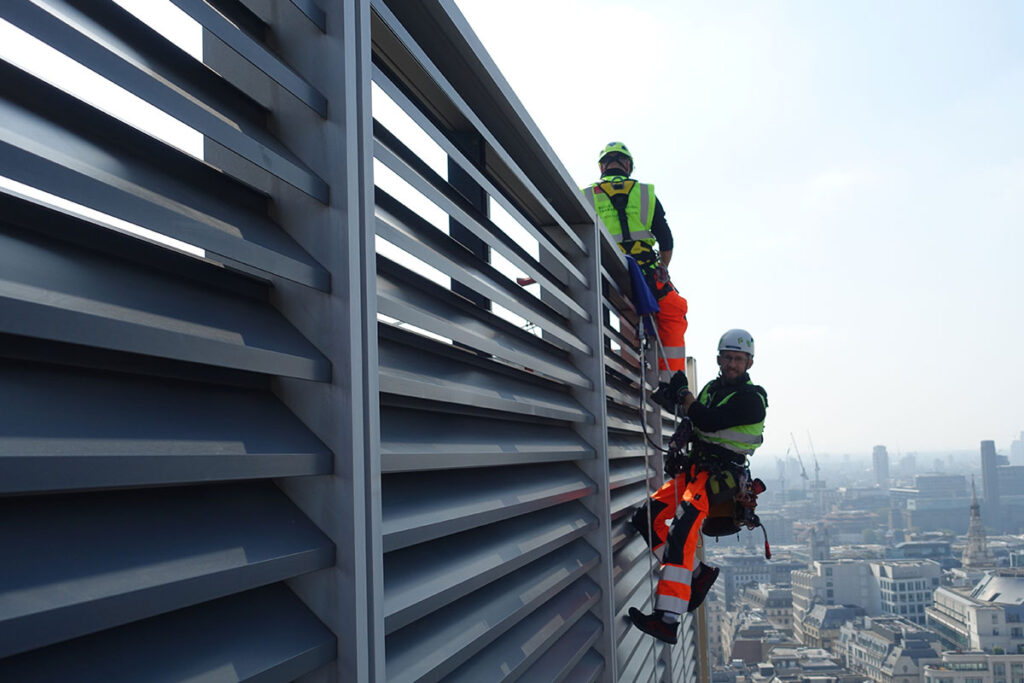
Difficult-access maintenance may involve rope access, MEWPs, cradles, temporary platforms, drones, scaffolding or a combination of methods.
The correct solution should be selected according to the building, task and operational environment.The access method should support the maintenance outcome rather than dictate it.
How Rope Access Supports PPM and Reactive Maintenance
Rope access can provide close access to difficult-to-reach areas without surrounding the building with extensive scaffolding.
It can support both planned and reactive maintenance activities, including:
- Condition inspections
- Water-ingress investigations
- Façade repairs
- Roof repairs
- Sealant replacement
- Gutter clearance
- Painting
- Coating maintenance
- Glazing work
- Masonry repairs
- Removal of loose materials
For planned maintenance, rope access can help teams inspect and maintain recurring high-level areas with relatively limited disruption.
For reactive maintenance, it can provide a rapid route to locations that need to be inspected or made safe. This overview of rope access services explains how the method can support commercial and high-rise building maintenance.
For operational sites and industrial structures, industrial rope access services can provide access where ground conditions, equipment or structural geometry restrict conventional methods.
Rope access is not suitable for every task. Large replacement projects, long-duration programmes and work involving significant quantities of materials may be better suited to scaffolding or powered access.
The correct access method should be determined during maintenance planning.
Choosing the Right Maintenance Strategy
The appropriate maintenance strategy depends on risk, condition and operational requirements.
Facilities managers and property teams should consider several factors.
Consequences of Failure
Ask what would happen if the asset failed.
Could it:
- Create a safety risk?
- Allow water into the building?
- Interrupt business operations?
- Damage another asset?
- Affect tenants or customers?
- Create an expensive emergency response?
- Cause insurance or compliance concerns?
The greater the consequence, the stronger the case for planned inspection and preventative maintenance.
Asset Condition
An asset with known deterioration requires a different strategy from one that is new and performing reliably. Where condition is unknown, an inspection should usually take place before deciding to rely on reactive maintenance.
Accessibility
A simple defect can become expensive if specialist access must be arranged every time it occurs. When access is complex, several inspections and maintenance tasks may be grouped into one programme.
Building Operations
Maintenance may need to account for:
- Occupancy
- Production schedules
- Hotel guests
- Academic terms
- Peak trading periods
- Security requirements
- Weather windows
- Tenant communication
Planned work can usually be coordinated around these requirements more effectively than an emergency response.
Whole-Life Cost
The lowest immediate repair cost may not provide the best long-term value.Repeated access, temporary repairs and damage to adjoining materials can make a reactive-only strategy more expensive over time.
How to Reduce Reactive Maintenance
Reactive maintenance cannot be removed completely, but its frequency and impact can often be reduced.
Practical steps include:
- Establishing current asset condition
- Recording recurring defects
- Creating inspection schedules
- Clearing gutters before high-risk weather periods
- Addressing minor coating and sealant failures
- Monitoring known problem areas
- Grouping difficult-access work
- Reviewing temporary repairs
- Keeping photographs and maintenance records
- Setting clear escalation procedures
- Allocating contingency budgets
Each reactive call-out should also be treated as a source of information.
A repeated roof leak, blocked outlet or coating failure may reveal a wider issue that should be incorporated into the PPM programme.
Creating a PPM and Reactive Maintenance Plan
A practical maintenance plan should begin with an asset register. This should record the major elements requiring inspection and maintenance, including roofs, façades, drainage, glazing, coatings and access systems.
The next step is to establish the current condition. Existing reports, repair records and new inspections can be used to identify known defects and information gaps. The assets should then be prioritised according to risk.
Maintenance requirements may be divided into:
- Immediate safety work
- Urgent corrective repairs
- Planned preventative maintenance
- Monitoring
- Long-term refurbishment or replacement
The plan should also define how reactive defects will be reported and assessed.
Responsibilities should be clear, particularly where several teams, tenants or contractors may identify issues.
Accurate records should be retained for every inspection and repair.
These may include:
- Defect locations
- Photographs
- Inspection findings
- Materials used
- Completion dates
- Access methods
- Outstanding recommendations
- Suggested review periods
The programme should be reviewed regularly as more information becomes available.
Choosing Reactive Maintenance Services
Reactive maintenance companies should be assessed on more than their ability to attend quickly.
Useful questions include:
- Can they investigate the cause of the problem?
- Do they understand the relevant building element?
- Can they inspect difficult-to-reach areas?
- Will they distinguish between temporary and permanent repairs?
- Can they provide photographs and technical records?
- Do they have appropriate access and safety systems?
- Can their findings support future planned maintenance?
- Do they have experience with occupied commercial or industrial buildings?
Rapid attendance is valuable, but speed without diagnosis can result in repeated work.
From Reactive Repairs to Industrial Asset Protection
Reactive maintenance should not end when the immediate defect has been repaired. Each repair can provide useful information about the wider condition of the building or asset.
It may reveal:
- A recurring weakness
- An inspection gap
- A drainage issue
- An unsuitable previous material
- An access constraint
- A component approaching the end of its service life
- A location that should be added to the PPM programme
By recording and reviewing these findings, organisations can gradually move from repeated emergency response towards planned, evidence-led asset protection.
Building Transformation supports commercial and industrial property teams with building inspections, reactive repairs, planned maintenance and difficult-access works across façades, roofs and wider building-envelope assets.
The starting point is understanding the problem, assessing the risk and deciding what information is needed before work begins.
Exploring PPM and Reactive Maintenance Solutions?
An effective maintenance strategy should help organisations:
- Protect building assets
- Reduce safety risks
- Identify defects earlier
- Improve budget planning
- Minimise operational disruption
- Reduce repeat repairs
- Extend asset life
- Improve maintenance records
- Prioritise investment
Rather than viewing planned and reactive maintenance as competing approaches, they should be used together.
PPM helps reduce predictable failures. Reactive maintenance provides the flexibility to respond when unexpected defects occur.Inspections and accurate records connect the two.
Speak to Building Transformation
Whether you are responding to an active defect, investigating a recurring problem or developing a planned maintenance programme, Building Transformation can help assess the building and establish the most appropriate next step.
Photographs, videos, previous reports and maintenance records can help our team understand the issue before a site visit is arranged.
Contact our team to discuss your commercial or industrial building maintenance requirements.
Related Building Maintenance Services and Guides
Explore specific maintenance and inspection services in more detail:
- Bridge Condition Surveys
- Industrial Coating Removal
- Drone Roof Surveys
- Façade and Curtain Walling Maintenance
- Commercial Roof Condition Surveys
You can also read more about building inspections and difficult-access maintenance:
- Industrial Rope Access Services
- Rope Access Services
- Building Condition Surveys
- How Rope Access Methods Make Building Painting a Success
Frequently Asked Questions
What is PPM and reactive maintenance?
PPM is planned maintenance completed before an anticipated failure. Reactive maintenance responds to a defect after it has occurred or been identified. Most commercial buildings require a combination of both approaches.
What is the difference between planned and reactive maintenance?
Planned maintenance is scheduled in advance according to time, condition or risk. Reactive maintenance begins when an asset develops a fault, fails or creates an urgent problem.
Is PPM the same as preventative maintenance?
PPM usually means planned preventative maintenance. It includes inspections and maintenance activities scheduled to reduce deterioration and lower the risk of unexpected failure.
What is predictive maintenance?
Predictive maintenance uses condition data to estimate when an asset is likely to require intervention. Maintenance is completed when evidence shows deterioration rather than solely according to a fixed schedule.
What are the main types of reactive maintenance?
The main types include emergency maintenance, corrective maintenance, deferred maintenance and run-to-failure maintenance.
What are the advantages of reactive maintenance?
Reactive maintenance can reduce unnecessary routine spending on low-risk assets and allow simple components to remain in service until a confirmed fault occurs.
What are the disadvantages of reactive maintenance?
Potential disadvantages include unpredictable costs, operational disruption, repeat callouts, larger repair requirements and limited time to investigate the cause.
Can reactive maintenance be avoided completely?
No maintenance programme can prevent every unexpected defect. However, inspections, accurate records and preventative work can reduce the frequency and impact of failures.
What is high-level maintenance?
High-level maintenance is inspection, cleaning or repair work carried out on elevated areas such as roofs, façades, gutters, glazing and structural steelwork.
Can rope access support planned and reactive maintenance?
Yes. Rope access can support inspections, localised repairs, painting, cleaning and urgent make-safe work where the affected area is difficult to reach.
How often should a commercial building be inspected?
Inspection frequency depends on building age, condition, materials, exposure, use and defect history. The interval should reflect the risk and consequences of asset failure.
What should a building maintenance plan include?
A building maintenance plan should include an asset register, condition information, risk priorities, inspection schedules, planned work, reactive response procedures, access requirements and accurate maintenance records.