Manufacturing facilities, warehouses and industrial sites depend on buildings that are often under constant pressure. Roofs, gutters, façades, cladding, steelwork, loading bay structures, rooflights, gantries and elevated plant areas are exposed to weather, movement, vibration, operational wear and environmental conditions every day.
Because many of these areas sit above normal eye level, defects can go unnoticed for long periods. A blocked gutter, failed roof detail, damaged façade panel or small patch of corrosion may not immediately affect operations. But is left unchecked, that same issue can develop into water ingress, safety risk, production disruption or a more expensive repair.
Planned high level maintenance helps facilities, estates and operations teams understand the condition of difficult-to-access assets before they fail. So, instead of waiting for a leak, loose component or corrosion problem to force action, manufacturing sites can use planned inspections and preventative maintenance to protect the building, reduce disruption and support operational continuity.
For environments where downtime is costly and safety is critical, high-level maintenance is not simply a property upkeep issue. It is part of protecting the facility’s ability to keep working.
What is high level maintenance?
High level maintenance refers to inspection, cleaning, repair and preventative maintenance work carried out on parts of a building or structure that cannot be easily accessed from ground level.
In a manufacturing or industrial environment, this often includes roofs, gutters, cladding, façades, curtain walling, high-level glazing, structural steelwork, elevated walkways, bridges, gantries, canopies and roof-mounted plant areas.
These assets play an important role in protecting the building envelope. Roofs and gutters manage water. Façades, cladding and curtain walling protect the structure from weather exposure. Steelwork, gantries and elevated structures support safe movement, operation and access. When these elements deteriorate, the impact is rarely contained to the exterior of the building. It can quickly affect production areas, internal environments, stock, equipment and site safety.
What is planned maintenance?
Planned maintenance is a proactive approach to managing building condition. It involves inspecting and maintaining assets before defects become failures.
For manufacturing facilities, this might mean scheduling roof and gutter inspections before winter, checking high-level façade elements after severe weather, monitoring corrosion on exposed steelwork, or planning localised repairs during a shutdown period rather than waiting for an emergency.
The purpose is to give site teams more control. When inspections happen regularly, defects can be identified early, prioritised properly and repaired at a time that works around production, logistics and operational requirements.
This is especially important in industrial environments, where even a relatively small building defect can have a wider operational impact. A leak above a production line, a blocked gutter over a loading bay or deteriorating steelwork near an access route can create disruption far beyond the original maintenance issue.
The problem with reactive-only maintenance
Reactive maintenance has its place. If something fails unexpectedly, it needs to be dealt with. However, when a manufacturing facility relies mainly on reactive maintenance, it becomes much harder to manage risk, cost and disruption.
The issue is that many high-level defects do not appear suddenly. They build up over time. A protective coating starts to fail. A sealant joint begins to break down. A gutter outlet becomes partially blocked. A rooflight starts to deteriorate. A small area of corrosion begins to spread. By the time the issue becomes visible inside the building, the underlying defect may already be more advanced.
Reactive maintenance also tends to reduce control. Access has to be arranged quickly. Repairs may need to happen during normal operations. Temporary fixes may be used to keep the site running. Costs can be harder to forecast, and the work may cause more disruption than it would have done if it had been identified earlier.
A planned approach allows facilities teams to make better decisions. Instead of dealing with defects under pressure, they can assess condition, prioritise risk, plan access, allocate budget and schedule work around the operational needs of the site.
Why manufacturing buildings are vulnerable to deterioration
Manufacturing and industrial buildings often face more demanding conditions than standard commercial properties.
Large roof areas are exposed to wind, rain, heat, cold, standing water and drainage pressure.
Façades and cladding systems experience weathering, movement, impact and pollution. Steelwork can be affected by moisture, coating failure, chemicals, condensation, humidity or industrial processes. Gutters and outlets can become blocked by debris, moss, dirt or materials from nearby operations.
In some cases, the building’s age is a major factor. Older industrial buildings may have legacy materials, historic repairs, ageing coatings or limited maintenance records. In other cases, deterioration is driven by how the building is used. Heavy vehicle movement, vibration, plant installations, roof traffic, production processes and frequent loading activity can all affect building condition over time.
The challenge is that many of these defects develop in areas that are not routinely visible. A roof may only be inspected when it leaks. A gutter may only be checked when water overflows. Corrosion may only be noticed once rust staining appears. By then, the maintenance requirement may already be more complex.
Roofs, gutters and drainage: why early inspection matters
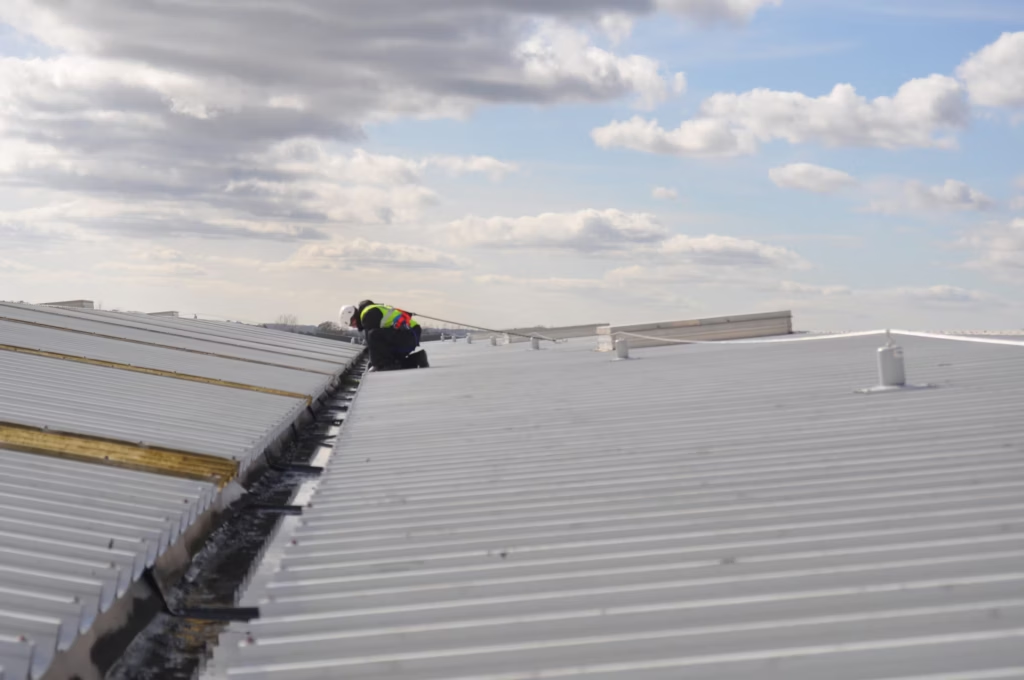
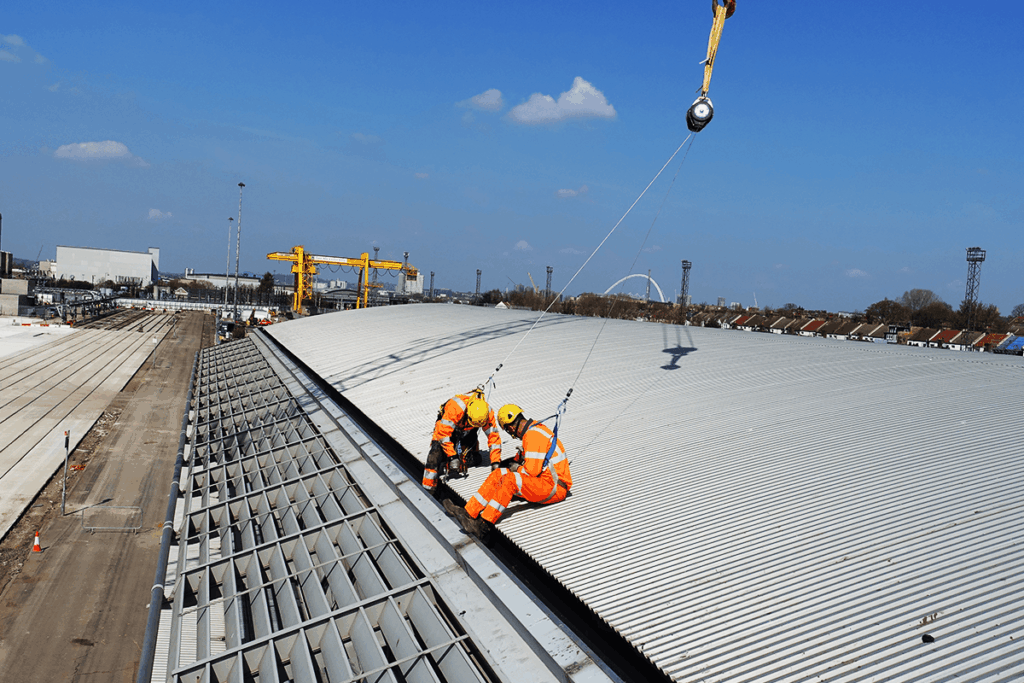
Roof and drainage failures are among the most disruptive issues for manufacturing facilities.
A leaking roof can affect machinery, production lines, stored materials, electrical equipment, finished goods and staff areas. It can also create slip risks, hygiene concerns or quality-control issues, depending on the nature of the facility.
Gutters and drainage systems are often a particular problem because they are easy to overlook. When gutters are blocked, undersized, damaged or poorly maintained, water can overflow, track into the building or sit against materials that were not designed for prolonged exposure. Over time, this can contribute to corrosion, staining, damp, internal leaks and deterioration around roof edges or façade interfaces.
Planned roof inspections can identify:
- damaged roof sheets
- failed flashings
- defective rooflights
- ponding water
- blocked outlets
- loose fixings
- deteriorating membranes
- early signs of water ingress
Once these are identified, maintenance teams can plan repairs before the issue reaches the production floor.
We can provide commercial roof condition surveys and drone roof surveys to help clients assess roof condition and plan appropriate maintenance.
Façades, cladding and curtain walling
The external façade of a manufacturing facility does more than shape the appearance of the building. It protects the internal environment, supports weather performance and helps maintain the integrity of the wider building envelope.
Over time, cladding panels, curtain walling, glazing systems, sealants, gaskets, fixings and façade interfaces can deteriorate. Movement, weather exposure, UV damage, impact, corrosion and previous poor repairs can all create weaknesses.
When façade defects are not addressed, they can lead to water ingress, loose components, heat loss, and other safety concerns. In some cases, the visible issue may be only part of the problem. Water appearing internally may be entering through a failed sealant joint, defective curtain walling component or high-level façade detail several metres away from the visible leak.
Planned high-level maintenance helps identify these problems before they escalate. Regular inspections can highlight failed seals, deteriorated gaskets, damaged panels, corroded fixings, cracked materials, movement at joints and other defects that may require repair.
Building Transformation provides façade and curtain walling maintenance for commercial and industrial buildings where external envelope performance needs to be maintained.
Steelwork, corrosion and elevated structures
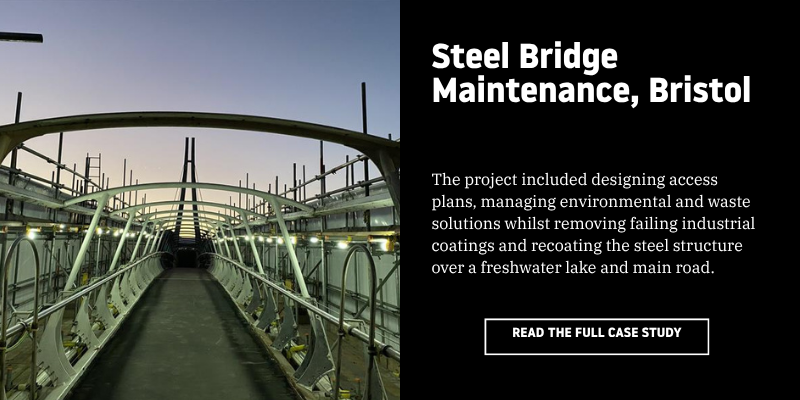
Structural steelwork, gantries, walkways, bridges, platforms, canopies and roof-level frames are common across manufacturing and industrial sites. These elements can be vulnerable to corrosion, particularly where protective coatings have failed or moisture becomes trapped.
Corrosion can begin as a surface issue, but if left untreated it can affect the performance, strength and lifespan of steel elements. It can also damage fixings, brackets, connections and support points.
Industrial environments may accelerate corrosion because of humidity, chemicals, process activity, pollutants, condensation, heat, poor drainage or general exposure. This makes planned inspection and maintenance especially important.
Early inspection allows teams to identify coating failure, rust staining, localised corrosion,loose fixings and water traps before more extensive repair or replacement is needed. Where issues are identified, works such as coating removal, surface preparation, corrosion treatment and protective coating application can be planned as part of a wider maintenance programme.
We provide industrial coating removal for difficult-access structures where failed coatings need to be removed before further treatment or protection.
How planned high-level inspections support maintenance decisions
A planned inspection gives facilities and estates teams clearer evidence about the condition of the building. This is important because maintenance decisions are often difficult when the issue is high-level, partially hidden or hard to access.
Rather than relying on assumptions, inspection findings can show what the defect is, where it is located, how severe it appears to be and what action may be required. This helps teams prioritise immediate repairs, schedule lower-risk works, monitor areas of concern and plan budgets more accurately.
It also helps avoid unnecessary work. For example, a leak may appear to be a roofing issue, but a closer inspection may identify the source as a failed façade joint or deteriorated flashing detail. Similarly, corrosion may appear localised from ground level, but high-level inspection may show wider coating failure that needs to be addressed as part of a planned programme.
This is where planned maintenance becomes especially valuable. It connects inspection, diagnosis, access planning and repair delivery, rather than treating every defect as a standalone emergency.
Building Transformation’s experience in building condition surveys supports this more structured approach to industrial maintenance.
The role of specialist access and industrial rope access
Access is often one of the biggest barriers to maintaining manufacturing facilities properly.
Many high-level assets cannot be inspected safely or accurately from ground level. Scaffolding may be disruptive, costly or slow to install. MEWPs may be limited by machinery, public areas, loading bays, soft ground, internal layouts, rooflines or working height.
Specialist access methods give facilities teams more options. Depending on the site and scope, this may include industrial rope access, MEWPs, scaffolding, drone surveys, roof access systems or a combination of methods.
Industrial rope access can be particularly effective where works are localised, high-level or difficult to reach. It allows IRATA trained technicians to get close to the building fabric and inspect or maintain specific areas without necessarily installing large-scale scaffold.
For manufacturing sites, this can reduce disruption to production, keep access requirements more targeted and help teams complete inspections or remedial works around live operations.
Building Transformation has further guidance on industrial rope access services, rope access services and how rope access methods support building painting projects.
How planned maintenance supports safety and compliance
High-level defects can create safety and compliance risks if they are not managed.
Loose façade components, corroded steelwork, leaking roofs, defective gutters, damaged cladding or deteriorating elevated structures may affect people, operations, equipment or neighbouring areas. In a manufacturing environment, where people, vehicles, machinery and materials are often moving through the site, these risks need to be identified and controlled.
Planned maintenance supports safety by giving teams evidence of building condition and a structured way to respond to defects. It also helps demonstrate that risks are being actively managed, which may support internal governance, insurance requirements, landlord obligations, tenant responsibilities or wider compliance processes.
It can also reduce the need for emergency works at height. When issues are identified early, you can plan access properly, risk assessments can be completed in advance and works can be scheduled around the safest and least disruptive time.
The operational benefits of planned high-level maintenance
The main benefit of planned high-level maintenance is control.
Manufacturing facilities cannot always avoid defects, but they can reduce the likelihood of defects becoming disruptive failures. A planned approach helps protect production, safety, budgets and asset condition by giving teams a clearer understanding of what is happening across the building.
This can ultimately mean fewer unexpected leaks, fewer emergency callouts, better winter preparedness, reduced corrosion risk, clearer repair priorities and improved confidence in the condition of high-level assets.
It also supports longer-term asset protection. Industrial buildings are expensive to repair when defects are left too long. By identifying problems early and addressing them in a planned way, facilities teams can extend the life of roofs, façades, steelwork, and elevated structures while reducing the risk of major future expenditure.
Practical examples of planned high-level maintenance
Planned high-level maintenance can include many different activities depending on the building and site.
A manufacturing facility might arrange a roof and gutter inspection before the wetter months to reduce the risk of water ingress. A warehouse may need a drone survey to assess roof condition across a large footprint. An industrial site may require rope access technicians to inspect corrosion on high-level steelwork or carry out localised coating repairs without installing full scaffolding. A commercial production facility may need curtain walling, gaskets or sealants checked where recurring leaks have been reported.
Other examples include inspecting loading bay canopies, maintaining elevated walkways, clearing high-level gutters, checking façade fixings, investigating rooflight defects, removing failed coatings from steel structures or assessing bridge and walkway condition. Building Transformation also provides bridge condition surveys for structures where access, safety and condition assessment need to be carefully managed.
The specific activity will vary, but the principle remains the same: inspect early, understand the condition, plan the access and complete the right maintenance before the issue becomes disruptive.
Planned maintenance as part of industrial asset protection
Manufacturing buildings are operational assets. Their condition directly affects the work happening inside them.
If a roof fails, production may be interrupted. If gutters overflow, water may enter the building. If cladding deteriorates, weather performance may be affected. If steelwork corrodes, repair costs may increase. If elevated structures are not maintained, safety concerns may develop.
Planned high-level maintenance helps protect those assets by turning hidden or difficult-access areas into manageable maintenance priorities.
This doesn’t mean every defect requires immediate repair. It means facilities teams have the information they need to make informed decisions. Some issues may need urgent action. Others may be monitored. Some may be grouped into a future maintenance programme. The value lies in knowing the difference.
FAQs
What is high level maintenance?
High level maintenance is the inspection, cleaning, repair and preventative maintenance of areas that are difficult to access from ground level. In manufacturing and industrial facilities, this often includes roofs, gutters, façades, cladding, steelwork, glazing, gantries, bridges, walkways and elevated structures.
Why is planned high-level maintenance important for manufacturing facilities?
Planned high-level maintenance helps identify defects before they cause disruption. This is important for manufacturing facilities because leaks, corrosion, façade defects or roof failures can affect production, stock, equipment, safety and day-to-day operations.
What is the difference between planned and reactive maintenance?
Planned maintenance is proactive. It uses scheduled inspections and maintenance works to prevent defects from becoming failures. Reactive maintenance happens after a problem has already appeared, such as a leak, loose component or visible deterioration.
How can high-level maintenance reduce downtime?
High-level maintenance can reduce downtime by identifying issues early and allowing repairs to be scheduled around production requirements. This helps avoid emergency works, unexpected closures and disruption to operational areas.
Can industrial rope access be used for high-level maintenance?
Yes. Industrial rope access can be used where areas are difficult to reach using ground-level access, scaffolding or MEWPs. It is often suitable for targeted inspections, façade repairs, roof edge works, gutter maintenance, corrosion checks, coating works and difficult-access industrial structures.
What areas of a manufacturing facility should be inspected regularly?
Roofs, gutters, drainage systems, façades, cladding, glazing, structural steelwork, elevated walkways, gantries, canopies and roof-mounted plant areas should all be considered as part of a planned high-level maintenance programme.
What happens if high-level maintenance is delayed?
Delaying maintenance can allow small defects to develop into larger issues. This may lead to water ingress, corrosion, roof failure, façade deterioration, safety risks, higher repair costs and unplanned disruption to manufacturing operations.
Need support with planned high level maintenance?
If you manage a manufacturing facility, warehouse or industrial site, Building Transformation can help you inspect, maintain and protect difficult-access assets.
Our team supports complex industrial environments with specialist access, roof surveys, façade maintenance, corrosion control, coating removal and high-level remedial works.
Speak to Building Transformation about planned high level maintenance for your manufacturing or industrial facility.