Warehouses and large industrial buildings are built to carry the load. They support storage, logistics, production, loading, distribution, plant, machinery and daily movement across large operational spaces. Consequently, the condition of the building can have a direct impact on safety, productivity and continuity.
The challenge is that many of the most important maintenance risks are not immediately visible. Roof defects may develop long before a leak appears internally. Steel corrosion may spread beneath a failed coating before it becomes obvious from ground level. Façade movement, damaged cladding, failed sealants or blocked gutters may only become urgent once water ingress, loose components or operational disruption has already occurred.
Structural inspections help facilities managers, property managers, asset owners and estates teams identify these hidden risks before they become costly failures. For warehouses and industrial buildings, they are a practical part of planned preventative maintenance, helping teams reduce reactive repairs, protect building performance and make better decisions about maintenance budgets.
What hidden maintenance risks are common in warehouses and industrial buildings?
The most common hidden maintenance risks in warehouses and industrial buildings include roof deterioration, blocked drainage, water ingress, corrosion to steelwork, façade defects, cladding movement, failed sealants, loose fixings, damaged coatings and deterioration to difficult-access areas.
These issues often develop gradually. A rooflight begins to fail, or a gutter outlet becomes partially blocked, or a protective coating breaks down on exposed steelwork.
At first, the impact may be limited, but over time these defects can affect wider building performance.
The problem is that warehouses and large industrial buildings are often difficult to inspect thoroughly without planned access. High-level gutters, roof areas, steel frames, parapets, cladding systems, loading bay canopies, gantries and elevated walkways may be outside the normal scope of day-to-day site checks.
That is where structural inspections become valuable, and gives teams a clearer view of the asset’s condition and help identify where maintenance is needed before the issue becomes disruptive.
What are structural inspections?
Structural inspections are planned assessments of a building’s structure, envelope and key maintenance-risk areas. Their purpose is to identify defects, deterioration, movement, corrosion, water ingress and other issues that could affect safety, performance or long-term asset condition.
For warehouses and industrial buildings, structural inspections may include roof areas, structural steelwork, cladding, façades, curtain walling, gutters, downpipes, fixings, joints, loading bay structures, elevated walkways, bridges and difficult-access details.
They are not only about checking whether a building is structurally safe at a single point in time. In a maintenance context, structural inspections are also about understanding condition, identifying early warning signs and deciding what needs to happen next.
A useful inspection should help answer practical questions: where is the defect, how serious is it, what is causing it, what should be monitored, what needs repair, and how should access be planned?
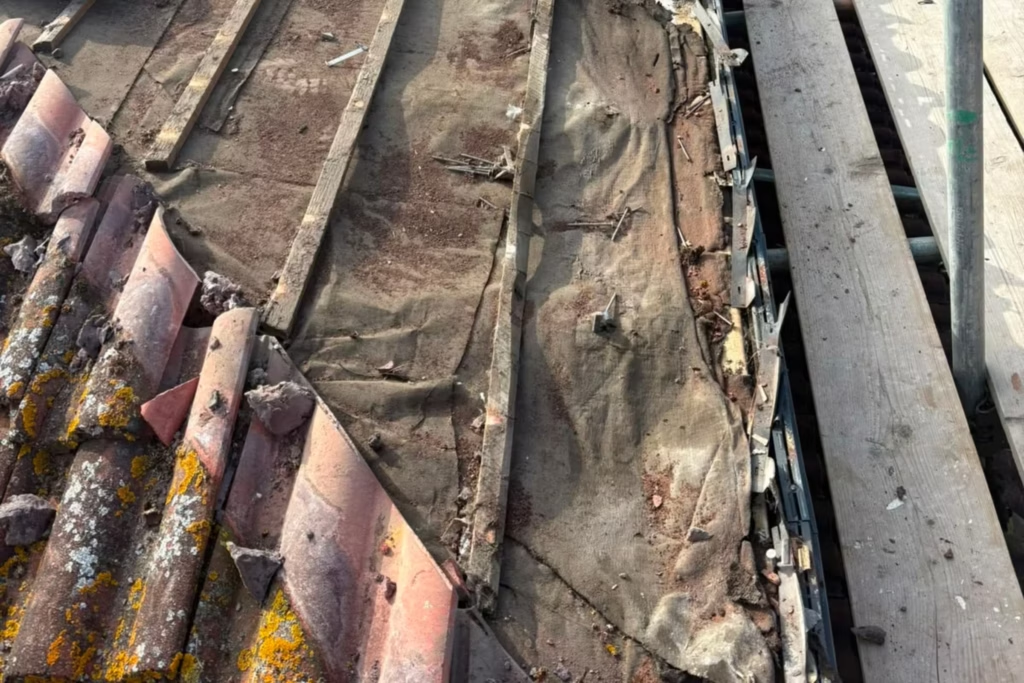
Why hidden defect can become expensive
Many building defects are cheaper and easier to address when they are found early.
A small area of failed coating on steelwork may be treated and recoated before corrosion spreads. A blocked gutter can be cleared before water damages the roof edge or tracks into the building. A failed sealant joint can be replaced before repeated water ingress affects internal areas. A roof defect can often be repaired more efficiently before it becomes an emergency leak.
When defects are left until failure, the repair is rarely just about the original issue. Water ingress can damage stock, machinery, insulation, finishes or electrical systems. Corrosion can move from surface deterioration to section loss. Façade defects can create safety risks if panels, fixings or components become loose. Roof defects can disrupt production, storage or logistics activity below.
Reactive maintenance also reduces control. Work has to be arranged quickly, often around live operations, and access may need to be mobilised under pressure. This can make costs harder to manage and repairs more disruptive.
Structural inspections help shift maintenance from reactive response to planned decision-making.
Roofs and drainage: a common source of hidden risk
Roofs are one of the most important areas to inspect on warehouses and industrial buildings because they cover large operational spaces and are exposed to constant weathering.
Large roof areas can develop defects through age, movement, failed fixings, damaged roof sheets, deteriorated membranes, cracked rooflights, defective flashings, blocked gutters or poor drainage. These issues are not always visible from inside the building until water has already entered.
Gutters and outlets are also a frequent source of problems. When water cannot drain properly, it may overflow, pond, track into the building envelope or accelerate corrosion around roof edges and support details.
A planned roof inspection can identify early signs of deterioration and help facilities teams plan repairs before leaks affect operations. This is particularly important for warehouses, where water ingress can damage goods, packaging, racking, vehicles, production areas or loading zones.
We provide commercial roof condition surveys and drone roof surveys to help you assess roof condition across large or difficult-access buildings.
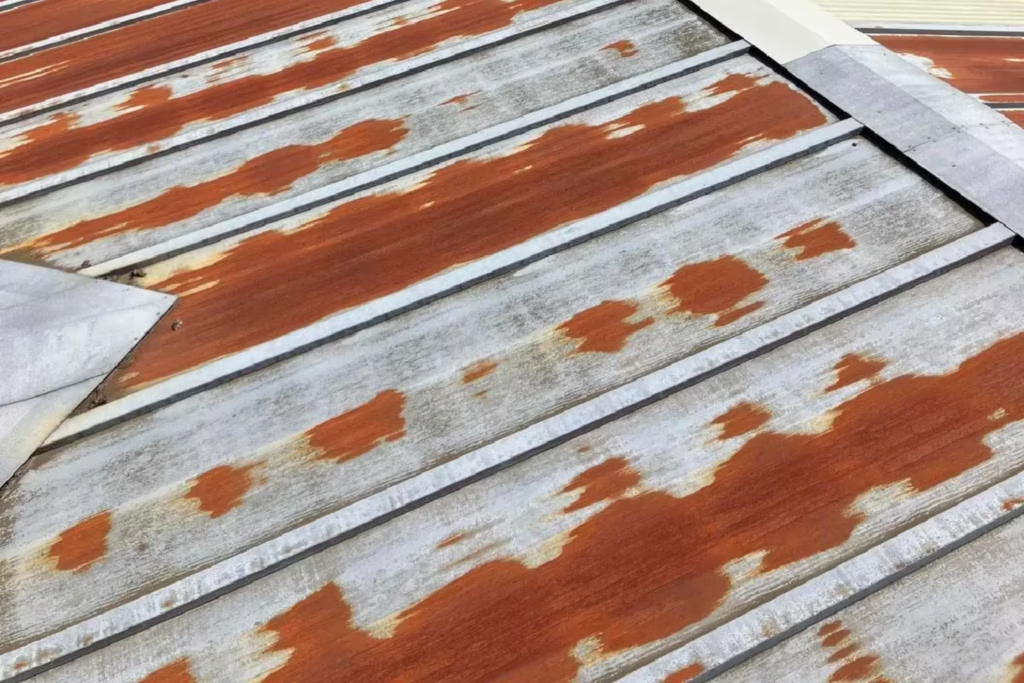
Structural steelwork and corrosion
Structural steel is widely used across warehouses and industrial buildings. It may be visible internally, exposed externally, integrated into roof structures, used around loading bays, or present in gantries, bridges, walkways and elevated platforms.
Steelwork is durable, but it still needs inspection and maintenance. If protective coatings fail or moisture is allowed to reach the surface, corrosion can begin. This may appear as rust staining, blistering paint, flaking coatings or localised deterioration around joints, fixings and connections.
In industrial environments, corrosion can be accelerated by humidity, chemicals, process activity, condensation, leaks, poor drainage or general weather exposure. Once corrosion progresses, it can increase maintenance costs and may require more involved repair, coating removal or protective treatment.
Structural inspections help identify corrosion risks early. They can assess whether the issue appears superficial, whether coatings are failing, whether water is collecting in vulnerable areas, and whether more detailed investigation or repair is needed.
Where failed coatings need to be removed before treatment, we can provide industrial coating removal for difficult-access steelwork and industrial structures.
Façades, cladding and curtain walling defects
The façade of a warehouse or industrial building protects the internal environment from weather exposure, water ingress and external conditions. It may include cladding panels, curtain walling, glazing, masonry, metal components, sealants, gaskets, fixings and interfaces with the roof or structure.
Over time, these elements can deteriorate through movement, impact, weathering, UV exposure, corrosion, vibration or poor previous repairs. Because these defects are often high-level or external, they may remain unnoticed until there is staining, water ingress, visible movement or loose components.
Façade defects can also be difficult to diagnose. The point where water appears internally may not be the point where it entered. Water may track behind panels, along structural elements or through interfaces before becoming visible elsewhere.
Structural inspections and façade inspections help identify the likely source of defects and the condition of the surrounding building envelope. This supports more accurate repair planning and reduces the risk of repeat maintenance callouts.
At Building Transformation, we provide façade and curtain walling maintenance for commercial and industrial buildings where external envelope performance needs to be inspected, maintained or repaired.
Water ingress investigations
Water ingress is one of the most common signs that a hidden defect has progressed.
In warehouses and industrial buildings, water can enter through roofs, rooflights, gutters, parapets, cladding joints, façade interfaces, glazing systems, failed sealants, fixings or drainage details. Once inside the building envelope, it may travel before appearing in a completely different location.
This is why repeated leak repairs can fail if the source has not been properly identified.
Inspection-led maintenance looks beyond the visible symptom. Instead of simply patching the area where water appears, the inspection considers surrounding details, likely water paths, related defects and the condition of adjacent materials.
This can help facilities teams understand whether the issue is isolated, recurring or part of a wider building envelope problem.
Access constraints in large industrial buildings
Access is one of the main reasons hidden risks remain hidden.
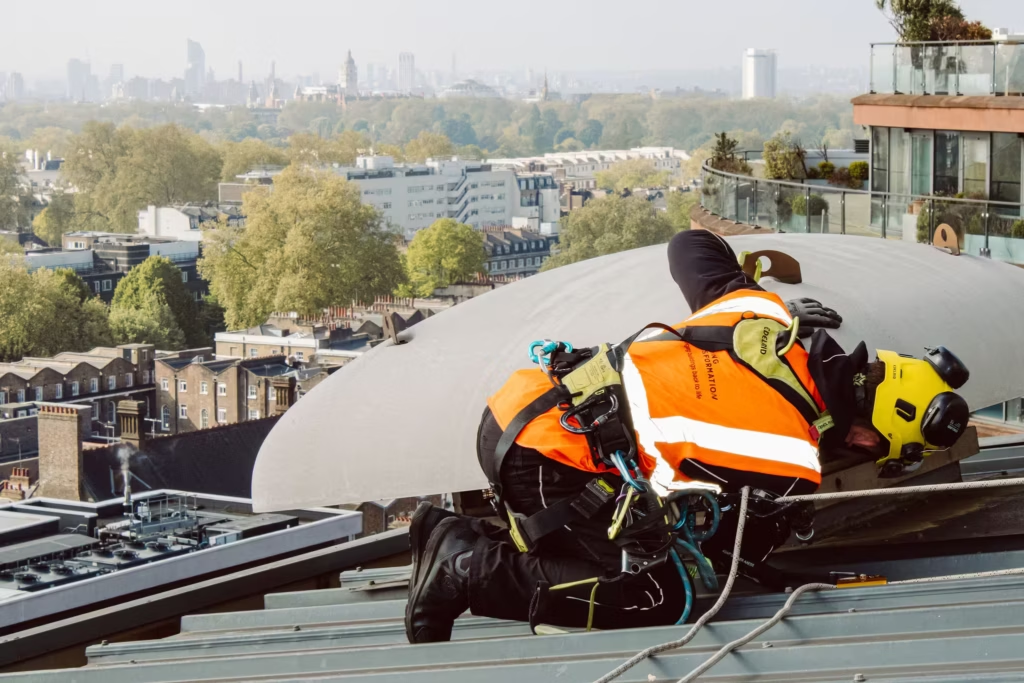
Large industrial roofs, high façades, gutters, gantries, bridges, parapets, loading bay canopies and roof-mounted plant areas can all be difficult to inspect safely. Ground-level visual checks are rarely enough to understand the true condition of these areas.
Scaffolding may be unnecessary for a targeted inspection or too disruptive for a live site. MEWPs may be limited by racking, vehicles, loading bays, soft ground, machinery, public areas or building height. In other cases, drones, roof access systems or rope access may provide a more practical way to gather evidence.
Specialist access-led inspections allow teams to reach difficult areas safely and methodically. They also help clients avoid basing maintenance decisions on incomplete information.
Our previous articles on industrial rope access services and rope access services explain how rope access can support inspection and maintenance works where standard access methods are limited.
How structural inspections reduce reactive maintenance
Reactive maintenance is often more expensive, disruptive and difficult to control than planned maintenance.
When an issue is only addressed after it causes a visible problem, there may already be secondary damage. A roof leak may have affected insulation, stock or equipment. Corrosion may have spread beyond the original defect. A façade problem may have created internal water damage. A damaged gutter may have caused repeated overflow or staining.
Structural inspections reduce reactive maintenance by identifying defects earlier and giving facilities teams time to plan.
This means works can be prioritised based on risk rather than urgency alone. Access can be arranged properly. Budgets can be forecast. Repairs can be scheduled around operational requirements. Lower-risk issues can be monitored instead of being ignored or over-treated.
For warehouses and industrial buildings, this can support operational continuity and help teams avoid the disruption of emergency repairs.
How structural inspections support PPM
Planned preventative maintenance, or PPM, is the process of maintaining assets before they fail.
Structural inspections support PPM because they provide evidence of condition. They help facilities teams understand which assets are performing well, which are deteriorating, and which need repair or further investigation.
For industrial buildings, this evidence is particularly important because many assets are high-level, external or difficult to access. Without inspection data, maintenance planning can become reactive or assumption-led.
Inspection findings can support PPM by helping teams plan budgets, schedule access, prioritise repairs, monitor known defects and reduce long-term maintenance risk.
They also provide a useful record of asset condition over time. This can support internal reporting, landlord and tenant discussions, insurance requirements, capital expenditure planning and wider asset management decisions.
This article on building condition surveys talks through how inspections help support maintenance planning and long-term asset protection.
When should structural inspections be considered?
Structural inspections should be considered when there are visible signs of deterioration, recurring defects, planned refurbishment works, ageing assets, limited maintenance records or concerns about water ingress, corrosion, movement or damage.
Warning signs can include recurring leaks, rust staining, visible cracking, loose cladding, damaged panels, blocked gutters, sagging roof areas, failed sealants, rooflight defects, damp patches, pooling water, movement at joints or unexplained staining.
A structural inspection may also be useful before budgeting for major maintenance works. It can help confirm the scope of defects, identify priorities and reduce uncertainty before repairs are specified.
In warehouses and industrial buildings, inspections are especially useful when the building is operationally important and disruption would be costly. Early inspection gives teams more options and more time to act.
From inspection to maintenance planning
A structural inspection should lead to clear, practical next steps.
The findings may recommend immediate repairs, planned maintenance, monitoring, further investigation or more detailed access-led works. In some cases, the next step may be a roof condition survey, façade inspection, water ingress investigation, corrosion treatment, coating removal or difficult-access repair programme.
The value is in creating a clear path from inspection to action.
Rather than treating each issue as an isolated repair, inspection-led maintenance helps facilities and asset teams understand how different defects connect. A leak may be linked to gutter failure. Corrosion may be linked to water ingress. Façade staining may be linked to failed sealants. Roof deterioration may be linked to drainage problems or previous poor repairs.
When these relationships are understood, maintenance can be planned more effectively.
Inspection-led maintenance for warehouses and industrial buildings
We work with commercial and industrial clients where access, condition and repair planning need to be considered together.
As a specialist access-led inspection and maintenance contractor, Building Transformation supports clients with difficult-access surveys, roof inspections, façade and curtain walling maintenance, water ingress investigations, corrosion control, coating removal and remedial works.
This approach helps our clients move beyond reactive repair, and it gives facilities managers and asset owners the evidence they need to understand hidden risks, prioritise maintenance and protect building performance.
For warehouses and industrial buildings, that can mean fewer unexpected failures, reduced downtime, improved safety management and more predictable maintenance planning.
Need structural inspections for a warehouse or industrial building?
If you manage a warehouse, logistics facility, manufacturing site or large industrial building, Building Transformation can help identify hidden maintenance risks before they become costly failures.
Our team supports inspection-led maintenance across roofs, façades, steelwork, water ingress, corrosion, difficult-access areas and industrial building envelopes.
Speak to Building Transformation about structural inspections, roof condition surveys, façade inspections and access-led maintenance for your industrial asset.
FAQs
What are structural inspections?
Structural inspections are assessments of a building’s structure, external envelope and key maintenance-risk areas. For warehouses and industrial buildings, this may include roofs, steelwork, façades, cladding, gutters, glazing, fixings, joints, loading bay structures and difficult-access areas.
Why are structural inspections important for warehouses?
Structural inspections are important for warehouses because many defects develop in high-level or hard-to-access areas. Regular inspections help identify hidden deterioration before it causes leaks, safety risks, operational disruption or costly repairs.
What hidden maintenance risks are common in industrial buildings?
Common hidden risks include roof deterioration, blocked gutters, water ingress, steel corrosion, coating failure, damaged cladding, failed sealants, loose fixings, façade movement, rooflight defects and deterioration to elevated structures.
How do structural inspections support planned preventative maintenance?
Structural inspections support planned preventative maintenance by providing evidence of building condition. This helps facilities teams prioritise repairs, plan access, forecast budgets, monitor known defects and reduce reactive maintenance.
When should a structural inspection be arranged?
A structural inspection should be arranged when there are recurring leaks, visible cracks, rust staining, loose cladding, damaged roof elements, façade defects, unexplained staining, movement, water ingress or concerns about ageing building assets.
Can structural inspections reduce repair costs?
Yes. Structural inspections can help reduce repair costs by identifying defects early, before they develop into more extensive damage. Early inspection allows repairs to be planned and targeted more effectively.
Can difficult-access areas be inspected without scaffolding?
Yes. Difficult-access areas may be inspected using rope access, drone surveys, MEWPs, roof access systems or other specialist access methods. The right method depends on the building, location and level of detail required.
What happens after a structural inspection?
After a structural inspection, the findings can be used to plan repairs, monitor defects, arrange further investigation, specify access requirements or build a planned maintenance programme.