Render repair is an important part of façade maintenance for commercial buildings, especially where external walls are exposed to weathering, pollution, movement, staining and water ingress.
On a rendered façade, visible defects may often look cosmetic at first. Defects such as cracks, discolouration, algae growth, flaking paint or small areas of failed render, you might not consider urgent. But, once a render system starts to deteriorate, moisture can enter the façade, the coatings and system can fail, and the underlying substrate can become more vulnerable to further damage.
For commercial property managers, surveyors and facilities teams, the key questions need to be: ‘what has caused the failure, how far has it spread, and what repair method will protect the building long term?’
A proper render repair strategy should consider cleaning, preparation, crack repairs, patch repairs, repainting and any wider façade issues that may be contributing to the problem. Let’s dig into this topic a little further.
What does render repair involve?
Render repair involves identifying and addressing defects in the external rendered surface of a building. Depending on the condition of the façade, this could involve cleaning, removing loose or failed material, repairing cracks, reinstating damaged areas, preparing the surface and repainting or recoating the render.
On commercial buildings, render repair is rarely just a small cosmetic task. The works may need to be planned around building occupation, access constraints, weather exposure, tenant disruption, health and safety requirements and the long-term performance of the façade.
A typical render repair process may involve:
- Render cleaning to remove dirt, algae, staining or contaminants
- Identification of cracks, hollow areas, failed coatings or loose material
- Removal of unstable render
- Preparation of the substrate
- Patch repairs or localised render reinstatement
- Treatment of joints, cracks and vulnerable edges
- Final inspection and maintenance recommendations
The exact approach depends on the render type, the cause of failure and the condition of the wider façade.
What causes render failure?
Several reasons. Sometimes the issue is age-related. Sometimes it is caused by poor detailing, water ingress, movement, incompatible coatings or previous repairs that have not performed as intended.
The most common causes of render failure tend to include cracking, impact damage, freeze-thaw action, trapped moisture, failed coatings, building movement, poor adhesion, water ingress from defective joints or openings, and contamination from pollution or biological growth.
Cracking is one of the most common signs. This may be caused by thermal movement, structural movement, settlement, impact, poor original application or stress around openings. Small cracks may allow water to seep behind the render, leading to further deterioration over time.
Staining is another common issue. Dirt, pollution and algae can affect the appearance of the building, but staining can also indicate moisture movement, poor drainage, defective rainwater goods or water tracking across the façade.
Failed coatings can also accelerate render deterioration. If paint or protective coatings begin to blister, peel or crack, moisture may become trapped, or the render may lose protection against weather exposure.
This is why investigation is so important. Repairing the visible defect without understanding the underlying cause can lead to repeated failures.

Can damaged render be repaired?
In most cases, yes, damaged render can be repaired. But the repair needs to be appropriate to the type and extent of the defect.
Small areas of localised damage may be suitable for patch repair, particularly where the surrounding render is sound, and the cause of the defect has been identified. Wider cracking, hollow areas, recurring staining, water ingress or coating failure may require a more detailed remediation plan.
A simple patch may not be enough if the render has failed due to movement, trapped moisture, or substrate issues. Likewise, repainting over cracked or contaminated render may improve appearance temporarily, but it will not restore the integrity of the façade.
The question is not only whether the damaged render can be repaired, but whether the repair will perform. Good render repair should be durable, compatible with the existing material, visually appropriate and supported by proper preparation.
Render cleaning, repair or repainting: which is needed?
Render cleaning, render repair and repainting all solve different problems.
Render cleaning is appropriate where the façade is generally sound but affected by dirt, algae, biological growth, pollution staining or surface contamination. Cleaning can improve appearance and help prepare the surface for inspection or redecoration. It should also form part of a proactive maintenance programme, which will help to ensure the render and facade perform as originally intended.
Render repair is required where the render itself has cracked, detached, delaminated, become hollow, suffered impact damage or failed in localised areas. The defective material needs to be addressed before any finishing system is applied.
Painting render or repainting rendered walls may be suitable once the façade has been cleaned, repaired and properly prepared. However, painting should not be used to disguise unresolved defects. A coating system is only as effective as the surface beneath it.
On commercial buildings, these stages often work together. A façade may need cleaning first, so defects can be seen clearly. It may then need localised render repairs, followed by preparation and a compatible coating or façade redecoration system.
Building Transformation provides specialist façade cleaning and façade redecoration services as part of our wider external building maintenance programmes.
How render type affects the repair strategy
Different render systems behave differently, so the repair method should always be based on the material, substrate and existing façade build-up.
Cement render is a traditional, hard-wearing render commonly used on external walls. It can be durable, but it can crack if it’s subjected to pressure from movement or poor detailing. Repairs need to consider compatibility, adhesion and moisture movement. Where concrete substrates are involved, it is also important to consider whether there are signs of corrosion, spalling or deeper façade defects.
Acrylic render is often used as part of modern render systems and can offer flexibility and a smoother finish. However, it still needs compatible repair products and coatings. Using the wrong material can affect appearance, adhesion and long-term performance.
Older, historic and heritage buildings may also have mixed substrates, previous repairs or historic coatings that need careful assessment. Depending on the age of the property, it’s possible that the historic render may contain lime or, in certain cases, even horse-hair, which was used as a binder. On these buildings, the repair approach must be sensitive to the existing fabric and should avoid trapping moisture or applying incompatible materials.
This is why render repairs should not be treated as a one-size-fits-all task. The correct solution depends on what the render is, how it was installed, how it has failed and what the building needs from a performance perspective.
Why façade inspections matter before render repairs
Before starting render repairs, a façade inspection or survey should be carried out to understand the extent of the issue.
From ground level, it can be difficult to judge whether render defects are isolated or part of a wider problem. Cracks may extend higher than expected. Hollow areas may not be visible. Staining may be linked to water ingress from above. Coating failure may suggest moisture trapped beneath the surface.
A quality façade survey helps identify:
- The type and condition of the render
- Areas of cracking, staining or coating failure
- Hollow, loose or delaminated render
- Water ingress routes
- Defective details, joints or abutments
- Access requirements
- Whether cleaning, repair, redecoration or wider remediation is needed
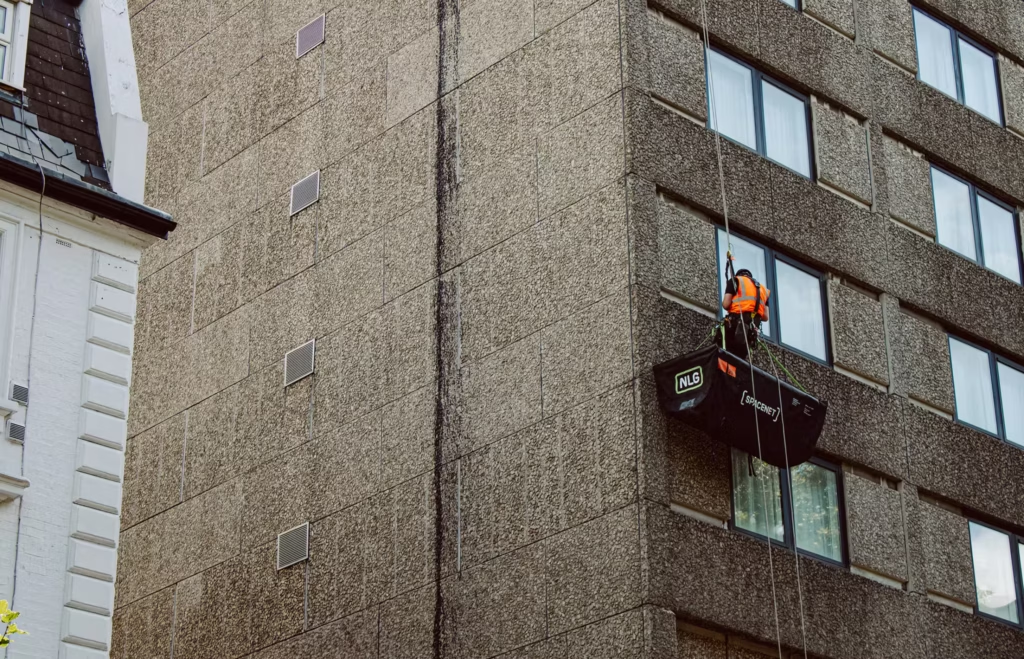
For more complex buildings, this inspection may need to be carried out using rope access, MEWPs, scaffold towers or other façade access methods. Rope access is particularly useful where defects are at height, access from ground level is restricted, or the building remains occupied during the works.
How rope access supports commercial render repair
Access can be one of the biggest challenges in commercial render repair.
Many rendered façades are located on occupied buildings, high-rise elevations, restricted sites or areas where full scaffolding would be disruptive or costly. In these situations, IRATA-trained rope access specialists can provide a flexible and efficient way to inspect, clean, repair and repaint specific areas of the façade.
Rope access is particularly useful for localised render repairs, high-level crack repairs, façade cleaning, staining investigation, coating inspections and targeted redecoration works. It allows trained technicians to reach difficult areas safely without always needing large access structures at ground level.
This can reduce disruption for tenants, visitors and building operations. It can also make it easier to carry out phased maintenance, where works are prioritised by risk, location or condition.
For commercial property teams, this is valuable because render defects do not always justify full scaffold access across an entire elevation. A targeted access strategy can help control costs while still allowing the building to be inspected and maintained properly.
Why delaying render repair can increase costs
Render defects rarely improve on their own.
A small crack can allow water to enter. A failed coating can expose the render to further weathering. Staining can indicate recurring moisture. Loose or hollow render can continue to deteriorate until more extensive removal and reinstatement are needed.
Delaying render repair can lead to:
- Larger areas of failed render
- Increased water ingress risk
- Damage to the underlying substrate
- More extensive coating failure
- Higher access and repair costs
- Greater disruption to occupants
- Reduced façade lifespan
Early intervention allows repairs to be planned rather than reactive. It also gives property managers better control over cost, programme and disruption.
In many cases, a planned maintenance approach combining render cleaning, localised repairs and repainting can extend the life of the façade and delay the need for more extensive refurbishment.
Planning the right render repair approach
The right render repair strategy starts with diagnosis.
Before deciding whether a building needs cleaning, patch repairs, repainting or wider façade remediation, the façade should be inspected properly. The render type, defect pattern, access constraints and underlying cause of failure all need to be understood.
For commercial buildings, this is especially important. The works must protect the building fabric, minimise disruption, comply with safety requirements and support long-term asset performance.
We provide specialist façade maintenance, façade and curtain walling repairs, render cleaning, façade redecoration and difficult-access repair services for commercial buildings.
If your building is showing signs of cracked render, staining, water ingress, failed coatings or general façade deterioration, a professional façade inspection is the best starting point. From there, the correct repair, cleaning and repainting strategy can be planned with confidence.