Building maintenance has a direct impact on operational continuity, safety, asset performance and long-term cost control, particularly for commercial buildings and industrial sites.
When roofs, façades, gutters, steelwork, cladding, glazing or elevated structures are only repaired after something fails, maintenance quickly becomes reactive. A leak appears. A façade component becomes loose. Corrosion spreads. A gutter overflows. An emergency repair is arranged because the defect can no longer be ignored.
Reactive maintenance will always have a role. Buildings are exposed to weather, movement, age and operational demands, and unexpected defects can still happen. However, relying too heavily on reactive maintenance usually creates higher costs, more disruption and less control.
Planned maintenance takes a different approach. It uses inspections, condition surveys, scheduled maintenance and prioritised repairs to identify defects before they become failures. For facilities managers, property managers, asset owners and operations teams, this can reduce downtime, prevent emergency repairs and support a more strategic approach to asset protection.
What is planned maintenance?
Planned maintenance is a proactive approach to maintaining buildings, assets and structures before failure occurs.
In commercial and industrial environments, planned maintenance may include roof condition surveys, façade inspections, gutter checks, structural inspections, water ingress investigations, coating inspections, corrosion treatment, sealant replacement, cleaning, drainage maintenance and scheduled repairs.
The purpose is to understand the building’s condition and plan works at the right time, rather than waiting until defects cause disruption.
Planned maintenance is often used as part of a Planned Preventative Maintenance, or PPM, strategy. This will help asset and facilities teams identify risks, forecast budgets, schedule access and reduce the likelihood of unplanned failures.
What is reactive maintenance?
Reactive maintenance is work carried out after a defect, failure or problem has already occurred.
This might include emergency roof leak repairs, urgent gutter clearance, temporary weatherproofing, repairing damaged cladding, responding to loose façade elements, treating advanced corrosion, or arranging access after a high-level defect has become a safety concern.
Reactive maintenance can be necessary. If a storm damages a roof or a leak appears unexpectedly, the issue needs to be made safe and repaired. The problem comes when reactive maintenance becomes the main maintenance strategy.
When teams only respond after something has failed, they have less control over timing, access, cost, disruption and repair quality.
Planned vs reactive maintenance: what is the difference?
The main difference between planned and reactive maintenance is timing.
Planned maintenance is carried out before failure, based on inspections, known asset condition and scheduled works. Reactive maintenance is carried out after a failure or visible problem has already occurred. Both approaches can be necessary, but planned maintenance gives facilities and asset teams greater control. Reactive maintenance should sit within a wider maintenance strategy, not replace one.
Why relying on reactive maintenance increases risk
Reactive maintenance can seem cost-effective in the short term because money is only spent when a problem appears. However, for commercial and industrial buildings, this approach often increases long-term cost and risk.
Many defects develop gradually. A roof membrane starts to deteriorate. A gutter outlet becomes partially blocked. A façade seal begins to fail. Protective coatings on steelwork break down. Water starts tracking behind cladding or into a roof detail.
At first, these issues may be small and relatively simple to address. If they are not identified early, they can develop into leaks, corrosion, structural deterioration, internal damage or operational disruption.
Reactive maintenance also creates pressure. Repairs often need to be arranged quickly, access may be harder to plan, and works may need to happen around occupied or operational areas. This can increase disruption and make it harder to deliver a long-term repair rather than a temporary fix.
The advantages and disadvantages of reactive maintenance
Reactive maintenance does have a place within building maintenance. It allows teams to respond quickly when something unexpected happens, and not every asset requires the same level of planned intervention.
But it becomes problematic when it is the default approach.
The main advantage of reactive maintenance is that it deals with immediate problems. It can be appropriate for isolated defects, storm damage, accidental impact, sudden leaks or issues that could not reasonably have been predicted.
The disadvantages are usually linked to control. Reactive repairs can be urgent, disruptive and more expensive than planned works. They may also treat the visible symptom without identifying the underlying cause.
For example, repeatedly patching a leak may not resolve the issue if the real source is failed façade sealant, defective guttering or water tracking through a roof interface.
The advantages and disadvantages of planned maintenance
Planned maintenance helps teams move from emergency response to informed decision-making.
Its main advantage is that it gives facilities and asset managers visibility of building condition. Once defects are identified early, they can be prioritised, budgeted and repaired in a controlled way.
Planned maintenance can reduce downtime, extend asset lifespan, support safety management and improve long-term cost control. It also allows works to be scheduled around production, occupancy, shutdown periods, tenant requirements or public access.
The main challenge is that it requires upfront planning. Inspections, surveys and maintenance schedules need to be organised, and budgets need to account for works before failure occurs. However, this is usually more manageable than dealing with emergency repairs, hidden deterioration and operational disruption later.
How planned inspections reduce emergency repairs
Inspections are the foundation of effective planned maintenance.
Without inspections, maintenance decisions are often based on visible symptoms or assumptions. With inspections, facilities teams can understand what is happening across the roof, façade, structure and wider building envelope.
A planned inspection may identify early signs of water ingress, corrosion, roof deterioration, blocked gutters, failed sealants, loose fixings, damaged coatings, movement, façade defects or drainage issues.
Once those risks are known, repairs can be planned before the defect escalates.
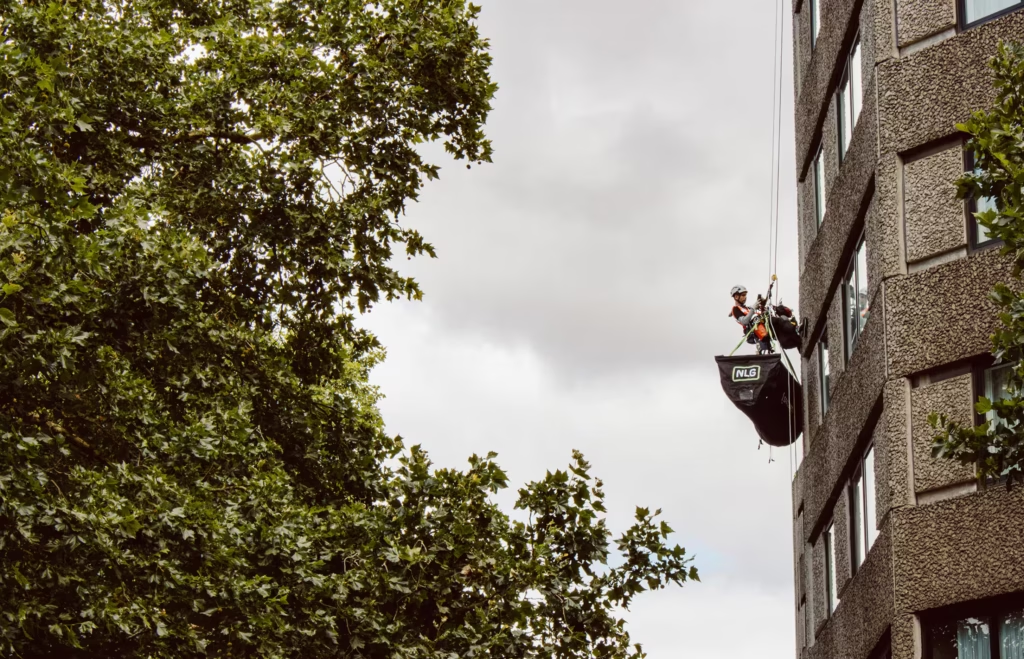
Building Transformation provides commercial roof condition surveys, drone roof surveys and access-led inspections that help clients understand building condition across large, high-level or difficult-access areas.
The role of condition surveys in maintenance planning
Condition surveys help facilities and asset teams move from reactive maintenance to planned maintenance.
A building condition survey can assess the state of key assets, identify visible defects, highlight areas of deterioration and provide practical recommendations for repair, monitoring or further investigation.
For commercial and industrial buildings, this may include roofs, gutters, façades, curtain walling, cladding, steelwork, coatings, elevated structures and difficult-access areas.
The findings can then support a structured maintenance plan. Higher-risk issues can be prioritised. Lower-risk defects can be monitored. Larger works can be budgeted. Access requirements can be planned in advance.
This article on building condition surveys explains a bit more about how condition-led insight supports maintenance planning and long-term asset protection.
How planned maintenance reduces downtime
Downtime is one of the biggest risks for industrial, manufacturing and commercial sites.
A leaking roof above a production area, a damaged gutter over a loading bay, loose cladding on a public-facing elevation or corrosion affecting high-level steelwork can all cause disruption. In some cases, areas may need to be closed, protected or made safe while emergency works are arranged.
Planned maintenance reduces downtime by identifying issues earlier and giving teams time to schedule works around operations.
For example, roof inspections can be arranged before wetter months. Gutter clearance can be scheduled before seasonal pressure increases. Coating repairs can be planned before corrosion spreads. Façade maintenance can be completed before water ingress affects internal areas.
This does not eliminate every risk, but it reduces the likelihood of sudden failures and gives site teams more control over when and how maintenance takes place.
Planned maintenance and asset protection
Buildings are operational assets. Their condition affects safety, performance, continuity and long-term value.
Planned maintenance supports asset protection by keeping key building elements in serviceable condition for longer. It helps prevent minor defects from becoming major repairs and gives owners a clearer view of future investment requirements.
This is particularly important for ageing industrial buildings, warehouses, manufacturing facilities, commercial estates and infrastructure assets where deterioration may be hidden, high-level or difficult to access.
A planned approach can support:
- Better budget forecasting
- Fewer emergency repairs
- Reduced operational disruption
- Improved safety management
- Longer asset lifespan
- Clearer maintenance priorities
- Better evidence for insurers, landlords, tenants or internal stakeholders
The value is not simply in completing repairs. It is in understanding condition, managing risk and protecting the building’s long-term performance.
Where reactive maintenance still has a role
Planned maintenance should reduce the need for reactive repairs, but it cannot remove them entirely.
Unexpected events still happen. Storms, accidental impact, sudden leaks, vandalism, extreme weather and operational damage may still require a reactive response.
The key is to use reactive maintenance appropriately. It should deal with urgent or unexpected issues, while planned maintenance manages known risks and recurring defects.
A balanced maintenance strategy often includes both. Reactive works keep the building safe and operational when unexpected issues arise. Planned maintenance reduces the number of avoidable emergencies by identifying and addressing deterioration earlier.
Specialist access and difficult-access maintenance
One of the reasons commercial and industrial building defects go unresolved is access.
High-level roofs, façades, gutters, gantries, bridges, cladding, glazing and steelwork can be difficult to inspect or maintain safely. Scaffolding may be too disruptive or expensive for targeted works. MEWPs may be restricted by ground conditions, loading bays, machinery, public areas or building height.
Specialist access methods can make planned maintenance more practical.
Depending on the site, this may include drone surveys, rope access, MEWPs, scaffolding, roof access systems or a combined access strategy. Industrial rope access can be particularly useful for targeted inspections and maintenance works where technicians need to reach high-level or difficult-access areas without installing large-scale scaffold.
You can find further guidance on industrial rope access services, rope access services and how rope access methods support building painting projects.

Examples of planned maintenance for commercial and industrial buildings
Planned maintenance will vary depending on the building, asset type and operational risk.
For a warehouse, it might involve scheduled roof and gutter inspections to reduce the risk of water ingress. For a manufacturing site, it might include checking high-level steelwork for corrosion or assessing roof-mounted plant areas before defects become disruptive. For a commercial building, it might include façade inspections, sealant replacement, curtain walling maintenance or planned roof repairs.
On industrial assets, planned maintenance may also involve coating removal, corrosion treatment, protective coatings, bridge condition surveys or access-led repairs to elevated structures.
We support our clients with bridge condition surveys, industrial coating removal and façade and curtain walling maintenance as part of wider inspection-led maintenance strategies.
How to move from reactive to planned maintenance
Moving from reactive to planned maintenance does not have to mean overhauling everything at once.
A practical starting point is to understand the condition of the most important or highest-risk assets. For many commercial and industrial buildings, this means roofs, gutters, façades, steelwork, drainage, glazing and difficult-access areas.
Once condition is understood, maintenance can be prioritised. Urgent risks can be addressed first. Known defects can be monitored. Lower-risk works can be scheduled. Larger repairs can be budgeted. Access can be planned properly.
Over time, this creates a more predictable maintenance cycle and reduces the reliance on emergency callouts.
Inspection-led maintenance with Building Transformation
We can provide commercial and industrial clients with inspection-led maintenance across roofs, façades, structures, steelwork, difficult-access areas and the wider building envelope.
Rather than simply responding to failures, our approach helps clients understand condition, identify maintenance risks and plan works before defects escalate.
Through condition surveys, specialist access, roof inspections, façade maintenance, water ingress investigation, coating removal and planned remedial works, we help facilities managers and asset owners reduce downtime, manage risk and protect long-term building performance.
FAQs
What is reactive maintenance?
Reactive maintenance is repair or maintenance work carried out after a defect, failure or issue has already appeared. This may include emergency leak repairs, urgent gutter clearance, damaged façade repairs or works required after unexpected building damage.
What is planned maintenance?
Planned maintenance is proactive maintenance carried out before failure occurs. It uses inspections, condition surveys and scheduled works to identify defects early, plan repairs and reduce the risk of emergency maintenance.
What is the difference between planned and reactive maintenance?
The difference is timing. Planned maintenance happens before failure and is based on asset condition. Reactive maintenance happens after a problem has appeared and usually requires a faster response.
Which maintenance strategy is better?
For most commercial and industrial buildings, a planned maintenance strategy is better for long-term cost control, downtime reduction and asset protection. However, reactive maintenance still has a role for unexpected issues, storm damage or urgent repairs.
Does planned maintenance reduce costs?
Planned maintenance can reduce long-term costs by identifying defects early, preventing secondary damage and allowing repairs to be scheduled more efficiently. It also helps avoid some emergency access costs and operational disruption.
How does planned maintenance reduce downtime?
Planned maintenance allows inspections and repairs to be scheduled around operations, shutdowns, tenant requirements or quieter periods. This reduces the risk of unexpected failures that interrupt production, storage, access or building use.
What buildings benefit from planned maintenance?
Warehouses, manufacturing facilities, industrial buildings, commercial properties, logistics sites, infrastructure assets and ageing estates can all benefit from planned maintenance, particularly where roofs, façades, steelwork and difficult-access areas are important to building performance.
Is reactive maintenance ever appropriate?
Yes. Reactive maintenance is appropriate when unexpected defects, sudden failures, storm damage or urgent safety issues occur. The aim is not to eliminate reactive maintenance entirely, but to reduce avoidable emergencies through better inspection and planning.
Need help reducing reactive maintenance?
If your building maintenance is becoming too reactive, Building Transformation can help you take a more planned, inspection-led approach.
Our team supports commercial and industrial clients with condition surveys, specialist access, roof inspections, façade maintenance, coating removal, water ingress investigation and difficult-access repairs.
Speak to us about planned maintenance, reactive maintenance reduction and long-term asset protection for your commercial or industrial building.