Façade cleaning and façade restoration are often treated as interchangeable. But, in practice, they solve different problems.
Façade cleaning usually focuses on removing surface-level dirt, staining, algae, pollution, carbon deposits, or biological growth from the external building envelope. Façade restoration goes further. It is used when the building fabric itself has deteriorated, failed or lost performance, and requires repair, conservation or reinstatement.
For commercial property managers, surveyors and facilities teams, understanding the difference matters. A dirty façade may lead you to think you only need cleaning, but upon closer inspection, a stained, cracked, or deteriorating façade may actually require investigation, repair, and restoration.
This is why it’s particularly important to ensure that a specialist access-led maintenance contractor assesses the building first, so they can accurately identify which method is most appropriate. They will usually carry out this investigation via a condition survey using rope access, allowing them to get close up and identify any underlying damage.
The wrong approach can have detrimental effects on your building, particularly on stone façades, heritage buildings, and older commercial properties, where the substrate may be sensitive, weathered, or already weakened. Simply cleaning the façade could leave you exposed to significant problems later.
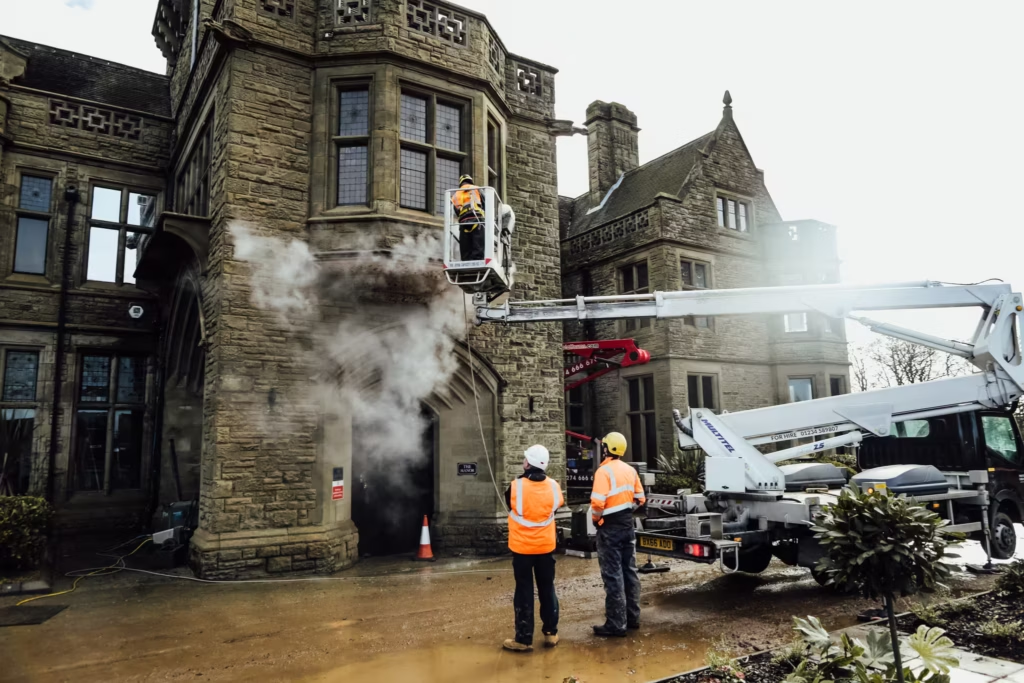
What is façade cleaning?
Façade cleaning actively removes contaminants from the external surface of a building. This might include general grime, traffic pollution, atmospheric staining, organic growth, moss, algae, lichen, bird fouling, paint residue or staining caused by water runoff.
On commercial buildings, façade cleaning is usually for appearance, asset presentation, tenant experience, or preparation for planned preventative maintenance before further works. It can also help reveal underlying defects that were previously hidden beneath dirt or staining.
Common façade cleaning methods can include steam cleaning, render cleaning, low-pressure washing, specialist stone cleaning, façade access cleaning and rope access cleaning for high-level or difficult-to-reach areas.
The key point is that cleaning should be appropriate to the substrate. Brick, stone, render, cladding, curtain walling and coated surfaces all respond differently. What works on one material may damage another.
For example, we use steam cleaning methods such as Thermatech for cleaning masonry and stone. Thermatech produces superheated water up to 150°C and is designed for masonry cleaning, paint removal and coatings removal on heritage and other structures, often without the need for added chemicals.
What is façade restoration?
Façade restoration is more extensive than cleaning, and is required when the external envelope has deteriorated, failed, been damaged or lost some of its original performance.
This tends to repair stonework, address cracks, replace failed materials, reinstate defective joints, remove failed coatings, repair render, treat corrosion, replace sealants, or restore the façade so it can function as intended.
Restoration is often needed where there are signs of physical deterioration, not just surface contamination. These signs may include:
- Cracking or spalling stone
- Failed render or delamination
- Open joints or defective pointing
- Water ingress
- Corroded fixings or embedded metalwork
- Failed coatings or peeling paint
- Stone decay or surface loss
- Movement-related damage
- Persistent staining linked to water pathways
On older and heritage buildings, restoration needs to be especially sensitive. Stone façades can be damaged by aggressive cleaning, unsuitable chemicals or incorrect repair methods, particularly when contractors take a blanket approach and apply the same method across the entire elevation.
Using rope access allows for a much more methodical and technical process. Different areas of the façade can be inspected, assessed and treated according to their actual condition, rather than assuming one solution will be suitable everywhere. This helps protect the building fabric, retain character and preserve long-term performance.
When does a façade need cleaning instead of restoration?
A façade may only need cleaning when the issue is superficial, and the underlying building fabric remains sound.
For example, if a stone, brick, render or cladding façade has become dirty due to pollution, algae or general weathering, but there are no signs of cracking, open joints, failed coatings, water ingress or material decay, a specialist façade cleaning programme may be appropriate.
Cleaning can be particularly effective where:
- The façade is structurally sound
- Staining is surface-level
- Biological growth is present, but has not caused substrate damage
- Pollution deposits are affecting the appearance
- The building needs planned external maintenance
- The façade requires preparation before inspection or redecoration
However, cleaning should still be preceded by proper assessment. Even when a façade looks like it only needs washing, hidden defects may be present. This is why a façade survey via rope access is often the most sensible starting point, particularly on large, high-rise, historic or access-constrained buildings.
A survey helps determine the façade material, condition, defect patterns and safest cleaning method before work begins.

When does a façade need restoration instead of cleaning?
A façade usually needs restoration when the issue goes beyond surface dirt.
If there’s cracking, stone decay, failed render, coating failure, open joints, corrosion, water ingress or signs of material breakdown, cleaning alone won’t solve the problem. In some cases, cleaning may even expose or worsen existing defects if the substrate is fragile.
Restoration is more appropriate where the façade has lost integrity or performance. For example, staining around windows or below joints may not simply be dirt. It may be a sign that water is entering the façade system and tracking through the building envelope.
Likewise, black staining on stone may be caused by pollution deposits, but if the stone is also friable, cracked or delaminating, it needs a more careful restoration-led approach.
This is where our wider façade expertise becomes important. Cleaning sits within a broader understanding of façade maintenance, façade and curtain walling repairs, façade leak detection and planned remedial works.
Common façade issues that need investigation
Many façade problems are misread at first glance. What appears to be staining may be linked to a drainage defect. What appears to be a dirty render may be a coating failure. What appears to be weathered stone may be active deterioration.
Common issues that should be investigated include:
Staining and pollution deposits
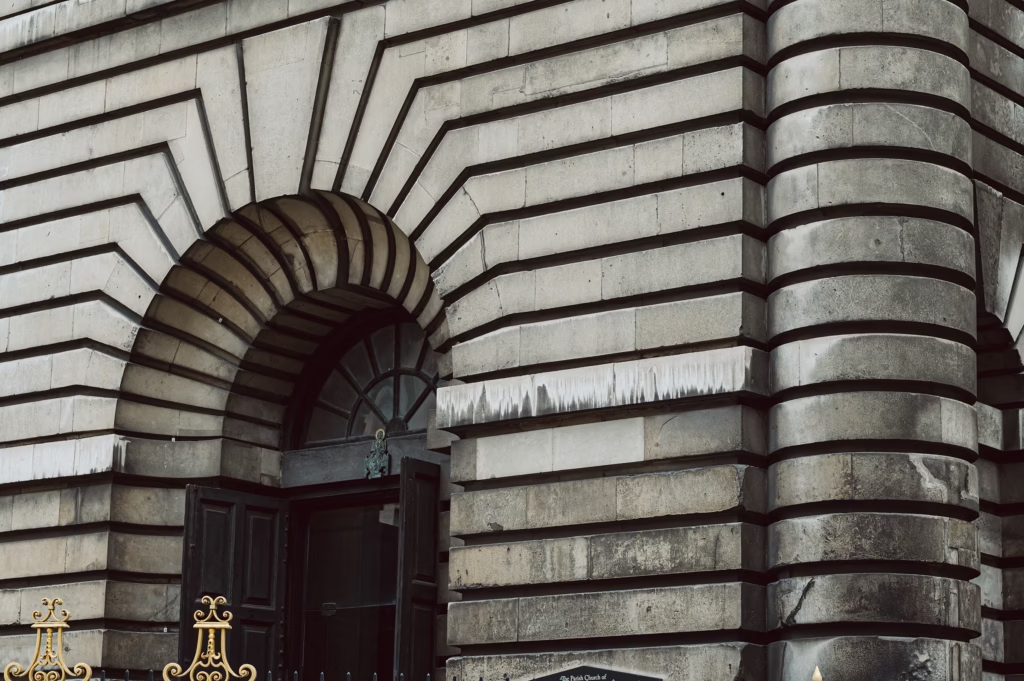
Urban façades are exposed to traffic pollution, airborne contaminants, rainfall patterns and general environmental soiling. On stone buildings, this can create heavy discolouration, particularly around ledges, cornices, window heads and sheltered areas where deposits accumulate.
Biological growth
Algae, moss and lichen often appear where moisture is retained on the façade. While some growth may be superficial, recurring biological staining can indicate poor drainage, water retention or shaded areas that need a longer-term maintenance approach.
Cracking and movement
Cracks should always be assessed before cleaning or restoration works begin. They may be cosmetic, but they may also indicate movement, failed joints, corrosion, water ingress or underlying structural issues.
Coating failure
Peeling, blistering, or flaking coatings can allow moisture into the substrate. Before redecoration, the cause of coating failure needs to be understood. Simply applying another coating over a failed system may trap moisture or repeat the same problem.
Stone deterioration
Stone façades can suffer from erosion, spalling, delamination, salt contamination, failed previous repairs and surface loss. These issues require specialist assessment because cleaning methods must be selected carefully to avoid damaging the substrate.
Why stone and heritage façades need specialist treatment
Stone cleaning and stone restoration require a different level of care from standard external façade cleaning.
Older buildings often contain materials that have weathered over decades, sometimes centuries. They may also have previous repairs, historic coatings, lime-based materials, delicate carvings or mixed substrates that respond differently to cleaning and repair methods.
A heavy-handed approach can remove more than dirt. It can strip surface detail, force water into the building fabric, damage pointing, accelerate decay or leave the façade looking uneven.
Specialist stone cleaning services should consider the condition of the stone, type of staining, porosity, moisture levels, previous coatings, environmental exposure and heritage value of the building.
On sensitive façades, cleaning test trials are also important. These help confirm that the chosen cleaning method delivers the required result without damaging the substrate.
How rope access supports façade cleaning and restoration
Access is a major consideration on commercial façades. Many buildings cannot be cleaned, inspected or restored easily from ground level. Scaffolding may be expensive or disruptive. MEWPs may be limited by pavement access, public areas, landscaping, rooflines or building height.
Rope access allows trained technicians to inspect, clean and carry out remedial works on high-level elevations with reduced disruption. It also allows our technicians to get much closer to the building fabric, making it easier to work methodically across the façade and identify potential defects as the work progresses.
For façade cleaning, this supports a more targeted approach to areas affected by pollution, staining, biological growth or difficult access. Instead of treating the façade as one uniform surface, rope access teams can assess localised conditions up close and adapt the cleaning method where needed. This can be particularly valuable on older, complex or sensitive façades where staining, cracking, failed joints, coating defects, or early signs of deterioration may not be obvious from a platform or ground-level inspection.
For façade restoration, rope access can help technicians reach cracked stonework, failed coatings, defective joints, curtain walling defects, leaking areas or other localised problems without the need for large-scale access systems across the whole elevation.
It’s particularly useful where the building remains occupied, and disruption needs to be controlled. Rather than relying on scaffold or vehicle-mounted access for every elevation, rope access teams can often work in a more flexible, targeted and technically informed way, focusing attention exactly where cleaning, inspection or remedial work is required.
Why surveys should come before cleaning or restoration
Before deciding whether a façade needs cleaning, restoration or wider refurbishment, the building needs to be properly inspected. A quality façade survey can identify the materials, defect patterns, access constraints and likely causes of deterioration. It can also help determine whether the problem is cosmetic, performance-related or part of a more serious building envelope issue.
A stained façade may need cleaning. A stained façade with failed joints, cracked stone and moisture tracking may need restoration. A leaking curtain wall may require gasket, mullion and sealant maintenance, not just surface cleaning.
Building Transformation’s article on quality façade surveys explains how detailed inspection supports better decision-making, while guidance on how to spot a failing façade can help property teams identify early warning signs before problems escalate.
Why you need a specialist access-led maintenance contractor
Façade cleaning, façade restoration and façade refurbishment all have a place in building envelope maintenance.
Facade cleaning is appropriate when the issue is surface-level, and the façade remains sound. Restoration is required when the building fabric has deteriorated, failed or needs sensitive repair. Facade refurbishment may be needed where multiple elements of the façade require improvement, replacement or upgrade as part of a wider programme.
The best approach starts with evidence. That means inspection, testing where required, access planning and a clear understanding of the building’s materials, age, exposure and defect history.
For commercial property managers and surveyors, this reduces risk by avoiding unnecessary works, preventing inappropriate cleaning methods, and ensuring defects are treated properly rather than temporarily disguised.
Building Transformation provides specialist access-led maintenance solutions for façade cleaning, façade redecoration, façade repairs and façade maintenance for commercial, high-rise and complex buildings. Whether the issue is staining, stone deterioration, coating failure or suspected façade defects, the right starting point is a proper inspection and a maintenance plan that protects the building for the long term.